The Fossa: Madagascar’s Top Predator
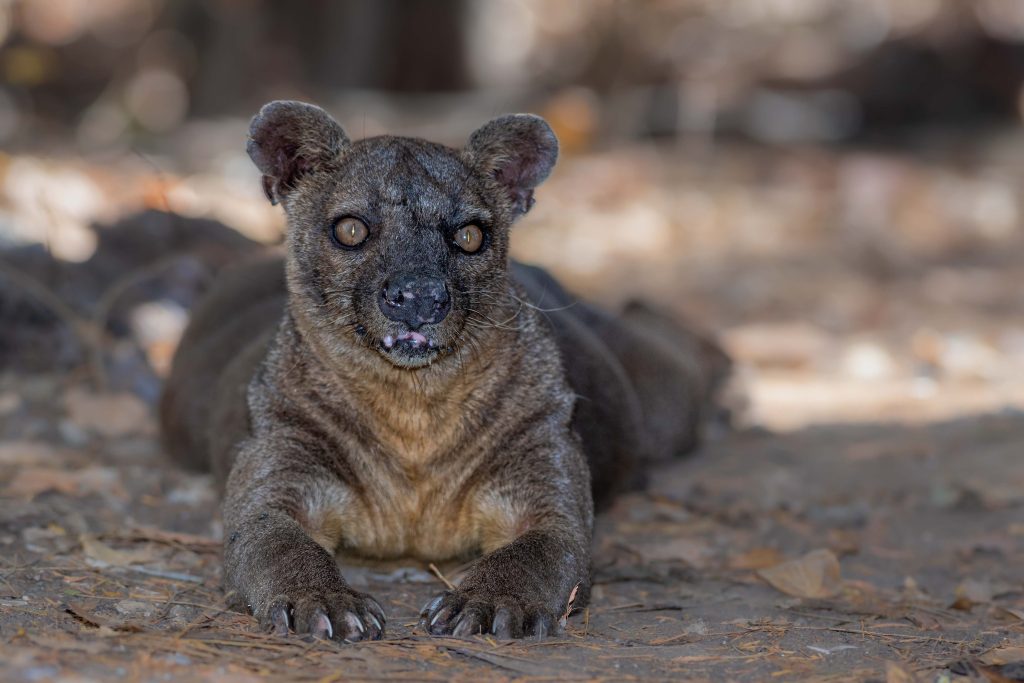
The fossa is Madagascar’s largest carnivore, a cat-like animal roughly the size of a small puma that hunts lemurs through the canopy. For all the resemblance, it is related to the mongoose family rather than to cats. Kirindy Forest Reserve near Morondava is the one place where sightings are realistic, particularly in October and November when the animals are mating.
What a Fossa Actually Is
Cryptoprocta ferox looks like the product of a cat and something else nobody can quite place. Males reach around eighty centimetres in the body with a tail of similar length, weighing up to twelve kilograms, with short reddish-brown fur, a small head and a long muscular tail.
The resemblance to cats is convergent rather than ancestral. Fossa belong to the Eupleridae, a family of Malagasy carnivores that descends from mongoose-like ancestors which reached the island once and radiated into the available niches. The same event produced the fanaloka, the falanouc and the ring-tailed mongoose.
What makes the fossa unusual among carnivores is its climbing. Semi-retractable claws and ankles that rotate allow it to descend trunks head-first and move through the canopy after lemurs, which are its main prey and which face no other predator of consequence.
An animal that looks like a puma, is related to mongooses, hunts primates through the treetops, and lives on one island. The fossa is what happens when evolution runs without competition.
Fossa Watching Tours at Kirindy
Kirindy Forest Reserve, roughly 50 to 60 km north of Morondava on the road toward Tsingy de Bemaraha, has a reputation far larger than its size, and the fossa is why.
Animals come through the camp area in the afternoon, investigating anything left around the restaurant, and visitors staying overnight see them with reasonable regularity. This is opportunistic wild behaviour rather than feeding, and guides keep people at a distance.
The reserve is privately managed by a Swiss forestry organisation, which means night walks run inside the forest itself rather than in adjacent community land as at the national parks. Decades of continuous research presence explain why the animals here treat people as background rather than threat.
Staying overnight is close to mandatory. Day visitors driving up from Morondava for a lunchtime walk consistently miss them, since the sightings cluster around late afternoon and evening.
Where Else Fossa Occur
Fossa live across most of Madagascar’s remaining forest, and are seen almost nowhere else with any reliability.
They are recorded at Ankarafantsika, Ankarana, Andasibe-Mantadia, Ranomafana, Masoala, Marojejy, Zahamena, Kirindy Mite, Mikea, Isalo and Andringitra. In practice a sighting at any of these is a matter of luck rather than planning.
Ankarafantsika and Ankarana are probably the next best after Kirindy, both with dry open forest that improves visibility. At the rainforest parks the combination of dense vegetation and a wide-ranging solitary animal makes encounters exceptional.
Kirindy Forest Reserve. The reliable site. Overnight stay required, October and November best, animals visit the camp area in the afternoon. Two hours north of Morondava on dirt road, combines with the Avenue of the Baobabs.
Everywhere else. Present at most forested parks, seen very rarely. Ankarafantsika and Ankarana offer the next best odds thanks to open dry forest. Treat any sighting elsewhere as a windfall rather than an expectation.
The Mating Season and When to Visit
October and November is the window that turns a fossa sighting from lucky into realistic, and the reason is a genuinely unusual mating system.
Females occupy a specific tree, often the same one used across years, and remain there for a period of days while males gather below and compete for access. The female exercises considerable choice over which males she accepts. This concentrates normally solitary and wide-ranging animals into one place for several weeks.
The practical consequence for visitors is that fossa are far more active, more visible and less cautious during this period. Guides at Kirindy know the trees being used and will take groups to them.
Outside those months the animals return to solitary ranging over large territories, and encounters fall back to chance.
Hunting, Diet and Behaviour
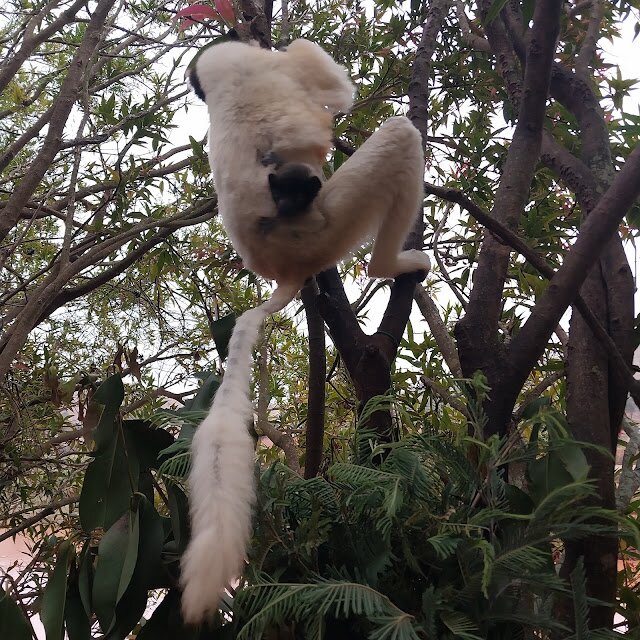
Lemurs make up a large share of the fossa’s diet, and it is the only predator capable of pursuing them through the canopy. Larger species including sifaka are taken, along with smaller nocturnal lemurs caught in tree holes.
Beyond primates the diet includes tenrecs, rodents, birds, reptiles and domestic poultry, which is the source of most conflict with rural communities. Fossa taking chickens are killed in retaliation across much of the country.
They hunt both by day and at night, which is unusual and reflects the activity patterns of their prey. Solitary hunting is the norm, though cooperative hunting by small groups has been documented, which is unusual among carnivores of this size.
Territories are large, with males ranging over areas that make population density low even in good habitat. This is the underlying reason sightings are so difficult: there are simply not many animals in any given stretch of forest.
Conservation and the Pressure on Forests
The fossa is classed as vulnerable and the population is estimated to be small and declining. The threat is habitat loss above everything else.
Dry deciduous forest in western Madagascar, which holds the strongest fossa populations, is among the most threatened habitat types in the world. Clearance for charcoal, agriculture and pasture has reduced it to fragments, and an animal needing large territories cannot persist in small patches.
Retaliatory killing after poultry losses adds pressure, as does hunting in some areas where fossa are eaten. Projections in the scientific literature have suggested the species could be lost within decades if forest loss continues at present rates.
Kirindy’s value is partly that the Swiss forestry management there has kept a substantial block of dry forest standing while surrounding areas were cleared, and the tourism revenue gives that protection an economic argument.
Fossa at Kirindy are wild animals behaving opportunistically around a camp, not habituated animals being fed. Keep food secured, do not attempt to attract them, and follow guide instructions on distance. Photography with flash at close range causes stress and is discouraged. The behaviour that makes sightings possible depends on the animals remaining wary rather than becoming dependent.
Fossa in Malagasy Culture and Folklore
The fossa occupies an odd place in Malagasy tradition, regarded with suspicion in much of the country and surrounded by beliefs that guides will relate if asked.
Stories attribute to it behaviours it does not have, and in some regions it is considered dangerous to people, which it is not. Fady, the system of local taboos, attaches to the animal in certain communities, and in a few places it is not eaten while in others it is hunted for meat.
The practical consequence of the folklore is mostly negative for the species. An animal already killed in retaliation for poultry losses attracts little sympathy when it is also regarded as sinister, and conservation work in rural areas involves addressing the reputation as much as the economics.
The name has travelled further than the animal. A film aimed at children gave the fossa an international profile as a villain, which conservationists have noted is not entirely helpful for a vulnerable species most people will never see.
The Other Malagasy Carnivores
The fossa is the largest of ten carnivore species in the Eupleridae family, all endemic and all descended from the same colonisation event.
The fanaloka, or Malagasy civet, is spotted and fox-like, found in eastern rainforest including Ranomafana, where guides occasionally locate one on night walks. The falanouc is a slender long-snouted insectivore recorded at Masoala and rarely seen anywhere.
The ring-tailed mongoose is the most visible of the group, reddish with a banded tail, active by day and turning up at Ranomafana and Ankarana. Grandidier’s mongoose is restricted to Tsimanampetsotsa and its immediate surroundings, boldly marked and inquisitive enough that visitors staying overnight sometimes get good views.
The narrow-striped mongoose occurs in western dry forest including Kirindy. Together these animals occupy the roles filled by cats, civets and weasels elsewhere, from one ancestral arrival.
Frequently Asked Questions
Where can I see a fossa?
Kirindy Forest Reserve north of Morondava is the one place with realistic odds, particularly during the October and November mating season. Staying overnight is close to mandatory, since animals come through the camp area in the late afternoon and evening. Day visitors from Morondava consistently miss them.
Is a fossa a cat?
No. It belongs to the Eupleridae, a family of Malagasy carnivores descended from mongoose-like ancestors that reached the island once and radiated into the available niches. The resemblance to cats is convergent evolution, produced by a similar predatory lifestyle rather than shared ancestry.
Are fossa dangerous to people?
No. They avoid humans and there is no meaningful risk to visitors. Madagascar has no dangerous large animals at all, which is one of the notable differences from mainland African destinations. The practical hazards on any Malagasy walk are terrain, heat and slippery trails.
When is the best time to see one?
October and November, during the mating season, when normally solitary animals concentrate around specific trees for several weeks and become far more active and visible. Guides at Kirindy know which trees are in use. Outside those months sightings fall back to chance even at Kirindy.
What does it cost to visit Kirindy?
Kirindy is a private reserve setting its own fees rather than following the national park schedule, with separate charges for day and night walks and a compulsory guide, all paid at the entrance in cash in Ariary. Accommodation at Kirindy Lodge inside the reserve is modest, with bungalow and dormitory options. The vehicle from Morondava is usually the larger cost.
Why are they so hard to see?
Low population density and large territories. Males range over areas big enough that even good habitat holds few animals, and they are solitary and wide-ranging outside the mating season. Add dense forest at most sites and encounters become exceptional almost everywhere except Kirindy.
Do fossa really eat lemurs?
Yes, and they are the only predator capable of pursuing them through the canopy. Semi-retractable claws and rotating ankles allow descent head-first down trunks and movement through branches. Larger lemurs including sifaka are taken, along with smaller nocturnal species caught in tree holes.
Is the fossa endangered?
Classed as vulnerable, with a small and declining population. Habitat loss is the main pressure, particularly the clearance of western dry forest for charcoal and agriculture, since an animal needing large territories cannot persist in fragments. Retaliatory killing after poultry losses adds to it.
Planning Your Trip
Seeing a fossa comes down to two decisions: going to Kirindy and sleeping there. Everything else is chance. Travellers who build an overnight into the drive between the Avenue of the Baobabs and Tsingy de Bemaraha get the best odds available in Madagascar at almost no extra travel cost.
Booking Your Madagascar Trip
The safari companies and tour operators listed on this website put trips like this together for a living and know which camps, guides and routes actually deliver. We are an independent guide to Madagascar; we do not book or sell tours ourselves.
When you are ready, arrange your safari, tour or holiday with one of the recognised operators listed here. Tell them your dates and what matters most, and a real person, not a form, will handle the itinerary, park bookings and logistics for you.