Night Walks and Nocturnal Wildlife in Madagascar
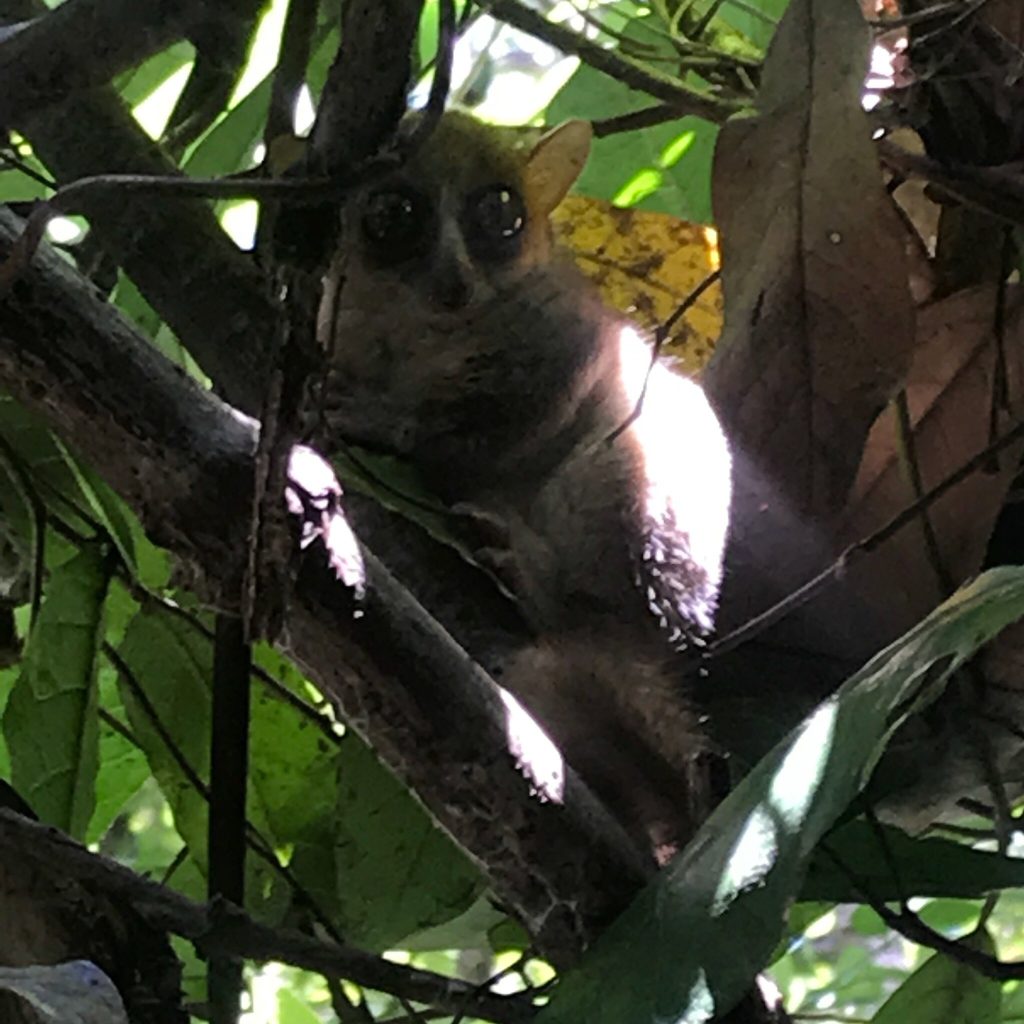
Half of Madagascar’s lemur species are nocturnal, along with most of the reptile and amphibian interest, which makes night walks a necessity rather than an optional extra on any wildlife trip. The complication is that they cannot happen inside national parks, since gates close in the afternoon. After-dark walking takes place in the community and private reserves next door, which are cheaper and often better.
Why Night Walks Happen Outside the Parks
This catches nearly every first-time visitor out. Madagascar National Parks closes its gates in the afternoon, so no walking of any kind happens inside a national park after dark.
What developed instead is a network of community and private reserves ringing the major parks, holding the same continuous forest and the same wildlife, where night walking is permitted.
At Andasibe the options are VOIMMA, set up and run by local villagers about 1.5 km from the park entrance, and Mitsinjo, run by a local association directly opposite the park office. Both are cheaper than the national park by day and considerably quieter.
At Ranomafana the walking happens along the RN25 forest strip near the entrance. At Amber Mountain and elsewhere, private reserves and lodge grounds serve the same purpose.
Kirindy Forest is the exception worth knowing. Because it is privately managed rather than a national park, night walks run inside the reserve itself, which is one reason it delivers wildlife the national parks cannot at that hour.
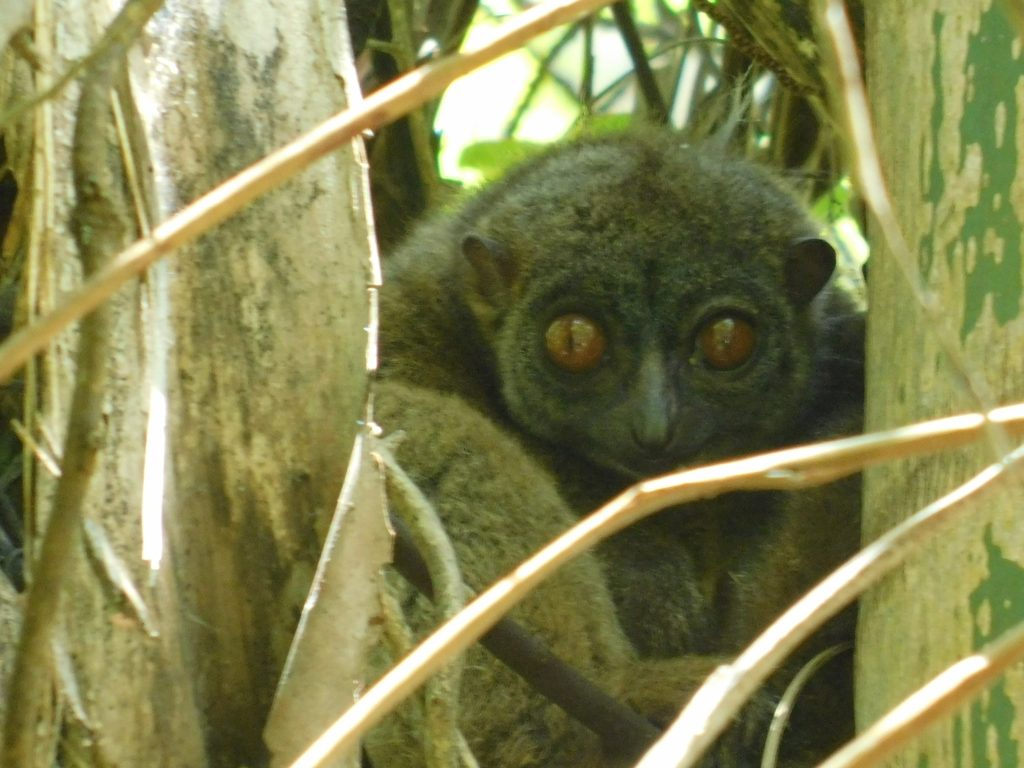
Half the lemur species in Madagascar are nocturnal. Skip the night walks and you see half the country’s primates.
Mouse Lemurs and the Nocturnal Primates
The small nocturnal lemurs are the reason to walk at night, and they are a completely different cast from the daytime species.
Mouse lemurs are the reliable find, tiny and quick in a torch beam, with eyes that reflect back brightly. Goodman’s mouse lemur at Andasibe, brown mouse lemurs at Ranomafana, grey mouse lemurs across the west and Madame Berthe’s at Kirindy Forest, the smallest primate on earth at around thirty grams.
Dwarf lemurs, fork-marked lemurs, woolly lemurs and sportive lemurs fill out the list, varying by park. Eastern woolly lemurs at Andasibe, Peyrieras’s woolly lemur at Ranomafana, and the Amber Mountain fork-marked lemur known for loud calls and an odd head-bobbing habit.
The aye-aye is the one everyone asks about and almost nobody sees. It occurs at Ranomafana, Masoala, Zahamena and elsewhere and is exceptionally rarely encountered. Palmarium on the Pangalanes Canal provisions them on a small island for night viewing, which is reliable and not a wild sighting.
Chameleons and Sleeping Reptiles
Night walks are where most of Madagascar’s reptile interest actually appears, and the reason is simple: sleeping chameleons are far easier to find than awake ones.
By day a chameleon against foliage is close to invisible even to a guide. At night they pale considerably and sit exposed on the ends of twigs, where a torch beam picks them out from several metres away, often at eye level and in colours they never show while awake.
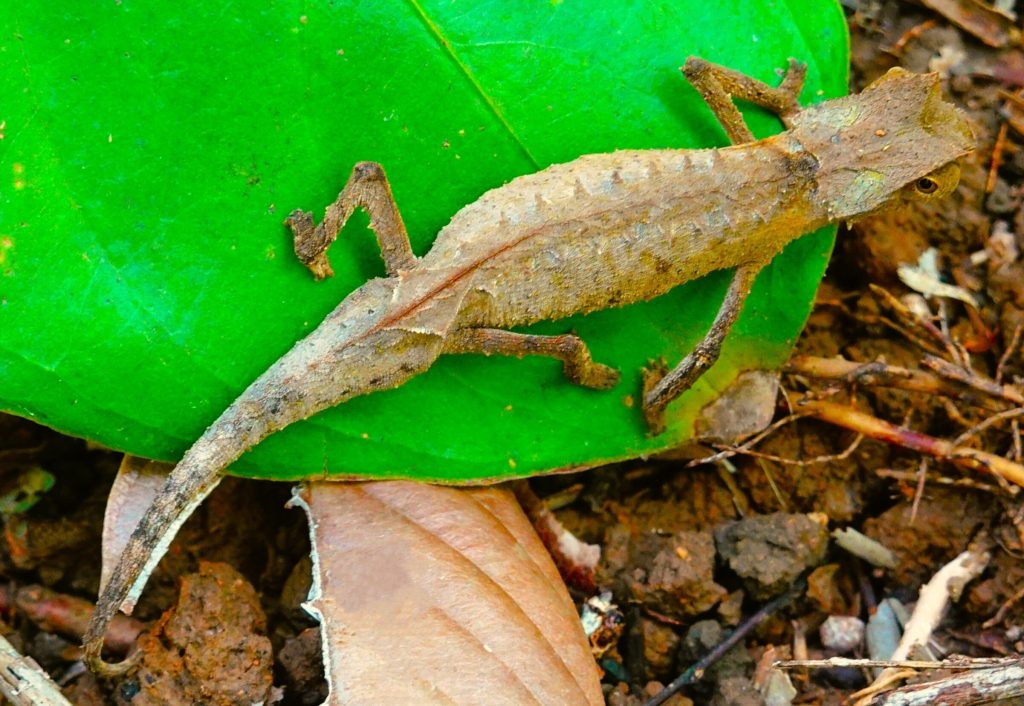
Parson’s chameleon, nose-horned chameleons, jewel chameleons and the tiny Brookesia leaf chameleons all turn up this way, along with the leaf-tailed geckos whose camouflage is the best in the natural world.
Frogs are the other half. From November through March the forest at night is loud with them, and tomato frogs, painted mantellas and Boophis tree frogs become considerably easier to find.
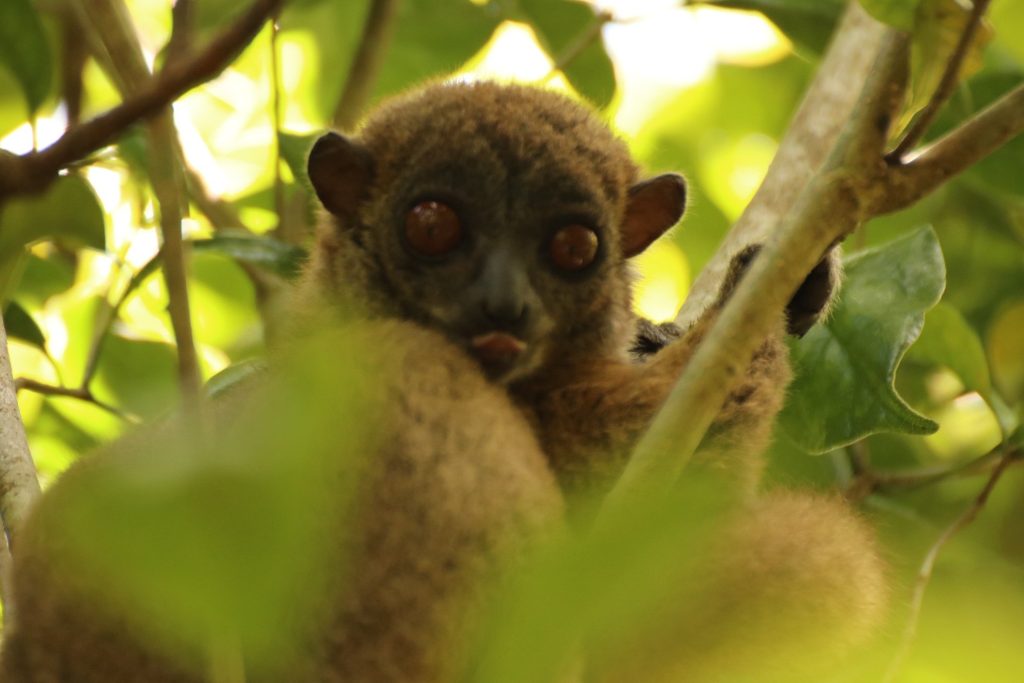
Best night walks. VOIMMA and Mitsinjo at Andasibe for mouse lemurs and woolly lemurs, Ranomafana’s roadside strip for the same plus frogs, Kirindy Forest for the giant jumping rat and Madame Berthe’s mouse lemur inside the reserve itself.
Best season. November through March, when warm wet conditions make reptiles and amphibians active and the frog chorus becomes loud. June to August sees many species sluggish or hidden, particularly at altitude.
Kirindy and the Nocturnal Specialities
Kirindy Forest Reserve north of Morondava delivers the strongest night walk in Madagascar, and being privately managed is the reason it can.
The giant jumping rat is the headline, roughly rabbit-sized, moving in hops and capable of launching itself close to a metre when startled. It occurs nowhere else and visits the camp area at night, and lodge staff will wake guests when one appears.
Madame Berthe’s mouse lemur was rediscovered in this forest and weighs about thirty grams. It is endangered and genuinely difficult to find even here, so treat a sighting as a bonus.
The fossa is active both day and night and comes through the camp area in the afternoon and evening, which is why staying overnight is close to mandatory for anyone hoping to see one.
Fork-marked lemurs, Coquerel’s dwarf lemurs, fat-tailed dwarf lemurs and sportive lemurs fill out the list.
What to Bring and How Night Walks Work
Bring your own torch rather than relying on the guide’s. A headlamp keeps hands free and spare batteries matter, since there is no mains power at most park camps and lodges run generators for limited hours.
A red filter disturbs nocturnal animals less than white light and is worth having. Some operations prohibit flash photography around nocturnal lemurs entirely, whose eyes are adapted to very low light, and guides will say so.
Walks typically run one to two hours on uneven ground in the dark, which is worth knowing for anyone unsteady on their feet. Closed shoes rather than sandals.
Long sleeves and repellent matter more after dark, since the malaria mosquito feeds between dusk and dawn. Applying repellent before setting out rather than partway through is the sensible habit.

Night walks along the roadside strip at Andasibe get crowded between late August and December, with several groups converging on the same mouse lemur. VOIMMA and Mitsinjo are quieter and hold the same wildlife. Ask your lodge to arrange a start either before or after the main rush, and expect the walk to be more rewarding for it.
Ethics and Disturbing Nocturnal Wildlife
Nocturnal animals are more vulnerable to disturbance than daytime species, and practice varies between operations.
Torchlight held on an animal for extended periods causes stress, particularly with mouse lemurs and other species whose eyes are adapted to near-total darkness. Good guides move the beam away between viewings and keep groups moving.
Flash photography is the sharper question. It produces the images people want and it stresses the animals. Use it sparingly, never repeatedly on one individual, and follow guide instructions where flash is prohibited.
Feeding to attract nocturnal animals is prohibited inside national parks and should be declined anywhere it is offered. The behaviour that makes sightings possible at Kirindy depends on animals remaining wild rather than becoming dependent.
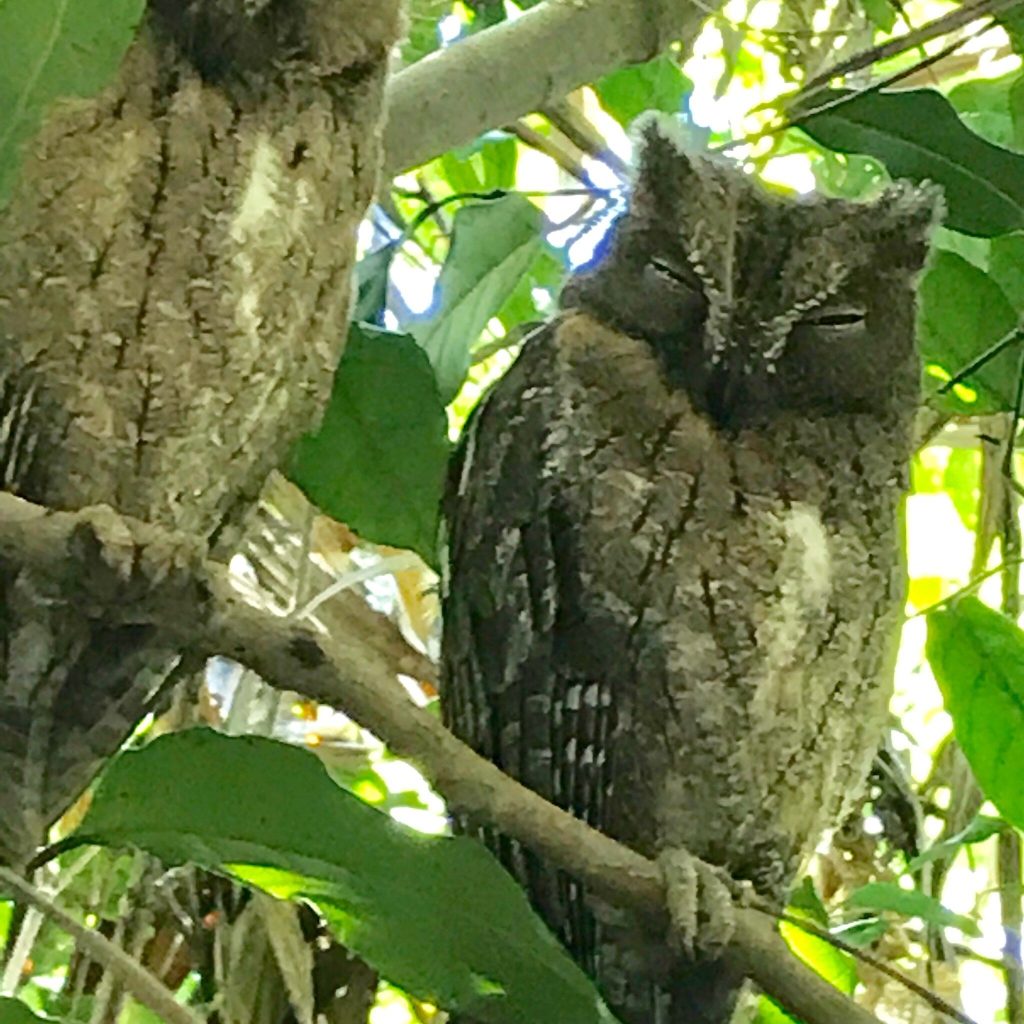
Best Time for Night Walks
Season affects night walks more than day circuits, because reptiles and amphibians drive so much of what you see.
November to March. The strongest window. Warm wet conditions make reptiles and amphibians active, the frog chorus becomes loud and chameleons are everywhere. The trade-off is rain, mud and cyclone risk on the east.
September and October. Reptiles becoming active again after the cool months, infant lemurs appearing, and settled weather. The best balance of conditions and wildlife activity for most visitors.
April to June. Rains easing with amphibians still active and forest at its greenest. Fewer visitors on the roadside walks. A good shoulder window.
July and August. Coldest months, when many reptiles become sluggish or stay hidden, particularly at altitude. Nocturnal lemurs are still findable but the reptile list shortens considerably.
Two hours is the usual length and it is enough. Walking slowly in the dark with a torch is more tiring than the distance suggests, and guides pace the route to what a group can sustain. Anyone wanting longer should ask in advance rather than partway through, since the community reserves run to their own schedules.

Frequently Asked Questions
Can I do a night walk inside a national park?
No. Madagascar National Parks closes its gates in the afternoon, so all after-dark walking happens in community and private reserves adjacent to the parks. At Andasibe that means VOIMMA or Mitsinjo, at Ranomafana the roadside forest strip. Kirindy Forest is the exception, being privately managed, where night walks run inside the reserve.
What does a night walk cost?
At the community reserves around Andasibe, roughly 20,000 to 25,000 Ariary per group for a guide. At Ranomafana the peripheral walk is commonly around 40,000 Ariary per group. These are separate from national park entry and paid in cash in Ariary. Kirindy sets its own rates as a private reserve.
What will I see?
Mouse lemurs are the reliable find, along with dwarf, woolly, fork-marked and sportive lemurs depending on the park. Sleeping chameleons at eye level in colours they never show by day, leaf-tailed geckos, and frogs in numbers during the wet months. Aye-ayes are theoretically possible and almost never seen.
Are night walks worth doing?
Yes, and skipping them means missing half of Madagascar’s lemur species along with most of the reptile and amphibian interest. Many visitors rate the night walks above the daytime circuits, particularly for chameleons, which are far easier to find asleep than awake.
When is the best season?
November through March, when warm wet conditions make reptiles and amphibians active and the frog chorus is loud. September and October offer the best balance of settled weather and wildlife activity. July and August see many reptiles sluggish or hidden, particularly at altitude, though nocturnal lemurs remain findable.
What should I bring?
Your own headlamp with spare batteries rather than relying on the guide’s, ideally with a red filter which disturbs animals less. Closed shoes for uneven ground in the dark. Long sleeves and repellent, since the malaria mosquito feeds between dusk and dawn. There is no mains power at most park camps.
Can I use flash photography?
Sparingly and never repeatedly on one animal. Nocturnal lemurs have eyes adapted to very low light and flash causes real stress. Some operations prohibit it around them entirely and guides will say so. A red-filtered torch gives you something to focus by without the same impact.
Where is the best night walk in Madagascar?
Kirindy Forest, because it is private and the walking happens inside the reserve, and because it holds the giant jumping rat, Madame Berthe’s mouse lemur and the best fossa odds in the country. Among the national park peripheries, VOIMMA and Mitsinjo at Andasibe are the most productive and considerably quieter than the roadside strip.
Planning Your Trip
Night walks are the cheapest improvement available to a Madagascar wildlife trip and the one most itineraries treat as optional. Building one into every park stop roughly doubles the species you see, and at Kirindy it is the whole reason to be there.
Booking Your Madagascar Trip
The safari companies and tour operators listed on this website put trips like this together for a living and know which camps, guides and routes actually deliver. We are an independent guide to Madagascar; we do not book or sell tours ourselves.
When you are ready, arrange your safari, tour or holiday with one of the recognised operators listed here. Tell them your dates and what matters most, and a real person, not a form, will handle the itinerary, park bookings and logistics for you.