Special Reserves of Madagascar
Alongside the national parks, Madagascar maintains a network of special reserves protecting habitat too small or too specific for full park status. Most receive almost no visitors, several have no infrastructure at all, and a few hold species found nowhere else. Ankarana and Analamerana in the north are the two worth planning around; the rest are for travellers with time, patience and a reason.
What a Special Reserve Is
Madagascar’s protected areas fall into several categories. National parks are the visitor-facing ones with circuits, guides and fee structures. Special reserves sit a tier below, created to protect a particular habitat or species rather than a broad area.
In practice this means smaller boundaries, less infrastructure and far fewer visitors. Some have accredited guides and marked trails. Several have neither, and arrangements must be made through regional offices or local communities in advance.
A third category, integral nature reserves, is closed to visitors entirely and exists purely for conservation. Tsaratanana falls into this group.
Community reserves are different again, owned and run by villages rather than the state. Anja near Ambalavao is the outstanding example and is covered separately, since it receives more visitors than most national parks.
Most of Madagascar’s special reserves see fewer visitors in a year than Andasibe sees in a week. That is the appeal and the difficulty in equal measure.
Ankarana Special Reserve
Ankarana is the exception that proves the rule: a special reserve with full visitor infrastructure, sitting directly on the RN6 about 108 km south of Antsiranana, and among the more rewarding protected areas in Madagascar.
It protects limestone tsingy rising 50 to 60 metres above the longest cave system in Africa, mapped at over 100 km, with underground rivers holding blind cave fish that traded their eyes for sensory hairs.
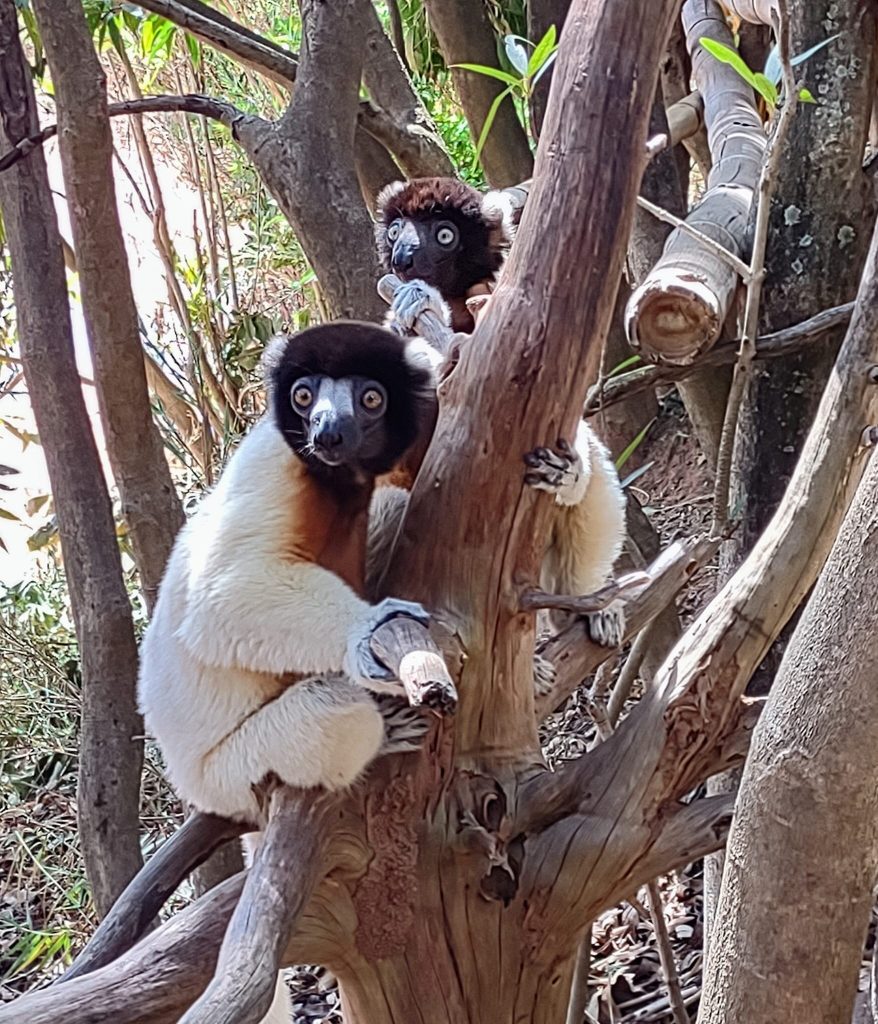
Crowned lemurs are close to certain, and the reserve holds most of the world population. Eleven lemur species occur in total, with over 100 birds recorded.
The western sector opens only July to November when the river crossing drops, and the caves close through the rains from December to April because of flash flooding. It joined the UNESCO Andrefana Dry Forests listing in 2023.

Analamerana Special Reserve
Analamerana lies in the far north not far from the Red Tsingy and protects dry forest holding Perrier’s sifaka, a critically endangered lemur with a range measured in a handful of forest fragments.
It shares the UNESCO Andrefana Dry Forests listing with Ankarana, and the two reserves together protect much of what remains of the northern dry forest system.
Access is difficult and infrastructure minimal, which is why so few travellers go. Arrangements are made through operators in Diego Suarez, and anyone with a serious interest in lemurs and several spare days can reach it.
For most visitors it registers as a name on the horizon from the Red Tsingy viewpoint rather than a destination.
Visitable with normal planning. Ankarana, with circuits, guides and accommodation nearby. Berenty and Kirindy Forest, both private rather than state reserves, with lodges on site.
Reachable with effort. Analamerana for Perrier’s sifaka, Bezà Mahafaly for research-linked access, Manombo and Tampolo on the east coast. All need arrangements through operators or regional offices.
Closed in practice. Tsaratanana, an integral nature reserve open to researchers rather than visitors. Kalambatritra and Ambohitantely, both remote with minimal or no facilities.
Bezà Mahafaly Special Reserve
Bezà Mahafaly in the southwest is small and scientifically important out of proportion to its size, protecting gallery forest and spiny thicket in Mahafaly country.
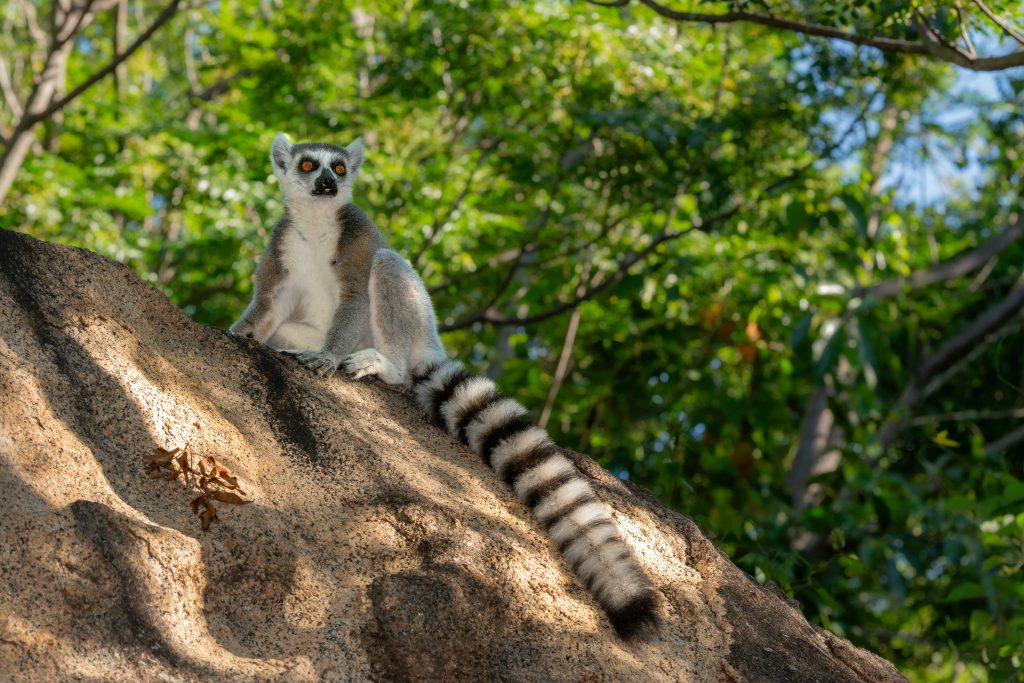
It has hosted long-running research on ring-tailed lemurs and Verreaux’s sifaka, with individual animals monitored across decades, producing much of what is known about how these species live in the wild.
Visitor facilities are limited and access is arranged through the research station rather than a park office. Travellers who reach it find ring-tailed lemurs and sifaka in gallery forest with almost nobody else present.
It is a genuine alternative for anyone uncomfortable with Berenty‘s extreme habituation and prepared for considerably less comfort.
Ambohitantely Special Reserve
Ambohitantely northwest of Antananarivo protects one of the last surviving patches of highland forest, a fragment of what once covered the central plateau before centuries of clearance.
Its value is largely to researchers. The highlands are the weakest region in Madagascar for wildlife precisely because the forest has gone, and Ambohitantely shows what has been lost.
Access is possible as a day trip from the capital with arrangements made in advance, though facilities are minimal and the species list is short compared with the eastern rainforests.
For visitors with limited time, Andasibe three to four hours east delivers considerably more.
Manombo and Tampolo on the East Coast
Manombo Special Reserve in the southeast protects lowland rainforest and holds several lemur species including populations of conservation concern. It sits in a heavily fragmented area and has been the subject of restoration work.
Tampolo, sometimes classified as a forest station rather than a reserve, protects littoral forest on the east coast near Fenoarivo Atsinanana, a habitat type reduced to fragments along that shoreline.
Both have limited infrastructure and see few visitors. They matter for what they protect rather than what they offer travellers, and access needs arranging locally.
Littoral forest as a whole is among the most threatened habitats in Madagascar, with the fragments at Sainte Luce and Mandena near Fort Dauphin more accessible to visitors than Tampolo.

Most special reserves cannot be visited on the strength of turning up. There are no gate offices, no guide rotas and often no marked trails. Arrangements go through Madagascar National Parks regional offices, research stations or local operators, and need making weeks rather than days in advance. Anyone building one into an itinerary should treat the access as the main planning problem.
Kalambatritra and Tsaratanana
Kalambatritra in the southeast highlands is among the least visited protected areas in the country, remote and with next to no visitor infrastructure. It protects montane forest and is known primarily from surveys.
Tsaratanana in the north is an integral nature reserve, the strictest category, closed to general visitors and accessible only for research. It contains Maromokotro at 2,876 metres, the highest point in Madagascar.
Travellers occasionally ask about climbing Maromokotro. It is a serious remote expedition rather than a trek, requiring permits and considerable logistics, and it is not comparable to Pic Boby at Andringitra, which is the highest summit ordinary walkers can reach.
In practical terms both reserves should be treated as closed.
Private and Community Reserves
Several of Madagascar’s best wildlife sites are neither national parks nor special reserves, and the distinction matters because different rules apply.
Kirindy Forest Reserve north of Morondava is privately managed by a Swiss forestry organisation, which is why night walks run inside the reserve rather than outside it as at the national parks. It is the one realistic place to see a fossa.
Berenty near Fort Dauphin is family-owned, protecting tamarind gallery forest surrounded by sisal, with around 500 ring-tailed lemurs habituated to the point of sitting on bungalow verandas.
Anja Community Reserve near Ambalavao is village-owned and holds the densest ring-tailed lemur population in Madagascar. VOIMMA and Mitsinjo at Andasibe are community-run and where the night walks happen.
Nahampoana near Fort Dauphin, Reniala near Ifaty and the Honko mangrove reserve near Toliara all operate on similar lines, with community or private management and easier access than the state special reserves.
The category distinctions matter practically as well as administratively. National parks have fee structures, accredited guides and published circuits. Special reserves may have none of these, which means arrangements go through regional offices and costs are agreed rather than posted. Travellers used to arriving at a gate and paying a rate should expect something different.
Frequently Asked Questions
What is the difference between a national park and a special reserve?
National parks are the visitor-facing protected areas with circuits, accredited guides and standard fees. Special reserves protect a specific habitat or species, are usually smaller, and have far less infrastructure. Integral nature reserves such as Tsaratanana are closed to visitors entirely and exist purely for conservation.
Which special reserves can I actually visit?
Ankarana without difficulty, since it has full infrastructure and sits on the RN6. Analamerana and Bezà Mahafaly with effort and advance arrangements. Manombo, Tampolo and Ambohitantely with local arrangements and minimal facilities. Kalambatritra and Tsaratanana should be treated as closed.
What do they cost?
Where fees apply they follow the Madagascar National Parks structure, typically 45,000 Ariary per adult per day with guides charged separately per group. Ankarana follows the standard rate. At reserves without gate offices, arrangements and costs are agreed through regional offices or research stations in advance. Everything is cash in Ariary.
Is Perrier’s sifaka worth the effort of reaching Analamerana?
For anyone seriously interested in lemurs, yes, since it is critically endangered with a range covering a handful of forest fragments and very few visitors ever see one. For general travellers, no. Access is difficult, infrastructure is minimal, and the northern circuit offers considerably more accessible wildlife at Ankarana and Amber Mountain.
Can I climb Maromokotro, the highest mountain?
It sits inside Tsaratanana, an integral nature reserve closed to general visitors, and reaching it is a remote expedition requiring permits and serious logistics rather than a trek. Pic Boby at Andringitra, 2,658 metres, is the highest summit ordinary walkers can reach and is the practical objective.
What is the best alternative to Berenty?
Anja Community Reserve on the RN7 for ring-tailed lemurs at the highest density in Madagascar, village-owned and taking ninety minutes. Bezà Mahafaly in the southwest for the same species in gallery forest with research-linked access and minimal comfort. The Mandrare valley camps near Fort Dauphin for wilder forest with Antandroy guides.
How do I arrange a visit?
Through Madagascar National Parks regional offices, through the research stations where those exist, or through operators based in the nearest city. Weeks rather than days of notice. There are no gate offices at most special reserves and turning up unannounced does not work.
Are private reserves better than state ones?
Different rather than better. Private reserves like Kirindy and Berenty have accommodation, easier access and in Kirindy’s case permission for night walks inside the boundary. State parks have larger areas and stricter rules on feeding and handling. Community reserves like Anja channel revenue directly to the villages protecting the forest.
Planning Your Trip
For nearly every visitor, Ankarana is the only special reserve worth building into an itinerary, and it functions like a national park in everything but name. The others reward researchers, specialists and travellers with weeks rather than days, and the access is the obstacle rather than the walking.
Booking Your Madagascar Trip
The safari companies and tour operators listed on this website put trips like this together for a living and know which camps, guides and routes actually deliver. We are an independent guide to Madagascar; we do not book or sell tours ourselves.
When you are ready, arrange your safari, tour or holiday with one of the recognised operators listed here. Tell them your dates and what matters most, and a real person, not a form, will handle the itinerary, park bookings and logistics for you.