Best Beaches in Madagascar

Madagascar has 5,000 km of coastline and very little built on it. The strongest beaches are on the islands: Île aux Nattes off Sainte-Marie, Andilana on Nosy Be, and the sandbar at Nosy Iranja that appears at low tide and vanishes at high. The mainland coast holds Ifaty’s reef, Ramena’s Three Bays and Libanona at Fort Dauphin. Nearly all of them stay quiet even in high season.
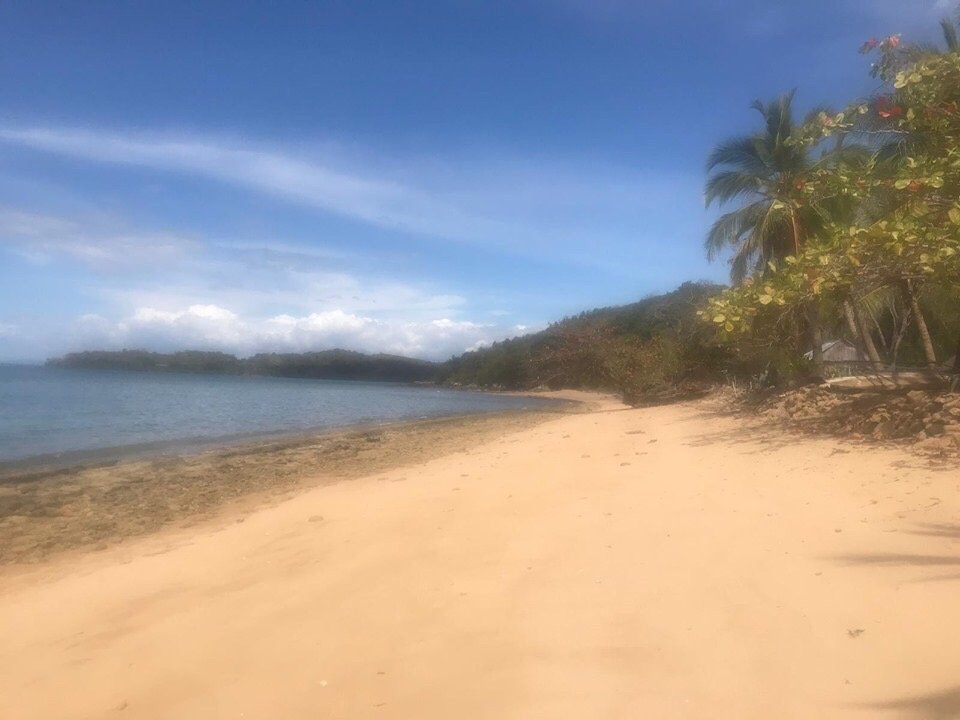
Île aux Nattes and the East Coast Islands
Île aux Nattes, known as Nosy Nato, is rated by many travellers as holding the finest beaches in Madagascar. Three square kilometres off the southern tip of Île Sainte-Marie, reached by a ten-minute pirogue crossing, with no roads and no cars.
Paradise Cove and Kintana Cove are the named beaches, both shallow, calm and usually empty. White sand curves between coconut palms leaning over a turquoise lagoon, with waves breaking on the reef offshore and safe swimming inside it.
Walking the whole shoreline takes two to three hours, and the best stretches are on the northern side. Guesthouses sit directly on the sand at a fraction of Nosy Be prices, and there are no ATMs anywhere on the island.
Île Sainte-Marie itself has calm lagoon beaches along the west coast, while the east side is wilder with dunes and mangroves. Between July and September humpback whales fill the channel, sometimes visible from the beach.
No roads, no cars, no ATMs. Île aux Nattes is what most people imagine when they picture an Indian Ocean island, and almost nobody is on it.
Nosy Be and the Northern Archipelago
Andilana at the northwestern tip of Nosy Be is the best beach on the main island, a long stretch of white sand with clear turquoise water and the larger resorts behind it.
Ambatoloaka on the west coast is the busiest, with bars, restaurants and dive operators, which suits some visitors and not others. Madirokely beside it is calmer, and Ambondrona in a small bay to the north is quieter still with views across to the mainland hills.
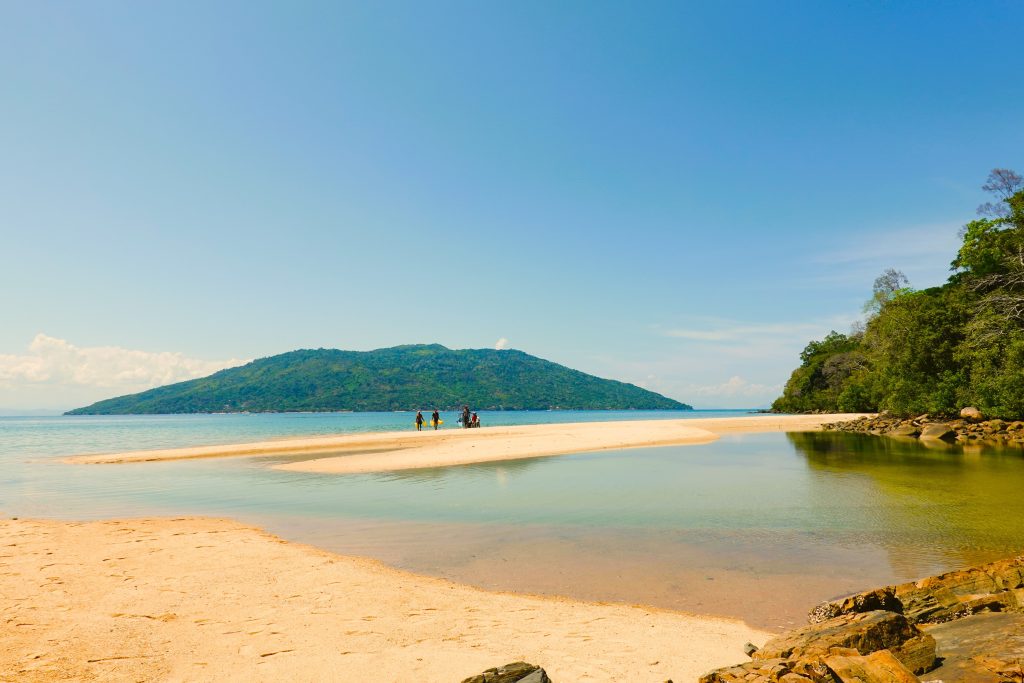
Nosy Iranja is the one people photograph. Two islets joined by a sandbar reported at between one and two kilometres, walkable at low tide and submerged at high, ninety minutes by boat from Nosy Be. Green and hawksbill turtles nest on the beaches, and an overnight bivouac gives you the island after the day boats leave.

Nosy Tanikely is the marine reserve, with coral gardens a few metres off the sand and reliable green turtles. Nosy Sakatia is the quiet alternative, known for swimming with turtles.
For the best sand. Île aux Nattes, Andilana on Nosy Be, Nosy Iranja’s sandbar. All white sand, calm water and minimal development. Nattes is the cheapest of the three by a wide margin.
For snorkelling off the beach. Nosy Tanikely, Ifaty and Mangily, and the Masoala marine reserves. Reef within easy swimming distance and no boat needed.
For emptiness. The Three Bays near Diego Suarez, Salary Bay and Andavadoaka north of Ifaty, and the Masoala peninsula. Wild, undeveloped and reached by rough road or boat.
The Southwest: Ifaty, Anakao and the Reef Coast
Ifaty and Mangily sit 27 to 30 km north of Toliara with a coral reef roughly 200 metres offshore, which makes snorkelling straightforward from the beach. Beach hotels line the shore and this is the natural finish to an RN7 trip.
Anakao is reached by boat from Toliara in about an hour, a Vezo fishing village with beach lodges, access to Nosy Ve for its red-tailed tropicbird colony, and inland access to Tsimanampetsotsa National Park.
Salary Bay and Andavadoaka run north with progressively fewer visitors and less infrastructure, which is the appeal for travellers who want genuine isolation.
This is the driest part of Madagascar, hot and sunny almost year-round. Note that Toliara itself has no swimming beach worth the name, since the city shoreline is tidal flats.
The North Coast and the Three Bays
Ramena is a fishing village forty-five minutes from Diego Suarez with a beach, restaurants and a relaxed atmosphere, and it serves as the departure point for the Emerald Sea.
Les Trois Baies runs east along the peninsula: Sakalava Bay, Dunes Bay and Pigeon Bay. Wild beaches with turquoise water and almost nobody on them, reachable by four-wheel drive or on foot for anyone with the time.
Sakalava Bay is the best kitesurfing spot in Madagascar, driven by the Varatraza trade wind from May to November. That same wind makes the boats to the Emerald Sea wet and cold on the afternoon return, so kitesurfers and swimmers want opposite dates.
The islets of the Emerald Sea itself have beaches to themselves, and outside peak season you will often have one entirely alone.
Fort Dauphin and the Southeast
Libanona is ten minutes from Fort Dauphin town centre and widely rated the finest town beach in Madagascar. White sand, clear water, sheltered from the wind and good for swimming, with sunsets that draw the whole town.
Vinanibe to the north has a powerful swell and is where local surfers go, while Ankoba is quieter and good for beachcombing.
Lokaro Bay is the wilder option, reached on a full-day excursion by boat through lagoons and mangroves to the fishing village of Evatraha, then three or four hours on foot across creeks and headlands to an isolated bay ringed by hills with hidden coves.
The southeast has a humid microclimate quite unlike the arid country immediately west, which keeps it green year-round.
Not every Malagasy beach is safe for swimming. Toamasina on the east coast has strong currents, port pollution and sharks, so Foulpointe 58 km north is where people swim. Morondava’s beach has strong currents. The Bay of Antongil at Masoala has a shark reputation. Take local advice at every new beach rather than assuming, and swim where residents do.
Beaches with Rainforest Behind Them
Masoala is the outlier and worth knowing about. Three marine reserves sit off a peninsula holding the largest protected rainforest in Madagascar, and you walk out of jungle onto sand with around a hundred coral species offshore.
Tampolo, Ambodilaitry and Ifaho are the reserves, with green and hawksbill turtles in the water and dolphins common. Sea kayaking runs along a coast where granite boulders drop into clear sea with forest overhanging.
The access is the catch: boat crossings of one to two hours from Maroantsetra that cancel in rough seas, few lodges, and buffer days necessary rather than prudent.
On a smaller scale, Lokobe on Nosy Be and Nosy Komba both put forest directly behind beaches, which no mainland coastal destination offers.
Beach Accommodation and Where to Stay
Beach accommodation varies enormously in price for similar standards, and location drives it more than quality.
Nosy Be is the most expensive part of Madagascar, with resorts at Andilana and a wider range around Ambatoloaka. Île Sainte-Marie is cheaper with small hotels rather than resorts, and Île aux Nattes cheaper still with beachfront guesthouses.
On the mainland, Ifaty and Mangily have beach hotels at moderate rates, and Anakao is reached by boat with lodges on the sand. Ramena near Diego Suarez has beach accommodation close to the Emerald Sea departures.
Book July to October well ahead, and months in advance for Sainte-Marie during whale season when the island fills. The quieter southwest beaches and Île aux Nattes can usually be arranged closer to travel.
Remote properties charge more than their comfort suggests because supply logistics dominate, and several include compulsory half board because there is nowhere else to eat.
Best Time for the Beaches
Beach timing runs differently from the wildlife calendar, and the coasts differ from each other considerably.
September to November. The strongest window across every coast. Warm, dry, calm seas and the best underwater visibility. Whale sharks appear off Nosy Be. Quieter than the mid-year peak.
April to June. Seas settling after the rains, good visibility, few visitors and lower prices. Comfortable temperatures everywhere. A reliable shoulder window.
July to September. Humpback whales at Sainte-Marie and Nosy Be. Trade winds in the far north make crossings rough and stir the shallows. Busiest and most expensive period, particularly on Sainte-Marie.
December to March. Cyclone season on the east, when Sainte-Marie becomes unreliable and places close. The far north around the Emerald Sea has its calmest water and clearest visibility. Nosy Be sees less impact than the east.
Frequently Asked Questions
Which is the best beach in Madagascar?
Île aux Nattes off Sainte-Marie is rated highest by many travellers, with white sand, calm shallow water, no cars and beaches that are usually empty. Andilana on Nosy Be is the best on the main island. Nosy Iranja’s sandbar between two islets is the most photographed. Libanona is the finest town beach.
Are Madagascar’s beaches crowded?
Rarely, which is the main advantage over comparable Indian Ocean destinations. Ambatoloaka on Nosy Be gets busy and Sainte-Marie fills during whale season from July to September. Everywhere else, including the Three Bays, Salary Bay and Île aux Nattes, stays quiet even in high season.
Where can I snorkel straight from the beach?
Nosy Tanikely, where the reef sits a few metres off the sand and green turtles are reliable. Ifaty and Mangily, with the barrier reef roughly 200 metres offshore. The Masoala marine reserves, where around a hundred coral species sit off beaches with rainforest behind them. None needs a boat or certification.
Is it safe to swim everywhere?
No. Toamasina on the east coast is unsafe with currents, pollution and sharks, so Foulpointe further north is where people swim. Morondava has strong currents. The Bay of Antongil at Masoala has a shark reputation. Island lagoons inside reefs are calm and safe as a rule. Take local advice at each beach.
Which beaches are cheapest?
Île aux Nattes by a wide margin, with beachfront guesthouses at a fraction of Nosy Be prices, though there are no ATMs so bring cash. Île Sainte-Marie is better value than Nosy Be across the board, which is the most expensive part of Madagascar across every category.
When should I go for the beaches?
September to November for the best all-round conditions on every coast, with warm water, calm seas and good visibility. April to June is the value shoulder. July to September brings whales but rougher water in the north. December to March is cyclone season on the east, though the far north is at its clearest.
Can I combine beaches with wildlife?
Easily, and it is the standard trip structure. Andasibe for indri then a flight to Nosy Be or Sainte-Marie is the most common pairing. Nosy Be has Lokobe rainforest on the island itself. Masoala combines both in one place, though it needs a week and boat access that depends on weather.
Do I need to book beach accommodation ahead?
For July to October and for Sainte-Marie during whale season, yes, months in advance. Île aux Nattes and the quieter southwest beaches can usually be arranged closer to travel. Domestic flights are the real constraint rather than rooms, so book those first.
Planning Your Trip
Madagascar’s beaches are best treated as the second half of a trip rather than the whole of one. The islands deliver sand and water that compete with anywhere in the Indian Ocean, and what makes them worth the trip is what you did in the forest first.
Booking Your Madagascar Trip
The safari companies and tour operators listed on this website put trips like this together for a living and know which camps, guides and routes actually deliver. We are an independent guide to Madagascar; we do not book or sell tours ourselves.
When you are ready, arrange your safari, tour or holiday with one of the recognised operators listed here. Tell them your dates and what matters most, and a real person, not a form, will handle the itinerary, park bookings and logistics for you.