Turtle Watching in Madagascar
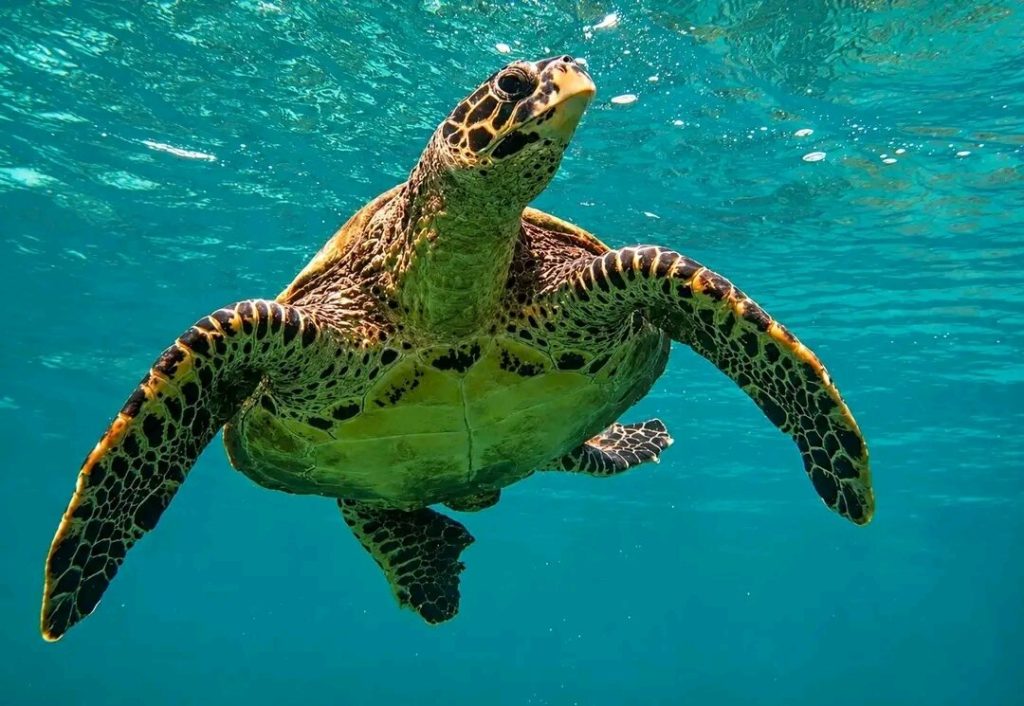
Five sea turtle species occur in Malagasy waters and two nest regularly: green turtles and hawksbills. Both are present year-round around Nosy Be, so snorkelling with them needs no particular season. Nesting is different, with Nosy Iranja the main site and the two species using different months. Seeing a female lay or hatchlings emerge requires an overnight stay and some luck.
Which Turtles and Where
Green turtles, Chelonia mydas, are the abundant species and the ones snorkellers meet. They are herbivores, grazing seagrass meadows, which is why the shallow beds off Nosy Sakatia hold them so reliably.
Hawksbills, Eretmochelys imbricata, are carnivores feeding mainly on sponges, and are critically endangered. They nest in smaller numbers but the Malagasy sites matter regionally, since hawksbill nesting is rare in the Comoros Basin.
Loggerheads occur in smaller numbers and prefer deeper water, occasionally nesting on Malagasy beaches. Olive ridleys are recorded but uncommon.
Leatherbacks, the largest of all sea turtles and jellyfish specialists, are seen very rarely off the Malagasy coast, sometimes between November and March.
The distinction that matters for planning is between seeing turtles in the water, which is easy and year-round, and seeing them nest, which is seasonal and needs a night.
Green turtles nest from around June to October, hawksbills from October to February. The two species use opposite halves of the year, which means there is almost always something nesting somewhere.
Snorkelling with Turtles
This is the accessible half and needs no season at all, since both main species are present around Nosy Be year-round.
Nosy Sakatia is the standout, with shallow seagrass beds at two to three metres where green turtles graze calmly. Snorkellers swim above them while they feed, and the Ambohibe protection zone covers the grounds.
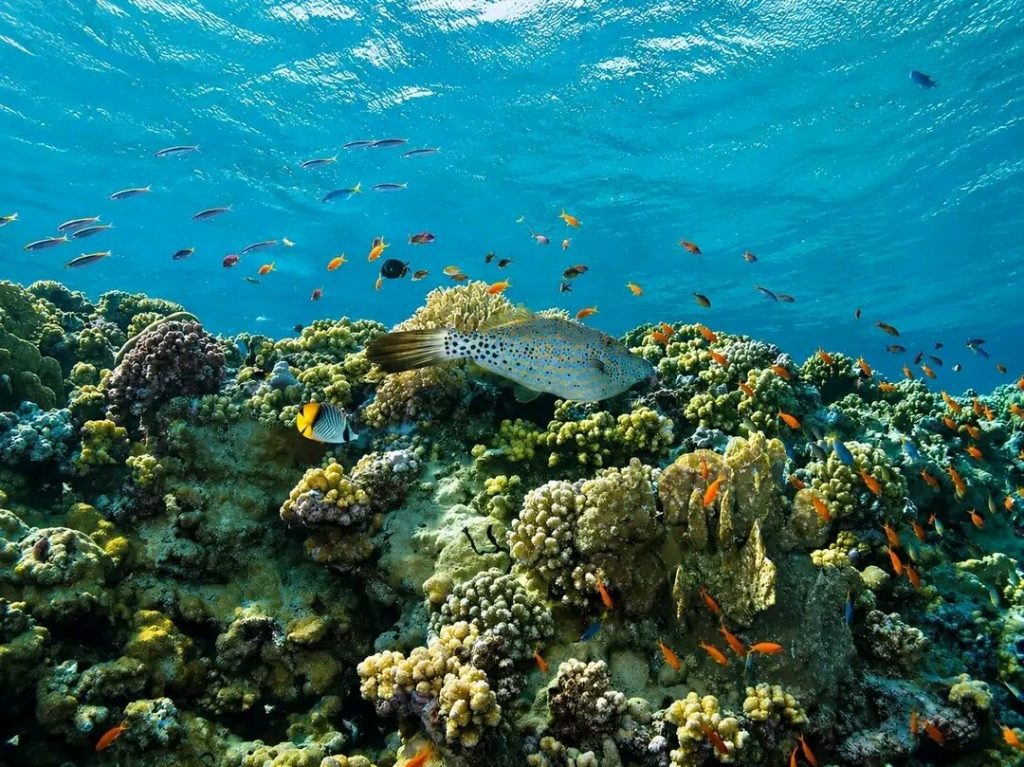
Nosy Tanikely, the marine reserve about thirty minutes from Nosy Be, holds turtles feeding on sponges, jellyfish and anemones, alongside the best reef snorkelling in Madagascar.
Nosy Iranja has turtles in the water year-round as well as being the main nesting site.
The Masoala marine reserves on the east coast hold green and hawksbill turtles, and turtles occur at Ifaty and along the southwest reef.
Nesting Seasons
Sources vary and the seasons differ by species, which is why blanket statements about turtle season in Madagascar are unhelpful.
Monitoring at Nosy Iranja Kely between 2000 and 2004 recorded 345 green turtle nests against 76 hawksbill nests, and found green nesting peaking in the winter months from May to August, with hawksbill nesting through the summer from December to March.
Other operators in the Nosy Be area report green turtles laying from June to October and hawksbills from October to February.
Conservation programmes on Nosy Komba run their nesting-season work from October to March, shifting to in-water surveys from April to September.
The practical conclusion is that some species is nesting through most of the year, and anyone travelling mainly for it should ask an operator what has been happening recently rather than relying on published ranges.
In the water, any month. Nosy Sakatia for green turtles on seagrass, Nosy Tanikely for reef feeding, Masoala for the east coast. No season required and no overnight stay.
Nesting, seasonal and overnight. Nosy Iranja Kely is the main site, with green turtles broadly in the middle of the year and hawksbills across the turn of it. Requires a bivouac stay.
Nosy Iranja
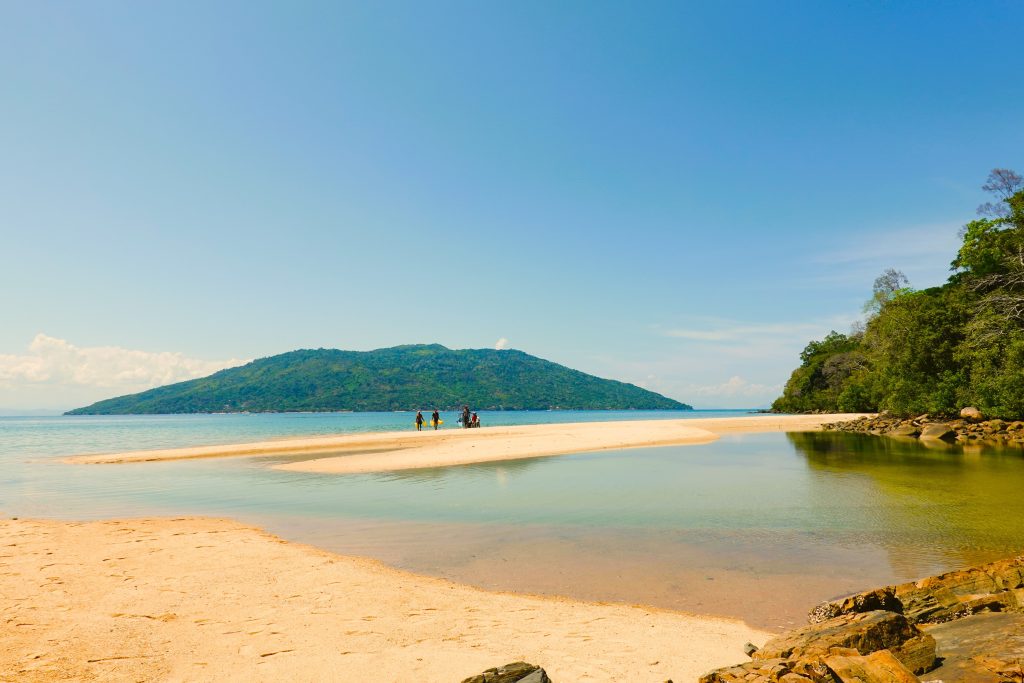
Nosy Iranja is two islets joined by a sandbar around a kilometre or more long, and the smaller one, Iranja Kely, is where the turtles nest.
The larger island, Iranja Be, holds a small fishing village. The nesting beaches are on the smaller islet, which is privately held.
Getting there means around ninety minutes to three hours by boat from Nosy Be depending on the craft. Day trips reach the sandbar but miss the nesting entirely, since laying and hatching happen after dark or at first light.
Bivouac packages exist for exactly this, with a night in a simple lodge on the island. That is the only way to see either event.
Long-term monitoring has run here through cooperation between a private hotel and researchers, which is why the nesting data exists at all.

How Nesting Works
The behaviour is worth knowing before standing on a beach at night waiting for it.
Females come ashore at high tide, which can fall by day or night, though most prefer darkness when it is cooler and the beach is quiet. Green turtles are the exception and will lay in open sunny areas during the day.
Hawksbills prefer to nest near trees or shrubs, greens in full sun, which is a difference visible in where nests are found.
The female digs a chamber with her hind flippers around 45 to 50 centimetres deep and lays roughly 150 to 200 eggs before covering it and returning to the sea.
Green turtles return to the beach where they hatched to lay their own eggs, navigating thousands of kilometres to do it.
Hatchlings emerge weeks later and make for the water, usually at night or first light, and the run down the sand is where they are most vulnerable.
Lights disturb nesting females and disorient hatchlings heading for the sea. Torches and camera flashes should stay off on the beach at night unless a guide directs otherwise. Do not walk over marked nests, and never pick up or carry hatchlings no matter how slow the descent looks. Their crawl to the water is part of how they orient themselves.
Threats and Conservation
Both main species are threatened and the pressures are consistent across the region.
Habitat destruction at nesting beaches is the fundamental problem, alongside pollution, accidental entanglement in fishing gear and poaching for meat and shell.
Sea turtles are protected under Malagasy law. Local trade in turtle meat continues in places, and predation of eggs by birds and other animals adds natural pressure on top.
Conservation work runs at several sites. Nest monitoring, nest relocation where eggs are laid in unsuitable places, hatchling monitoring and community education all feature, with volunteer programmes operating on Nosy Komba.
The village on Iranja Be has a direct economic stake in turtles remaining, since the excursion trade is a large part of the island’s income. That alignment is the strongest protection the nesting beaches have.
Buying anything derived from turtles, including shell, is illegal to export and prosecuted, and buying from a vendor does not change that.
Choosing an Operator
Practice varies and the questions worth asking are specific.
For in-water encounters at Sakatia and Tanikely, ask how many people go in at once, what distance is kept from grazing animals, and whether anything is fed. Some boats in the area have been reported feeding reef fish to attract marine life, which is poor practice.
For nesting, ask whether guides use red-filtered light or none at all, whether groups are kept back from laying females, and whether the operator works with any monitoring programme.
Operators cooperating with research programmes tend to have better protocols, since the data collection depends on not disturbing the animals.
Volunteer programmes exist for travellers wanting to contribute directly, running night beach patrols during nesting season and in-water surveys through the drier months.
Best Time to Visit
The answer depends entirely on whether you want turtles in the water or turtles on the beach.
Any month. Snorkelling with green turtles at Nosy Sakatia and Nosy Tanikely, since both main species are present year-round. September to November gives the best underwater visibility.
May to October. Green turtle nesting, reported variously as peaking May to August or June to October. Overlaps the dry season, which makes boat access to Iranja reliable.
October to March. Hawksbill nesting across the turn of the year. Warmer and wetter with rougher seas toward the end, which affects crossings to Iranja more than the nesting itself.
December to March. Cyclone exposure and rough seas make the Iranja crossing unreliable. Hatchlings may still be emerging, but reaching the island becomes the problem.
Frequently Asked Questions
When is turtle nesting season in Madagascar?
It depends on species. Monitoring at Nosy Iranja Kely found green turtle nesting peaking May to August and hawksbill nesting December to March, while other operators in the Nosy Be area report greens from June to October and hawksbills October to February. Some species is nesting through most of the year, so ask an operator what has been happening recently.
Where can I swim with turtles?
Nosy Sakatia is the standout, with shallow seagrass beds at two to three metres where green turtles graze and snorkellers swim above them. Nosy Tanikely holds turtles on the reef alongside the best snorkelling in Madagascar. Both work year-round since the animals are resident rather than seasonal.
Can I see turtles laying eggs?
At Nosy Iranja Kely, with an overnight stay. Laying and hatching happen after dark or at first light, so day trips miss both entirely. Bivouac packages exist for this purpose. Sightings are not guaranteed even in season, since nesting is unpredictable night to night.
How many eggs do they lay?
Females dig a chamber with their hind flippers around 45 to 50 centimetres deep and lay roughly 150 to 200 eggs before covering it and returning to the sea. Green turtles return to the beach where they hatched to nest, navigating thousands of kilometres to reach it.
What should I do if I see a nesting turtle?
Keep back and keep lights off. Torches and camera flashes disturb nesting females and disorient hatchlings heading for the sea. Do not walk over marked nests and never pick up hatchlings no matter how slow their crawl looks, since the descent to the water is part of how they orient. Follow your guide’s instructions.
Which species will I see?
Green turtles most often, since they are the abundant nesting species and graze the seagrass beds where snorkellers meet them. Hawksbills are critically endangered and nest in smaller numbers, though the Malagasy sites matter regionally. Loggerheads, olive ridleys and leatherbacks occur but are uncommon.
How do I choose an operator?
Ask how many people enter the water at once, what distance is kept from grazing turtles and whether anything is fed, since some boats in the area have been reported feeding reef fish. For nesting, ask about light protocols and whether the operator works with any monitoring programme. Those cooperating with research tend to have better practice.
Can I volunteer with turtle conservation?
Programmes operate on Nosy Komba and nearby islands, running night beach patrols and nest protection during the nesting months and switching to in-water surveys, identification photography and seagrass assessments through the drier half of the year. These are arranged in advance rather than on arrival.
Planning Your Trip
Turtle watching in Madagascar splits cleanly. Snorkelling with green turtles needs no planning beyond getting to Nosy Sakatia or Tanikely. Seeing one nest means Nosy Iranja, an overnight stay and accepting that it may not happen on the night you are there.
Booking Your Madagascar Trip
The safari companies and tour operators listed on this website put trips like this together for a living and know which camps, guides and routes actually deliver. We are an independent guide to Madagascar; we do not book or sell tours ourselves.
When you are ready, arrange your safari, tour or holiday with one of the recognised operators listed here. Tell them your dates and what matters most, and a real person, not a form, will handle the itinerary, park bookings and logistics for you.