Madagascar Health and Vaccinations Guide

Madagascar carries a high malaria risk across the whole country except Antananarivo, so prophylaxis is standard advice for nearly every visitor. Yellow fever vaccination is required only if you arrive from or transit a country where the virus is present. Hepatitis A, typhoid and routine boosters are the usual recommendations, and medical facilities outside the capital are limited enough that evacuation cover matters.
This article is general information gathered from public health sources, not medical advice. Vaccination requirements and antimalarial recommendations depend on your health history, your exact route, the season and your nationality. Book an appointment with a travel clinic or your doctor four to eight weeks before departure, since some vaccines need multiple doses spaced weeks apart and some antimalarials start before you travel.
Malaria Risk Across Madagascar
Malaria transmission occurs throughout Madagascar year-round, with the highest risk in coastal areas. The capital is the recognised exception, where transmission is rare, though travellers passing through on the way to anywhere else are still advised to take precautions.
The dominant parasite is Plasmodium falciparum, the form responsible for severe illness, and local parasites are resistant to chloroquine. That rules out the older drug entirely.
Risk rises in the wet season when mosquito numbers peak, but it does not disappear in the dry months. Coastal and lowland regions carry more risk than the highlands, and travellers spending time at Masoala, Nosy Be, the Pangalanes or the west coast are more exposed than those staying on the RN7 plateau.
Antimalarial Options and How They Work
Three antimalarials are commonly recommended for Madagascar, and which suits you depends on your medical history rather than your itinerary.
Atovaquone with proguanil, sold as Malarone and in generic form, is taken daily, started one to two days before entering the risk area and continued for seven days after leaving. The short tail makes it popular for shorter trips.
Doxycycline is taken daily, started two days before and continued for four weeks after leaving. It is cheaper but causes photosensitivity, which matters in a country where you will be in strong sun, and is unsuitable for children under twelve.
Mefloquine is taken weekly, started one to two weeks before and continued four weeks after. The weekly dose suits long trips, but it can cause neuropsychiatric effects and is not given to anyone with a history of seizures, psychiatric illness or cardiac conduction disorders.
None is completely protective, which is why mosquito avoidance runs alongside rather than instead of medication.
No antimalarial is fully protective. Any fever during or after a Madagascar trip needs prompt medical assessment, and symptoms can appear up to a year after the bite.
Mosquito Bite Prevention
The malaria mosquito feeds between dusk and dawn, which shapes the practical advice. Repellent containing DEET or icaridin applied in the evenings, long light-coloured sleeves and trousers after dark, and a bed net where rooms are not screened.
Many lodges provide nets, and the ones at remote parks almost always do because they have no other option. Checking for holes is worth the thirty seconds it takes.
Dengue is also present in Madagascar and is spread by a daytime-biting mosquito, so repellent during the day has its own justification, particularly in coastal towns.
Yellow Fever and Entry Requirements
Madagascar has no yellow fever transmission. The vaccine is an entry rule rather than a health protection measure, required only if you arrive from or have recently transited a country where the virus is present.
This catches travellers combining Madagascar with mainland Africa. Routings through parts of East and West Africa can trigger the requirement, and transit beyond a certain duration counts. Anyone adding Kenya, Tanzania or a West African stopover should carry the certificate.
Travellers flying direct from Europe, North America or Asia with no African stopover need no entry vaccine at all. Check your full routing rather than just your departure country, since a long layover can change the answer.
Recommended Vaccinations for Madagascar
Beyond entry requirements, several vaccinations are commonly advised. Hepatitis A is recommended for practically all travellers, spread through contaminated food and water.
Typhoid follows the same route and is advised for most visitors, particularly anyone eating outside hotels or travelling for longer periods. Routine boosters for tetanus, diphtheria, polio and measles should be current, with measles worth confirming given rising global case numbers.
Hepatitis B and rabies are considered for longer stays, remote travel or higher exposure risk. Rabies deserves thought for anyone spending time in rural areas or working with animals, since post-exposure treatment is difficult to obtain quickly in Madagascar.
Required. Yellow fever, but only if arriving from or transiting a country with transmission. Not required for direct flights from Europe, North America or Asia.
Recommended for most. Hepatitis A, typhoid, and current boosters for tetanus, diphtheria, polio and measles. Malaria prophylaxis for the whole country except the capital.
Considered case by case. Hepatitis B, rabies, and standby emergency malaria treatment for remote itineraries. Discuss these with a clinic against your specific route.
Food and Water Safety
Travellers’ diarrhoea is the most common illness on any trip here, and prevention is straightforward. Drink bottled or treated water throughout, including for brushing teeth, and avoid ice unless you know it was made from treated water.
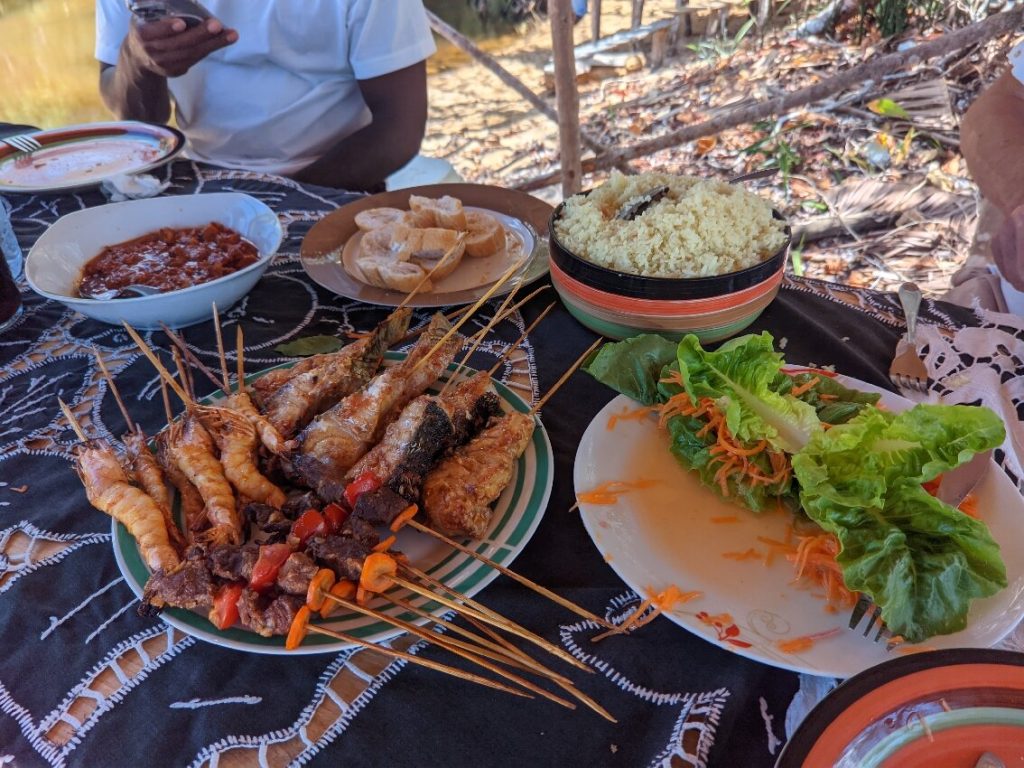
Food that is cooked and served hot is reliably fine, including street food where you can see it prepared. Raw salads, unpeeled fruit and food that has been sitting are the usual sources of trouble.
Carry rehydration salts, which matter more than antidiarrhoeals when the problem is fluid loss. A water filter bottle or purification tablets reduce plastic waste and cover you where bottled water is unavailable, which includes most park camps.
Medical Facilities and Evacuation Cover
Medical care exists in Antananarivo and the larger cities at a standard well below what most visitors are used to. Outside those, facilities are basic and in the remote parks there is nothing at all.
At Marojejy, Masoala, Namoroka and Baie de Baly the nearest hospital may be many hours away over rough road or by boat, with no phone signal en route. Andasibe has no coverage inside the park and the nearest real facility is hours off.
Comprehensive travel insurance including medical evacuation is worth buying rather than considering. Check that it covers the activities on your itinerary, since some policies exclude trekking above certain altitudes, which affects the Pic Boby and Marojejy summit routes.
Travelling with Children and Pregnancy
Antimalarial dosing for children is based on body weight and some drugs are unsuitable, with doxycycline not given under twelve. This makes a clinic consultation necessary rather than advisable for family trips.
Public health guidance identifies pregnant women, infants, young children and older travellers as being at higher risk of malaria and of severe complications from it. Advice on travel to malaria areas during pregnancy is a matter for a doctor and depends on circumstances, but it is a conversation to have well before booking rather than after.
Practical considerations for families extend beyond medication. Rehydration salts formulated for children, insect repellent appropriate to their age, and the fact that remote parks have no medical facilities at all all deserve thought. Long drives with limited stops are the other reality of Madagascar with children.
Other Health Considerations
Plague is endemic in Madagascar and occurs in seasonal outbreaks, mainly in rural highland areas. Risk to tourists is very low, and avoiding rodents and their fleas is the practical precaution.
Schistosomiasis, or bilharzia, is present in fresh water in some regions, which is worth knowing before swimming in rivers and lakes. Swimming in the sea and in the natural rock pools at Isalo and Tsingy de Namoroka is not a concern.
Sun exposure is stronger than most visitors expect, particularly at altitude in the highlands and on the exposed limestone of the tsingy parks. High-SPF sunscreen and a wide-brimmed hat prevent the most common minor problem on any Madagascar trip.
Frequently Asked Questions
Do I definitely need malaria tablets?
Public health sources recommend prophylaxis for travel to most of Madagascar, with the capital being the noted exception where transmission is rare. Any itinerary including national parks, the coast or the lowlands falls in the risk area. Discuss your specific route and health history with a travel clinic, since the decision is medical rather than something to settle from a website.
Which antimalarial should I take?
That depends on your medical history, not your itinerary. Atovaquone-proguanil, doxycycline and mefloquine are all recommended for Madagascar, with different dosing schedules, costs and side-effect profiles. Chloroquine is not effective here because local parasites are resistant. A travel clinic will match the drug to you.
Do I need a yellow fever certificate?
Only if arriving from or transiting a country with yellow fever transmission. Madagascar itself has none, so the requirement is an entry rule rather than health protection. Direct flights from Europe, North America or Asia need no certificate. Anyone combining Madagascar with mainland Africa should check their full routing, since a long layover can trigger it.
How far ahead should I see a travel clinic?
Four to eight weeks before departure. Some vaccines need multiple doses spaced weeks apart, and mefloquine is started one to two weeks before entering the risk area. Leaving it to the last fortnight limits your options considerably.
What if I get a fever during or after the trip?
Seek medical assessment promptly rather than waiting. Malaria symptoms typically begin with fever and can appear between eight days and a year after the bite, so tell any clinician about your travel history even months later. Continue taking prophylaxis unless a doctor tells you otherwise.
Is the food safe?
Cooked food served hot is fine as a rule, including street food prepared in front of you. Drink bottled or treated water throughout, including for teeth, and be cautious with ice, raw salads and unpeeled fruit. Rehydration salts are the most useful thing in a medical kit here.
Do I need evacuation insurance?
For most itineraries, yes. Medical facilities outside the capital are limited and at remote parks like Marojejy, Masoala, Namoroka and Baie de Baly the nearest hospital can be many hours away with no phone coverage en route. Check the policy covers your activities, since trekking above certain altitudes is excluded by some insurers.
Can I swim safely?
In the sea, yes, though take local advice on currents and on shark risk in specific places such as the east coast near Toamasina. Freshwater rivers and lakes carry bilharzia risk in some regions. The natural rock pools at Isalo and Tsingy de Namoroka are considered safe and are used by visitors routinely.
Planning Your Trip
The health preparation for Madagascar is more involved than for most destinations, largely because malaria covers the whole country and medical facilities thin out fast beyond the capital. None of it is complicated, but the timing matters, and a clinic appointment two months out removes nearly all the difficulty.
Booking Your Madagascar Trip
The safari companies and tour operators listed on this website put trips like this together for a living and know which camps, guides and routes actually deliver. We are an independent guide to Madagascar; we do not book or sell tours ourselves.
When you are ready, arrange your safari, tour or holiday with one of the recognised operators listed here. Tell them your dates and what matters most, and a real person, not a form, will handle the itinerary, park bookings and logistics for you.