Isalo National Park
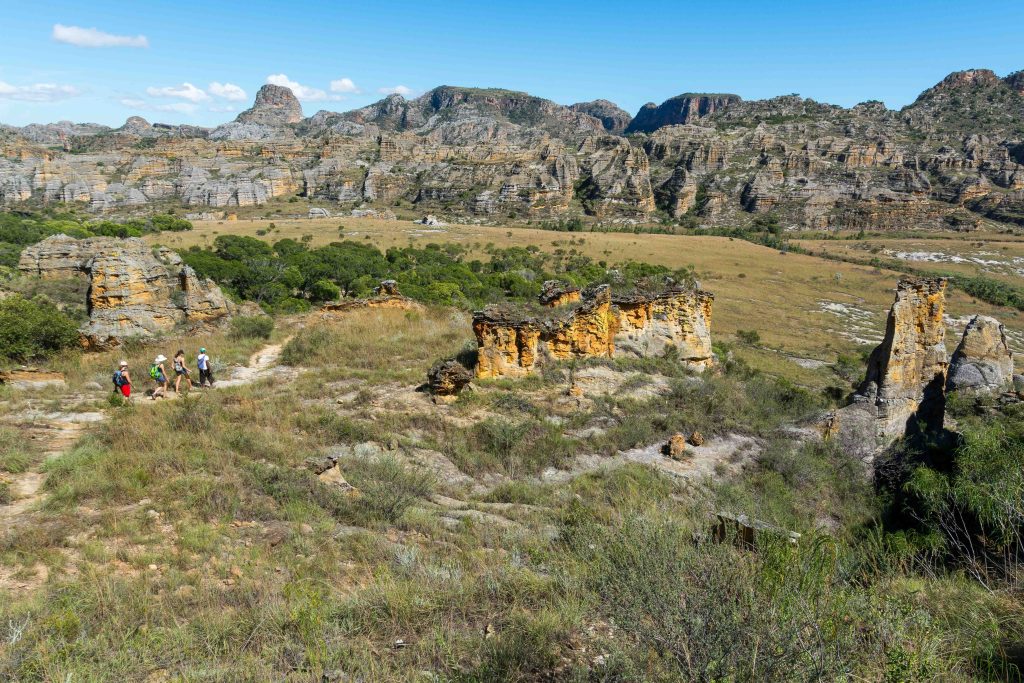
Isalo National Park is Madagascar’s leading hiking destination, built around a Jurassic sandstone massif cut by deep canyons, spring-fed pools and palm-shaded gorges. Walks range from a two-hour canyon route to multi-day treks across the plateau, all of them guided. The park protects roughly 81,500 hectares in the Ihorombe region beside the RN7, with the small town of Ranohira serving as its gateway.
Piscine Naturelle Hiking Safaris to the Isalo Natural Pool
The Piscine Naturelle hiking safari is the walk almost everyone does, and the one photographs of Isalo usually show. A clear pool sits beneath a small waterfall, ringed by pandanus and palms, tucked into a fold of rock that gives no hint of itself until you are standing above it.
Getting there takes about three hours over roughly 3 km of trail, starting from the Mangily car park a short drive from Ranohira. That distance sounds trivial and is not. The route climbs through eroded rock, crosses a plain of tapia trees and opens onto exposed savanna where there is no shade at all. Walking it between eleven and two in the heat of the day is a mistake people make once.
The pool itself is cool rather than warm, and swimming is allowed. Bring a swimsuit and a light towel. Ring-tailed lemurs work the trees around the water and have grown used to walkers, so the sightings here are close and easy.
Start at first light. The canyons hold cool air until mid-morning, the lemurs are active, and you will have the pool largely to yourself before the day groups arrive. By midday the exposed plateau sections turn genuinely punishing.
Namaza Canyon Trekking and the Cascade des Nymphes
Namaza canyon trekking follows a stream up a gorge north of Ranohira and rewards the effort with a chain of pools rather than a single one. The Cascade des Nymphes falls into a deep basin where the water stays cold year-round. Further along sit the Piscine Noire and Piscine Bleue, named for the colours the rock throws into them.
Most walkers combine Namaza with the Piscine Naturelle across a full day, dropping about 180 metres from the plateau into the valley. Reckon on six to seven hours moving, more if you swim at every stop, which is the sensible way to do it.
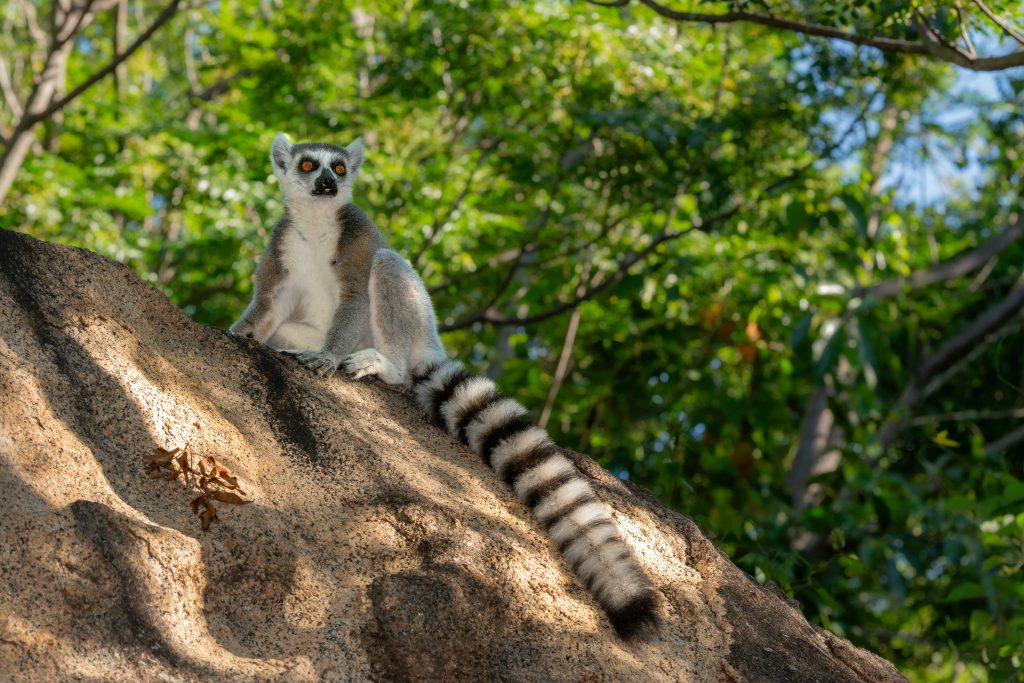
The Namaza campsite is one of the better spots in the park for lemurs. Ring-tailed and brown lemurs come through regularly, and Verreaux’s sifaka move along the gallery forest beside the stream. Camping here is possible with 33 pitches, running water and a sanitary block.
Canyon des Makis and Canyon des Rats Walking Tours
Walking tours of the two northern canyons make a gentler half day than the pool circuits. Canyon des Makis sits about 17 km by road from Ranohira, after which the walk itself is an easy couple of kilometres between vertical walls with resident lemurs overhead. Canyon des Rats runs alongside it and holds its own natural pools.
These routes suit anyone who wants the scenery without the climb. They also work well in the hot middle of the day, since the gorge walls throw shade for most of the route while the open plateau does not. Guides often pair them with an afternoon that would otherwise be lost to the heat.
Ring-Tailed Lemur Watching Tours in the Canyons
Ring-tailed lemur watching tours are the wildlife draw at Isalo, and expectations should be set honestly. This is not a rainforest park. Eight lemur species live here against fourteen at Andasibe, and the appeal is how visible they are rather than how many there are.
Ring-tailed lemurs move in troops along the canyon floors and around the pools, semi-habituated and unbothered by walkers. Verreaux’s sifaka are the other headline, white-bodied and famous for crossing open ground upright in a sideways bounding hop. Red-fronted brown lemurs keep to the gallery forest near water. After dark, grey mouse lemurs and pale fork-marked lemurs are around, though night walking is far less organised here than at the rainforest parks.
Early morning is the whole game at Isalo. Lemurs feed at dawn, the rock glows, and the canyons are still cool. By ten the animals have retreated into shade and so should you.
Multi-Day Isalo Trekking Expeditions Across the Massif
Longer trekking expeditions are what separates Isalo from every other park in Madagascar. At over 800 square kilometres with terrain running from 500 metres up to around 1,268 metres, there is room to walk for days without retracing a step. Routes of two, three and up to seven days cross the plateau, linking canyons and camping at sites inside the park.
The Teniky caves are the classic long objective, a minimum of two days walking each way from Ranohira, passing an old royal village and Bara tomb sites. This needs a capable guide and real logistics, since you carry water and food. Shorter overnight circuits combining Namaza with the natural pool camp are far easier to arrange and give you the park at dawn and dusk, which is when it is at its best.
Two campsites take bookings. Camping Namaza has 33 pitches at the gorge entrance. The Piscine Naturelle campsite holds around 80 people across 40 pitches, with running water, showers, firewood and sheltered tables.
Fenêtre de l’Isalo Sunset Tours and Rock Formations
Sunset tours to the Fenêtre de l’Isalo run most evenings and cost nothing but the drive. The Window is a natural sandstone arch a few kilometres from Ranohira, positioned so the setting sun drops through the opening. It is the single most photographed spot in the park and gets busy, with vehicles lining up along the track well before the light goes.
La Reine de l’Isalo, the Queen, is another eroded formation nearby and is treated as a sacred site by the Bara. Guides will point out others in the rock as you walk: a crocodile, a boot, whatever the wind has left behind. The whole massif shifts through orange and red in the last hour of light, which is when the park earns its comparisons with the canyon country of the American southwest.

Bara Culture and Cliff Tomb Tours in Isalo
The massif is sacred ground to the Bara, cattle-herding people of southern Madagascar, and their tombs are set into caves and ledges in the cliffs throughout the park. A cultural tour with a local guide explains what you are looking at, which matters, because these are active burial sites rather than ruins.
There is etiquette attached and guides will brief you on it. Pointing at a tomb with an extended finger is forbidden. The custom is to curl the index finger when indicating one. Some areas are off limits entirely. Photography is restricted at certain sites and permitted at others, so ask each time rather than assuming.
Bara tradition also explains features you would otherwise walk past, from burial caves high in otherwise unreachable rock to the old royal village on the Teniky route. The cultural layer is a genuine part of what this park protects, not an add-on.
Wildlife and Endemic Plants on an Isalo Safari
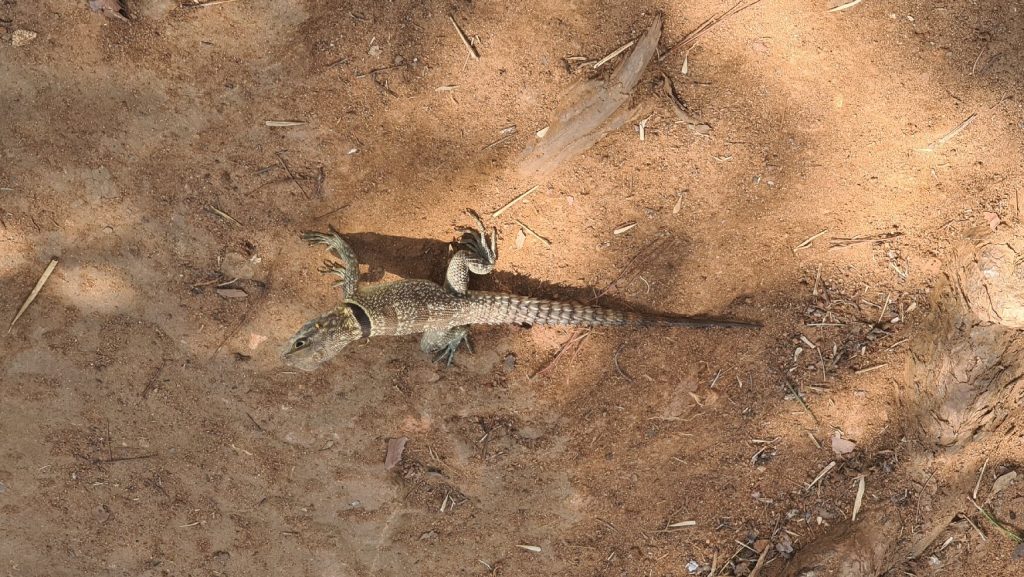
An Isalo safari turns up a species list adapted to heat and rock rather than rainforest. Oustalet’s chameleon, the largest chameleon in the world, lives here. So does the Malagasy rainbow frog, a small burrowing species marked in red, black and green that shelters in canyon crevices and is one of the more sought-after finds in the park.
Around 100 bird species have been recorded. Benson’s rock thrush is the one birders come for, restricted to this massif and a few neighbouring outcrops. Madagascar paradise flycatchers work the gallery forest, and raptors ride the thermals above the canyon walls through the middle of the day.
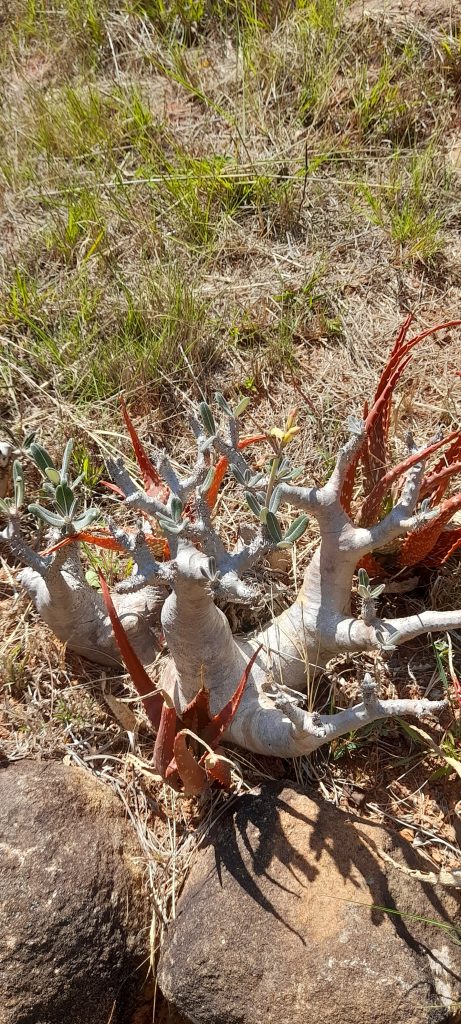
Plants are a bigger part of the picture than in most parks. Pachypodium rosulatum, the elephant’s foot, grows straight out of bare rock and flowers yellow from August into early October. Tapia woodland covers the plateau, aloes cling to the cliffs, and the canyon floors hold ferns and mosses that have no business existing in country this dry.
Getting to Isalo National Park and Ranohira on the RN7
Isalo sits directly on the RN7, roughly 700 km south of Antananarivo and around 240 km northeast of Toliara. The road is sealed the whole way and in reasonable condition, which is more than can be said for most Malagasy routes. Driving from the capital in a single day is possible and exhausting. The standard pattern breaks it over two days with a night in Antsirabe or Fianarantsoa.
Coming the other way, Toliara has an airport, and flying there then driving up cuts a great deal of road time out of a southern itinerary. Many travellers work Isalo into a one-way RN7 run, ending at the coast rather than doubling back.
The park office is in Ranohira, about 3 km from the park itself, and this is where fees are paid and guides assigned. There is also an interpretation centre called La Maison de l’Isalo on the RN7 a few kilometres out of town. Accommodation ranges widely: Le Jardin du Roy and Relais de la Reine are the upmarket sister properties, Isalo Rock Lodge and Satrana Lodge sit in the middle, and Ranohira itself has simple guesthouses.
Best Time for an Isalo Hiking Safari
Isalo is dry country and walkable all year, which sets it apart from the rainforest parks. Heat rather than rain is the limiting factor, and it shapes when you walk each day more than which month you visit.
April to June. Rains have finished, temperatures are moderate and visitor numbers are still low. Good walking conditions and reliable water in the pools. One of the better windows for the longer circuits.
July and August. Peak season, with the coolest daytime walking of the year. Nights on the plateau get genuinely cold, so campers need proper sleeping bags. Lodges book out well ahead.
September and October. The strongest months overall. Few mosquitoes, infant lemurs appear, and the elephant’s foot plants flower across the rock. Warming up but not yet at its worst.
November to March. Hot, with most of the year’s rain falling from December into February. Storms are usually short. Trails stay open, but midday walking becomes hard work and some canyon sections run high after heavy rain.
Whatever the month, plan around the clock rather than the calendar. Walk from six until ten, rest through the middle of the day, then head out again in the late afternoon.
Frequently Asked Questions
How much does it cost to visit Isalo National Park?
Reports vary more here than at other Malagasy parks. Entry is commonly quoted at 45,000 Ariary per adult per day, though some recent visitors have paid 65,000 Ariary plus a small tax, which may reflect circuit-based pricing. Guide fees are separate and charged per group rather than per person, with figures around 30,000 Ariary for the shorter circuits and considerably more for full-day or multi-day routes. Everything is cash in Ariary at the Ranohira office. Confirm the current schedule there before setting out, since posted rates change without much notice.
What will a two-night stay cost overall?
Accommodation spans a wide range. Simple guesthouses in Ranohira start around 20 to 25 US dollars a night. Mid-range lodges run roughly 55 to 90 dollars, and the upmarket properties sit above that. Add park entry and guide fees for your walking days, meals, and guide tips, which are expected. Camping inside the park is the cheapest option if you carry your own equipment.
Do I need a guide to hike in Isalo?
Yes. A guide is compulsory and assigned at the Ranohira office. Given the terrain, this is sensible rather than bureaucratic. The trails cross open rock where the route is not obvious, water sources are limited, and the heat is a real hazard for anyone walking alone.
How fit do I need to be?
Moderately. The Piscine Naturelle circuit involves about three hours each way over uneven rock with a climb and a long exposed stretch. Canyon des Makis is much easier and suits most walkers. The multi-day plateau routes need real hill fitness and heat tolerance. Footwear with proper grip matters more than anything else you bring.
Can you swim in the natural pools?
Yes, at the Piscine Naturelle, the Cascade des Nymphes and the pools along the Namaza gorge. The water is cold and clear. Bring a swimsuit and a light towel, since there is nowhere to change and the walk back is warm.
How many days should I allow?
Two nights lets you walk one full-day circuit, see the Window at sunset and keep a morning for the canyons. One night is enough for the Piscine Naturelle and nothing else, which is how most group itineraries handle it. Walkers who want the plateau treks or the Teniky caves need four nights or more.
Is Isalo worth it if I have already seen the rainforest parks?
Yes, because it is a completely different park. Andasibe and Ranomafana are about finding animals in dense forest. Isalo is about walking through canyon country with lemurs that come to you. Visitors who expect a wildlife-first park sometimes come away underwhelmed, while those who come to hike rate it the best in the country.
Planning Your Visit
Isalo rewards travellers who build in a second night. The park changes character with the light, and a single rushed circuit between long drives shows you very little of it.
Booking Your Madagascar Trip
The safari companies and tour operators listed on this website put trips like this together for a living and know which camps, guides and routes actually deliver. We are an independent guide to Madagascar; we do not book or sell tours ourselves.
When you are ready, arrange your safari, tour or holiday with one of the recognised operators listed here. Tell them your dates and what matters most, and a real person, not a form, will handle the itinerary, park bookings and logistics for you.