Orchids and Endemic Plants of Madagascar
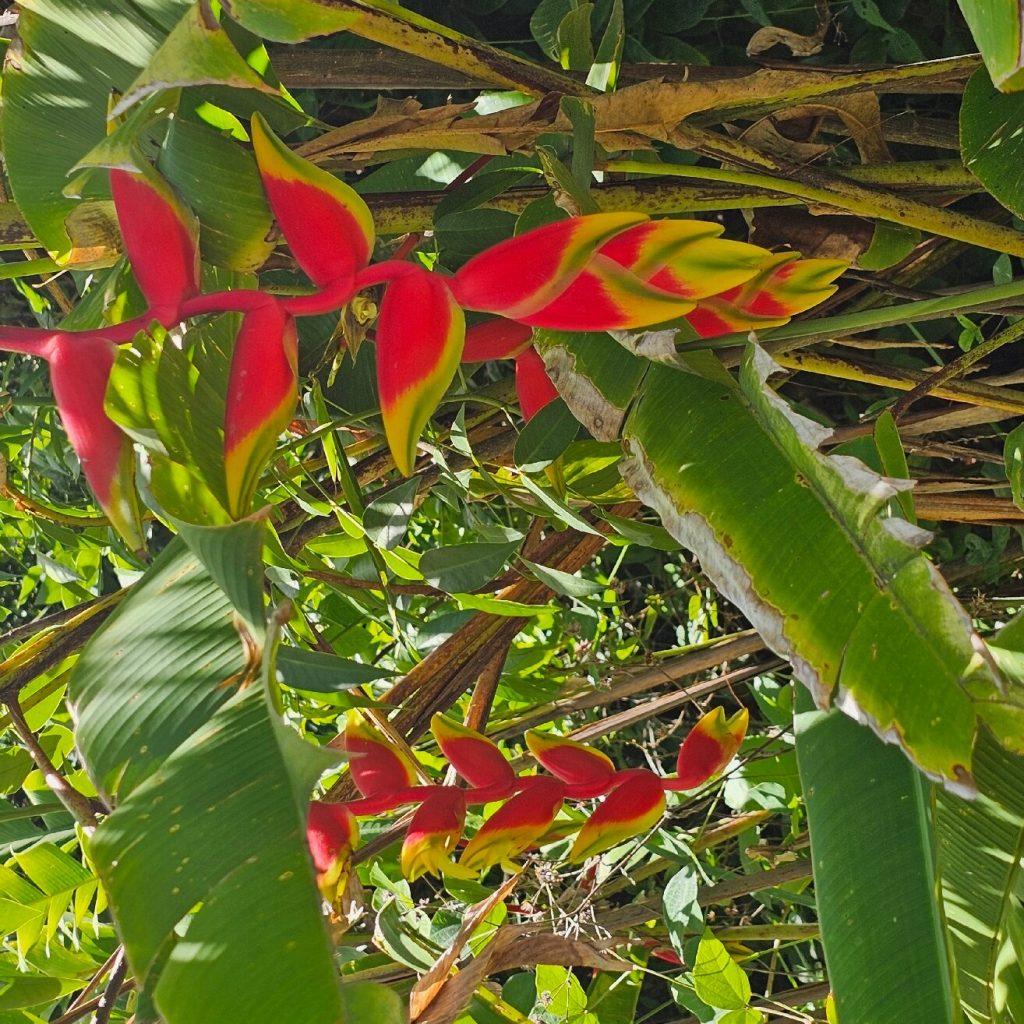
Madagascar holds around 12,000 plant species with roughly four in five found nowhere else, including over a thousand orchids, six endemic baobabs and the entire Didiereaceae family that gives the spiny forest its alien appearance. The botany is as distinctive as the wildlife and considerably less visited, with the Antsokay Arboretum near Toliara the best introduction available.
Why Madagascar’s Flora Is So Distinctive
The island separated from Africa around 165 million years ago and from India roughly 88 million years ago, and its plants have evolved in isolation since, adapting to climates that range from rainforest receiving 4,000 mm a year to spiny thicket receiving under 500.
Two entire plant families occur only here. The Didiereaceae, the octopus trees and their relatives, dominate the spiny forest of the south. The Sarcolaenaceae are woody plants of the eastern and central forests.
Beyond the endemic families, the radiations within familiar groups are what strike botanists. Six of the world’s eight baobab species grow here and nowhere else. Over a thousand orchid species have been described with more still being named.
The pressure is severe. Forest cover has been reduced to a fraction of its original extent, and species with tiny ranges have nowhere to move when a single valley is cleared.
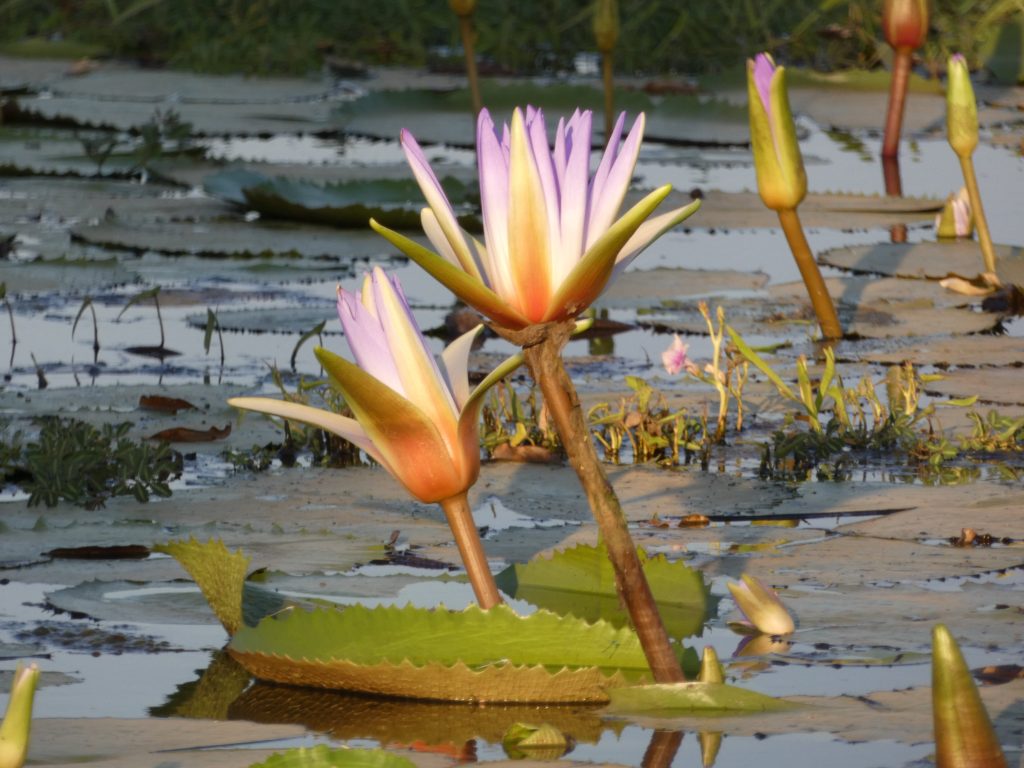
Twelve thousand plant species and four in five found nowhere else. Two entire families exist only on this island, and one of them looks like nothing on earth.
Orchids of Madagascar
Over a thousand orchid species grow in Madagascar, with the great majority endemic, and they occur across every habitat from rainforest canopy to bare rock.
The most famous is Angraecum sesquipedale, the Darwin orchid or comet orchid, whose nectar spur reaches around thirty centimetres. Darwin examined it and predicted that a moth with a proboscis of matching length must exist to pollinate it. He was ridiculed, and the moth was found decades later.
The Queen of Madagascar, Eulophiella roempleriana, is among the most sought-after, growing on Île Sainte-Marie and in the eastern forests with large pink flowers.
Where to see them. Ranomafana and Andasibe hold rich epiphyte communities, with Marojejy recording around 300 epiphyte species. Amber Mountain’s Amparihibe circuit is the orchid route in particular. The Analamazaotra area at Andasibe is known for orchid diversity.
Flowering is seasonal and peaks broadly from September through December, though species vary considerably. Guides at the major parks know which are in flower during your visit.
Baobabs and the Trees Everyone Photographs
Six of the world’s eight baobab species grow in Madagascar and all six are endemic. Adansonia grandidieri is the giant, reaching thirty metres with a trunk three metres across, and it lines the Avenue of the Baobabs near Morondava.
Adansonia za is the most widespread, A. rubrostipa the bottle-formed fony baobab of the south, A. madagascariensis the northern species, and A. suarezensis and A. perrieri both restricted to small northern ranges with the latter the rarest of all.
The Malagasy name is renala, mother of the forest, which reflects their status as older and weightier than anything growing around them. Specific trees receive offerings and carry sacred status.
They store water in soft fibrous trunks that swell and shrink with rainfall, flower at night pollinated by moths, bats and in some species lemurs, and are hard to age because they lay down little woody tissue.
The Spiny Forest and the Didiereaceae
The spiny forest of southern Madagascar is the strangest vegetation on the island and among the strangest anywhere.
The Didiereaceae family occurs only here. Octopus trees rise in ranks of thorn-covered stems, storing water in swollen trunks and defending it with spines. They look superficially like cacti and are unrelated.
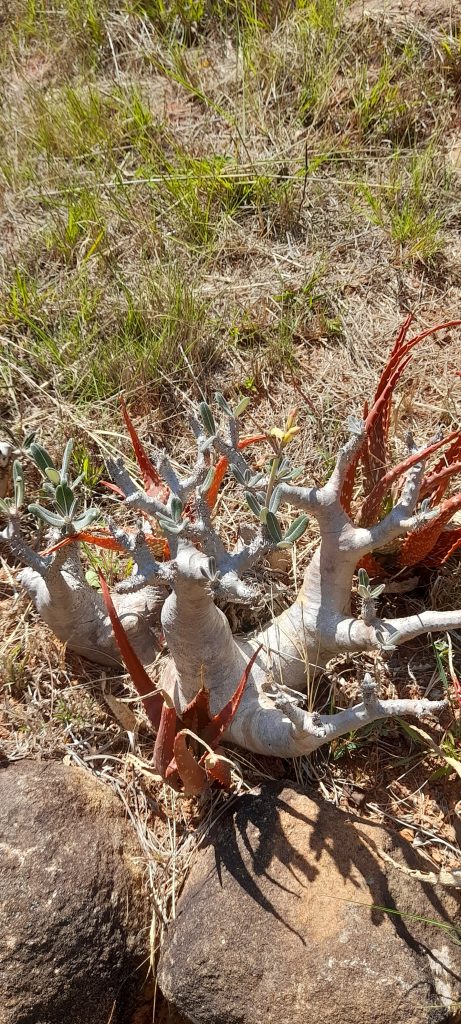
Pachypodiums, the elephant’s foot plants, grow straight out of bare rock with swollen bases tapering sharply. Pachypodium rosulatum at Isalo flowers yellow from August into early October. Over fifteen euphorbia species fill out the community.
Where to see it. The Antsokay Arboretum outside Toliara holds over 900 species from the southwest with around 90 percent endemic and knowledgeable guides, and is the best introduction anywhere. Ifaty’s Reniala Reserve, Tsimanampetsotsa, Mikea and the second parcel of Andohahela all protect spiny forest in situ.
The dry season runs seven to nine months here and rainfall falls under 500 mm a year in places, which explains everything about how these plants are built.
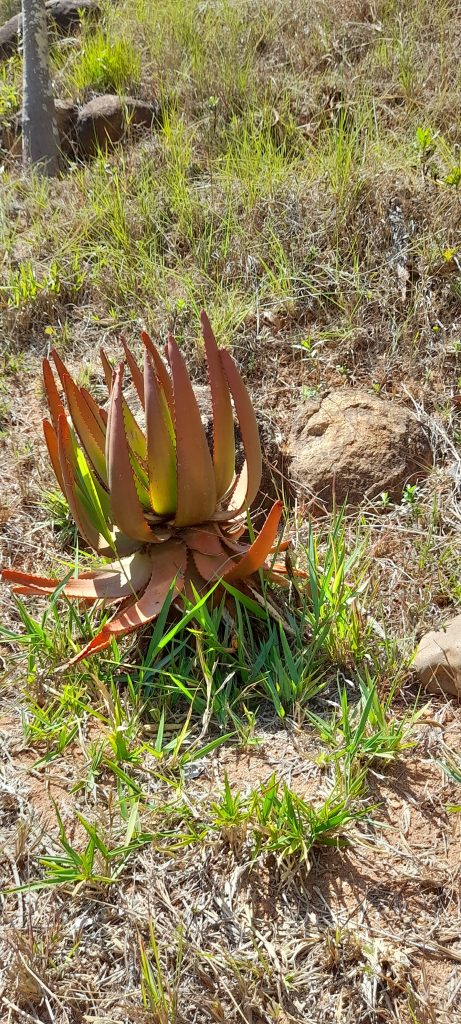
For orchids and epiphytes. Ranomafana, Andasibe, Marojejy and Amber Mountain’s Amparihibe circuit. Eastern rainforest with high humidity. Flowering peaks September to December.
For spiny forest botany. Antsokay Arboretum near Toliara for the introduction, then Tsimanampetsotsa, Mikea, Ifaty’s reserves and Andohahela’s second parcel for the real thing.
For baobabs. Avenue of the Baobabs at dawn or dusk, Kirindy Mite for the largest natural population, Mikea for three species together, Tsingy de Namoroka for baobabs growing out of limestone.
The Triangular Palm and Endemic Palms
Madagascar holds around 200 palm species with the overwhelming majority endemic, more than the whole of mainland Africa.
The triangular palm, Dypsis decaryi, is the emblem of Andohahela’s transition forest, its fronds emerging in three ranks rather than a spiral. It grows in gardens across the tropics and in the wild only in that one corner of the southeast.
Dypsis lokobeensis is named for the Lokobe forest on Nosy Be. Marojejya insignis occurs at Marojejy, where around fifty palm species grow, several found nowhere else.
The traveller’s palm, Ravenala madagascariensis, is the national emblem and not a true palm at all, its fan of leaves arranged in a single plane and its leaf bases holding water that gave it the name.
Palms are among the most threatened plant groups in Madagascar, with many species known from single populations and several described only in recent decades.
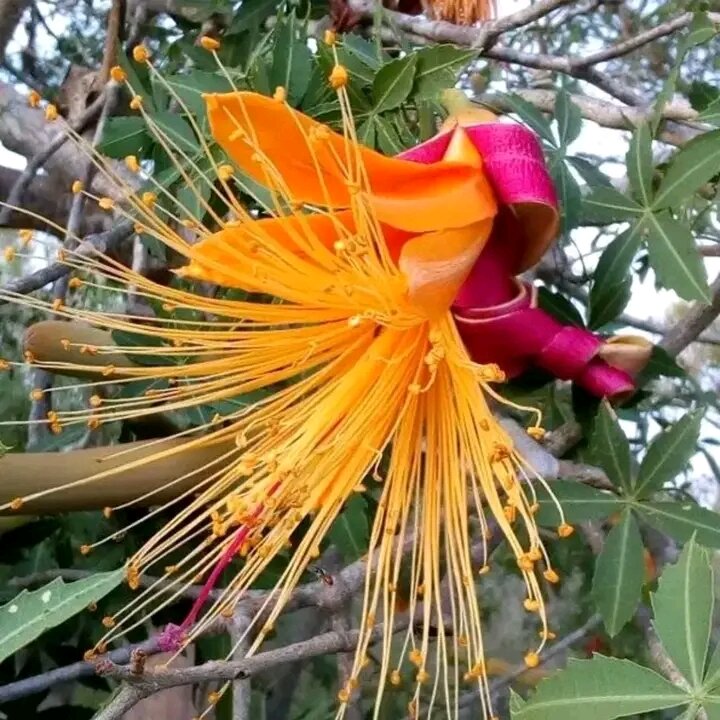
Vanilla, Ylang-Ylang and the Useful Plants
Several Malagasy plants have driven the country’s economy rather than just its ecology.
Vanilla is the best known, grown mainly in the SAVA region of the northeast around Sambava and Antalaha, and Madagascar produces a large share of the world supply. It is a cash crop for export rather than a domestic staple, which is why it appears in Malagasy cooking less than visitors expect.
Ylang-ylang covers the hillsides of Nosy Be, its flowers distilled into oil for perfume, giving the island its name as the perfumed island. The French introduced it in the colonial period.
Cloves, coffee, pepper and cocoa all grow on the east coast, and the highlands around Fianarantsoa hold Madagascar’s only tea estate at Sahambavy and its small wine industry.
Traditional medicinal use runs deep. At Andohahela over 90 percent of plant species have recorded medicinal uses, and guides drawn from local communities identify plants by use as readily as by name.

Ask for a botanical guide where plants are your priority. The general park guides are excellent on lemurs and reptiles, and several parks have guides with a specific interest in flora who will identify orchids, palms and medicinal species that others walk past. The Antsokay Arboretum in particular has guides who are genuinely well informed rather than reciting a script.
Conservation and the Threat to Malagasy Flora
The pressures are agricultural clearance, charcoal production and fire. Around Toliara something in the order of 15,000 hectares of dry forest are cleared each year for fuel, against reforestation efforts a fraction of that size.
Species with tiny ranges are the most exposed. Adansonia perrieri and A. suarezensis, both northern baobabs, occur in small areas. Several palms are known from single populations. Aloe namorokensis and Terminalia namorokensis occur only at Tsingy de Namoroka.
The baobab problem is instructive. Mature trees stand for centuries and are largely left alone, but seedlings fail to establish on grazed and burned farmland, so populations age without replacement. A stand full of giants and empty of young ones looks healthy and is not.
Rosewood and other protected timbers are prohibited from export, and illegal logging remains a serious pressure on eastern forests. Buying anything derived from protected species is both unlawful and counterproductive.

Frequently Asked Questions
How many plant species does Madagascar have?
Around 12,000 described, with roughly four in five found nowhere else. Two entire families are endemic: the Didiereaceae of the spiny forest and the Sarcolaenaceae. Over a thousand orchids, around 200 palms and six baobab species are all endemic, and new species are still being described.
Where is the best place to see the flora?
The Antsokay Arboretum near Toliara for the southwest, holding over 900 species with around 90 percent endemic and excellent guides. Ranomafana, Andasibe and Marojejy for rainforest orchids and epiphytes. Amber Mountain’s Amparihibe circuit for orchids above all. Tsimanampetsotsa and Mikea for spiny forest in situ.
When do orchids flower?
Broadly September through December, though species vary considerably and some flower at other times. Guides at the major parks know what is in flower during your visit. The eastern rainforest parks hold the richest epiphyte communities, with Marojejy recording around 300 epiphyte species.
What is the Darwin orchid?
Angraecum sesquipedale, whose nectar spur reaches around thirty centimetres. Darwin predicted that a moth with a proboscis of matching length must exist to pollinate it, was ridiculed for the suggestion, and the moth was found decades later. It grows in the eastern rainforests.
What makes the spiny forest so strange?
The Didiereaceae family occurs only in southern Madagascar. Octopus trees rise in ranks of thorn-covered stems, storing water in swollen trunks and defending it with spines, looking superficially like cacti and unrelated to them. Rainfall under 500 mm a year and a dry season of seven to nine months explain the adaptations.
Where does vanilla come from?
Mainly the SAVA region of the northeast around Sambava and Antalaha, and Madagascar produces a large share of world supply. It is a cash crop for export rather than a domestic staple, which is why it features in Malagasy cooking less than visitors expect. Buying at Toamasina or Analakely market costs a fraction of airport prices.
Can I take plants or seeds home?
No. Exporting plants, seeds and timber from Madagascar requires permits, and rosewood and other protected species are prohibited outright. Several orchids and succulents are subject to international trade restrictions. Buying from a vendor does not make exporting lawful.
Are the plants threatened?
Severely. Agricultural clearance, charcoal production and fire have reduced forest cover to a fraction of its original extent, with around 15,000 hectares cleared annually near Toliara alone. Species with tiny ranges are most exposed, including two northern baobabs, several palms known from single populations, and plants restricted to individual parks.
Planning Your Trip
Madagascar’s flora is the part of its natural history that visitors most often walk past, and the fix is straightforward: ask for a guide with botanical knowledge and start at the Antsokay Arboretum if your route reaches Toliara.
Booking Your Madagascar Trip
The safari companies and tour operators listed on this website put trips like this together for a living and know which camps, guides and routes actually deliver. We are an independent guide to Madagascar; we do not book or sell tours ourselves.
When you are ready, arrange your safari, tour or holiday with one of the recognised operators listed here. Tell them your dates and what matters most, and a real person, not a form, will handle the itinerary, park bookings and logistics for you.