Île Sainte-Marie (Nosy Boraha)

Île Sainte-Marie, known in Malagasy as Nosy Boraha, is a narrow island off Madagascar’s east coast offering the most accessible humpback whale watching in the Indian Ocean, uncrowded lagoon beaches and the world’s only pirate cemetery. Whale season runs July to September and is the peak reason to come. The island stretches about 50 to 60 km and sits roughly 8 km offshore.
Humpback Whale Watching Tours in the Sainte-Marie Channel
Humpback whale watching tours are what fill this island between July and September. Whales migrate up from Antarctic waters to breed and calve in the sheltered channel between Sainte-Marie and the mainland, and the numbers passing through make sightings close to certain in season.
Boats go out daily from the west coast. Animals are often visible from shore, and trips get you within metres of them. Breaching adults and mothers with newborn calves are the standard sights, and whale song carries through the hull when the boat is still.
The island operates guidelines on how boats behave around the animals, covering distance and numbers on site. Ask an operator how they handle it before booking, since compliance varies and the difference matters both for the whales and for the quality of what you see.
Between July and September this channel becomes a corridor for hundreds of humpbacks. Few places on earth put whales this close to a beach you can walk from your room.
Pirate Cemetery Tours at Baie des Forbans
Pirate cemetery tours take you to a hillside above the bay just south of Ambodifotatra, where weathered gravestones sit overlooking the water, at least one carved with a skull and crossbones. It is widely described as the only pirate cemetery in the world.
From around 1685 this island was the centre of piracy in the Indian Ocean. Sheltered bays and a position astride the trade routes made it an ideal base for raiding ships returning from the Indies, and names associated with the island include William Kidd, Thomas Tew, Thomas White and Olivier Levasseur. Wrecks still lie on the bottom off the Baie des Forbans.
Access depends on the tide, with the path in crossing ground that floods. Guides at Ambodifotatra know the timing. Sorting the history from the folklore is difficult here and most accounts blend the two, which is part of the appeal.

Île aux Nattes Pirogue Trips and Beach Tours
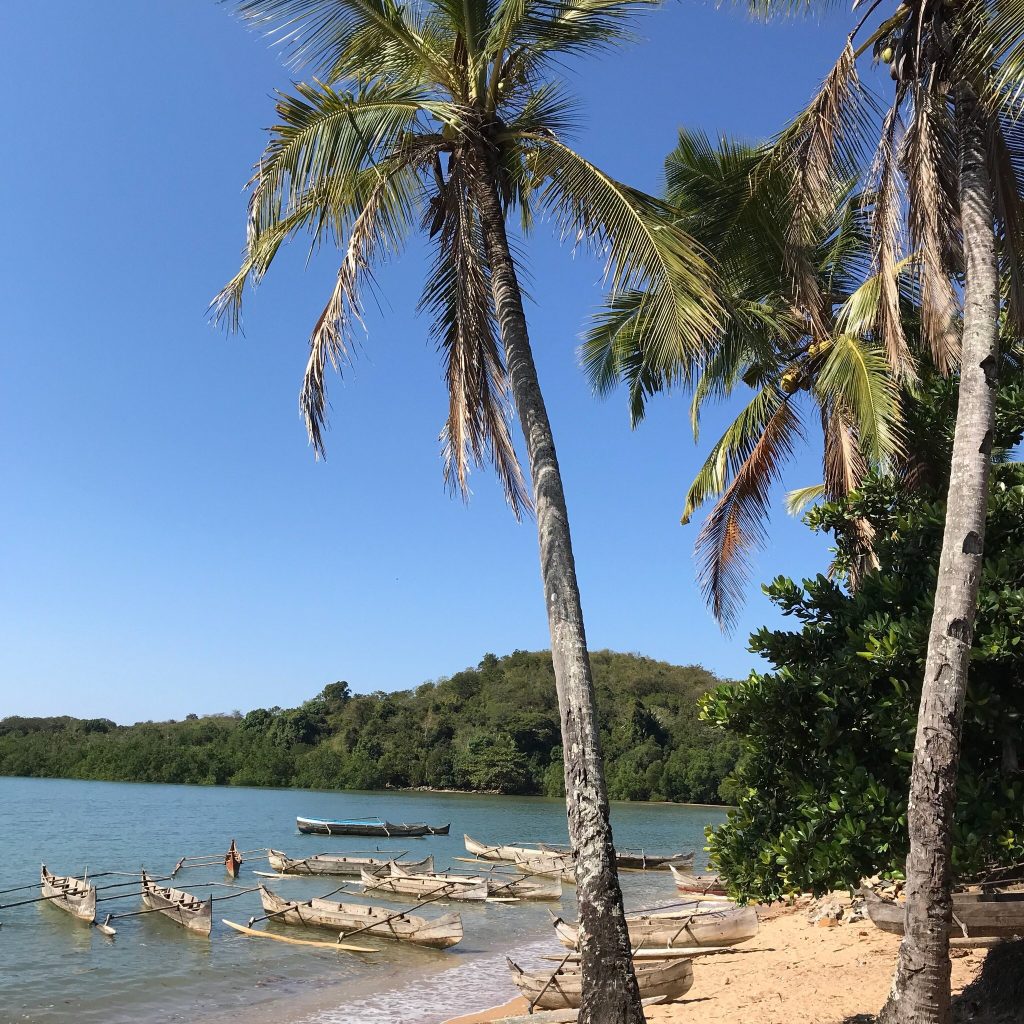
Pirogue trips to Île aux Nattes cross the shallow lagoon at the southern tip, a short paddle in a wooden canoe. The islet has white sand, clear water and almost nothing built on it, and most visitors rate it the best beach in the area.
Swimming and snorkelling work straight off the shore. The uninhabited Îlots aux Sables lie further out for anyone wanting to go beyond the obvious.
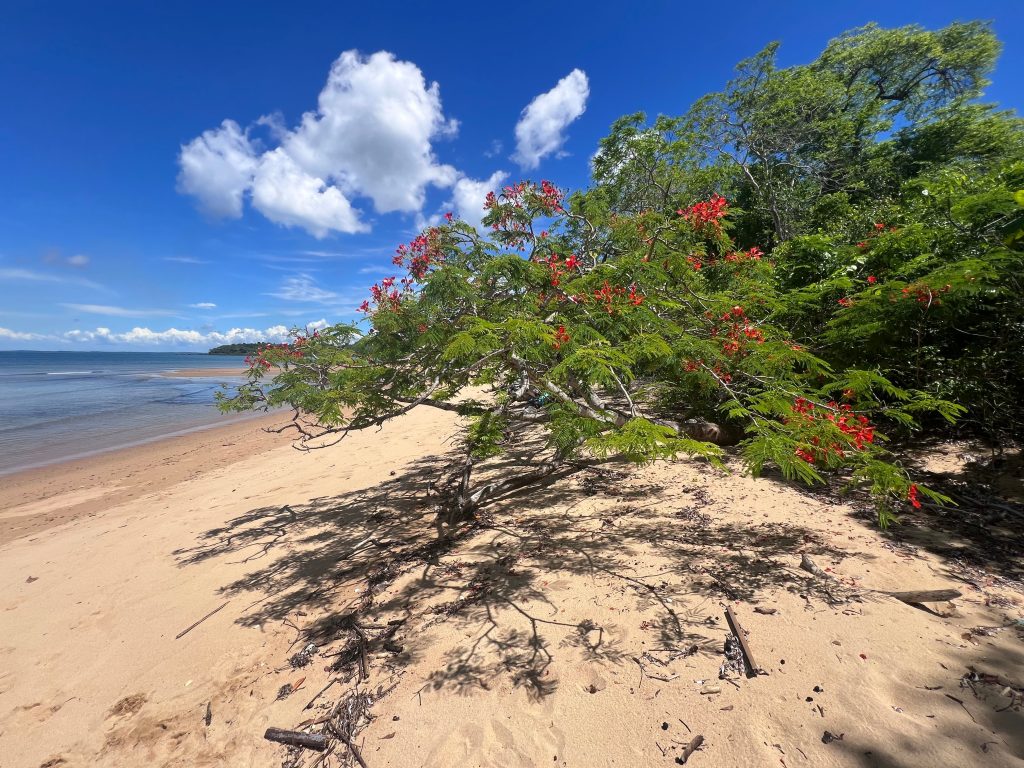
On Sainte-Marie itself, the west coast lagoon holds the calm swimming beaches while the east coast is wilder, with sand dunes and mangroves at Ampanihy where pirogue tours can be arranged. Natural rock pools in the north are worth the trip up the island.
Diving and Snorkelling Trips on the Reefs and Wrecks
Snorkelling trips work the coral reefs protecting the bays, with turtles, morays, skate and crocodile fish among the regular sightings. Visibility is good outside the wet months.
Wreck diving is the local speciality, given what sank here over three centuries. Operators run sites around the island, and the combination of reef and wreck makes this a more interesting proposition than the reef-only diving further north.
Whale season overlaps the good diving window, so travellers coming between July and September can do both from the same base.
Forest Walking Tours and Orchid Hunting at Ikalalao
Walking tours inland reach forest that most beach visitors never see. Ikalalao holds primary forest where three lemur species occur, including mouse lemurs and fat-tailed dwarf lemurs, best looked for at night.

Orchids are the botanical draw. Many species grow across the island, including the Queen of Madagascar, Eulophiella roempleriana, which is among the most sought-after orchids in the country and flowers seasonally.
Waterfalls sit in the forested interior, and the island is small and flat enough that cycling between villages works well. Bikes are widely available and are the pleasantest way to cover ground.
Ambodifotatra Walking Tours and Colonial History
The main town rewards an hour on foot. Walking tours take in Madagascar’s oldest church, built in the first half of the nineteenth century, along with colonial buildings, stone walls and a market.
The old fort is occupied by the Malagasy army and cannot be entered. French rule arrived in 1750, layering colonial administration over the pirate period that preceded it, and both are visible in the street layout.
Around 30,000 people live on the island, mostly in fishing and farming villages along the coast, and the pace is slow enough that mora mora, the Malagasy phrase for slowly slowly, gets quoted at visitors constantly.
Sainte-Marie. Quieter, wetter, greener and less developed. Whale watching, pirate history, empty beaches and small hotels. Suits travellers who want to do very little in pleasant surroundings.
Nosy Be. Busier, drier, more expensive, with nightlife, larger resorts and a bigger choice of island excursions. Suits travellers who want more activity and infrastructure.
Fishing Trips and Village Life on Nosy Boraha
Most people on this island make their living from the sea, and fishing trips with local crews are easy to arrange from the coastal villages. Deep-sea outings run for tuna, marlin and dorado, while inshore trips in a pirogue are a slower and cheaper way to spend a morning on the water.
The villages themselves are the character of the place. Sainte-Marie has no large resort strip and hotels are small and scattered, so daily life continues around visitors rather than being displaced by them. Clove and vanilla grow inland alongside rice, and the smell of drying cloves is a constant near the villages in season.
Bicycles are the best way to see this. The single road along the west coast is flat and quiet enough to ride comfortably, and stopping wherever looks interesting is the whole method. Guides can be arranged, though most visitors find they do not need one for the villages.
Markets at Ambodifotatra are the place to buy vanilla and cloves directly, at prices well below what the same produce costs once it has travelled.
Getting to Île Sainte-Marie from Antananarivo and Soanierana Ivongo
Flying is the straightforward option, with domestic flights from Antananarivo to the island’s airstrip. Schedules are limited and can shift, so build slack into any onward connection.
The overland route runs to Soanierana Ivongo on the east coast, from where a ferry crosses to the island. The crossing takes a couple of hours and the sea can be rough, particularly outside the calmer months, and cancellations happen. Anyone prone to seasickness should weigh that against the flight.
On the island, transport means bicycles, motorbikes, taxis and boats. Distances are short and the single main road runs the length of the west coast. Accommodation is small-scale and spread out, from eco-lodges to a handful of upmarket properties near the southern beaches.
Whale season is short and the island fills. Hotels and whale-watching boats book out well in advance for July through September, and prices rise accordingly. If whales are your reason for coming, reserve months ahead. If they are not, the shoulder months give you the same beaches for less with almost nobody around.
Best Time to Visit Île Sainte-Marie
This is Madagascar’s wet east coast, greener and rainier than the northwest, and the seasons are pronounced.
July to September. Whale season and the peak window. Cooler, with rainfall easing and humpbacks in the channel daily. Book everything well ahead. The reason most visitors choose these dates.
April to June. Rains tailing off, seas settling and the island quiet. Good beach conditions without the whale-season crowds or prices. A strong shoulder window.
October and November. Warm, dry and calm, with excellent conditions for diving and snorkelling. Whales have moved on. Very few visitors.
December to March. Heavy rain, high humidity, rough seas and cyclone exposure on this coast. Ferry crossings are unreliable and many visitors avoid the island entirely.
Frequently Asked Questions
How many days should I spend on Sainte-Marie?
Three to five days suits most visitors, covering the beaches, the pirate cemetery, a whale trip in season and a pirogue crossing to Île aux Nattes. Longer stays work if you want to cycle the island, dive the wrecks or simply do nothing, which is a large part of what the place is for.
Are whale sightings guaranteed?
Nothing is guaranteed, but between July and September sightings are close to certain and whales are frequently visible from the shore. Boats go out daily and most operators will take you again if a trip fails. Outside those months the whales are not there at all.
How does it compare with Nosy Be?
Sainte-Marie is quieter, greener, wetter and cheaper, with small hotels and very little nightlife. Nosy Be is busier, drier, more expensive and offers more island excursions and dive infrastructure. Travellers wanting a relaxed beach stay with character usually prefer Sainte-Marie. Those wanting activity and choice prefer Nosy Be.
Should I fly or take the ferry?
Fly if you can. The ferry from Soanierana Ivongo takes a couple of hours across water that is often rough, and cancellations are common in poor weather. The overland trip to reach the ferry port is also long. Flights are limited in number, so book early, particularly in whale season.
Is it good for families?
Yes. The west coast lagoon beaches are calm and shallow, distances are short, and the pace suits children better than a park circuit involving long drives. Whale watching is a strong draw for older children. Medical facilities are limited, which is worth factoring in.
Can I see lemurs on the island?
Three species occur in the forest at Ikalalao, all small and mostly nocturnal, including mouse lemurs and fat-tailed dwarf lemurs. This is not a wildlife destination in the way the mainland parks are. Come for the whales and the beaches, and treat the lemurs as a bonus on a night walk.
Is the pirate cemetery worth visiting?
Yes, though manage expectations. It is a small hillside site with weathered stones rather than a developed attraction, and access depends on the tide. What makes it worth the hour is the position above the bay and the history attached to it, much of which blurs into legend.
Planning Your Visit
Sainte-Marie divides into two trips depending on your dates. Between July and September it is a whale destination and everything else is secondary. Outside that window it is an unusually quiet beach island with a good story attached, and you will have most of it to yourself.
Booking Your Madagascar Trip
The safari companies and tour operators listed on this website put trips like this together for a living and know which camps, guides and routes actually deliver. We are an independent guide to Madagascar; we do not book or sell tours ourselves.
When you are ready, arrange your safari, tour or holiday with one of the recognised operators listed here. Tell them your dates and what matters most, and a real person, not a form, will handle the itinerary, park bookings and logistics for you.