Madagascar Beach Holiday Guide
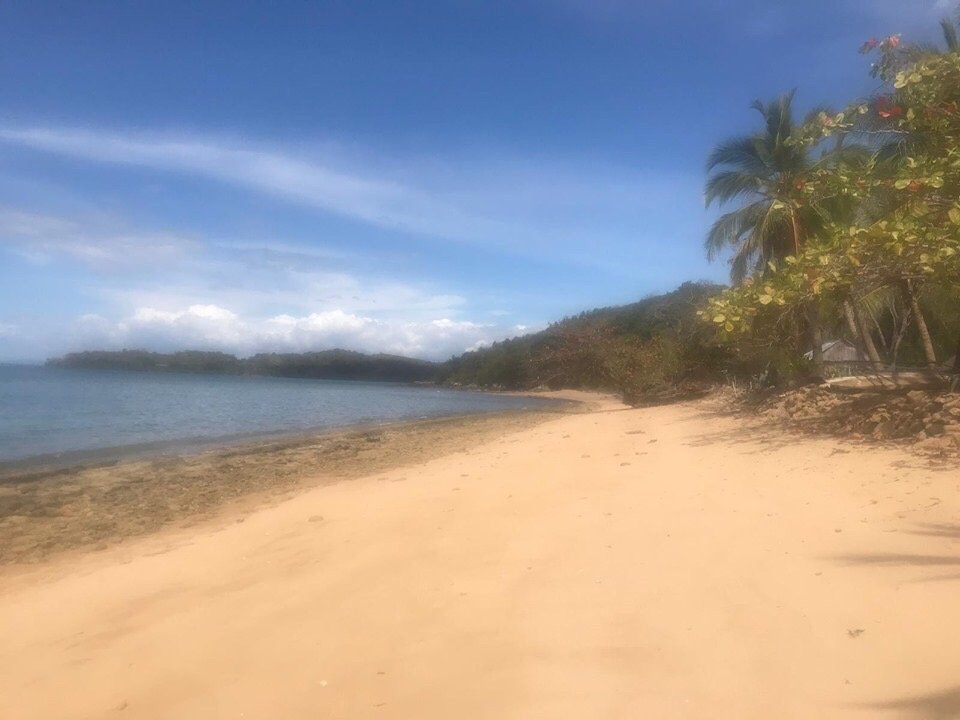
Madagascar has 5,000 km of coastline and almost nobody on it. Nosy Be holds the most developed resorts and the widest choice of island excursions, Île Sainte-Marie is quieter and cheaper with whales from July to September, and Île aux Nattes has what many rate the finest beaches in the country and no cars at all. What you will not find is Indian Ocean resort polish.
What to Expect from a Malagasy Beach Holiday
Set expectations before booking. Madagascar is not Mauritius or the Seychelles. Accommodation is smaller in scale, service is less polished, and infrastructure varies enormously between destinations.
What it offers instead is emptiness. Beaches that stay quiet in high season, islands where the only building is a guesthouse, and reefs with almost no boats on them. Nosy Iranja’s sandbar and the coves on Île aux Nattes are the kind of places that fill with people almost everywhere else.
The other distinguishing feature is what sits behind the beaches. Nosy Be has rainforest with black lemurs at Lokobe. Masoala puts coral reef against the largest protected rainforest in Madagascar. No other beach destination offers that.
Five thousand kilometres of coast and no resort infrastructure worth the name. Madagascar’s beaches are empty because almost nobody has built on them.
Nosy Be and the Northern Archipelago
Nosy Be is Madagascar’s main beach destination, a volcanic island with its own airport including some direct international services, which makes it the easiest to reach.
Andilana at the northwestern tip is widely rated the best beach, a long stretch of white sand with the larger resorts. Ambatoloaka on the west coast is the busiest, with bars, restaurants and dive operators, and a livelier atmosphere than some visitors want. Madirokely beside it is calmer, and Ambondrona quieter still.
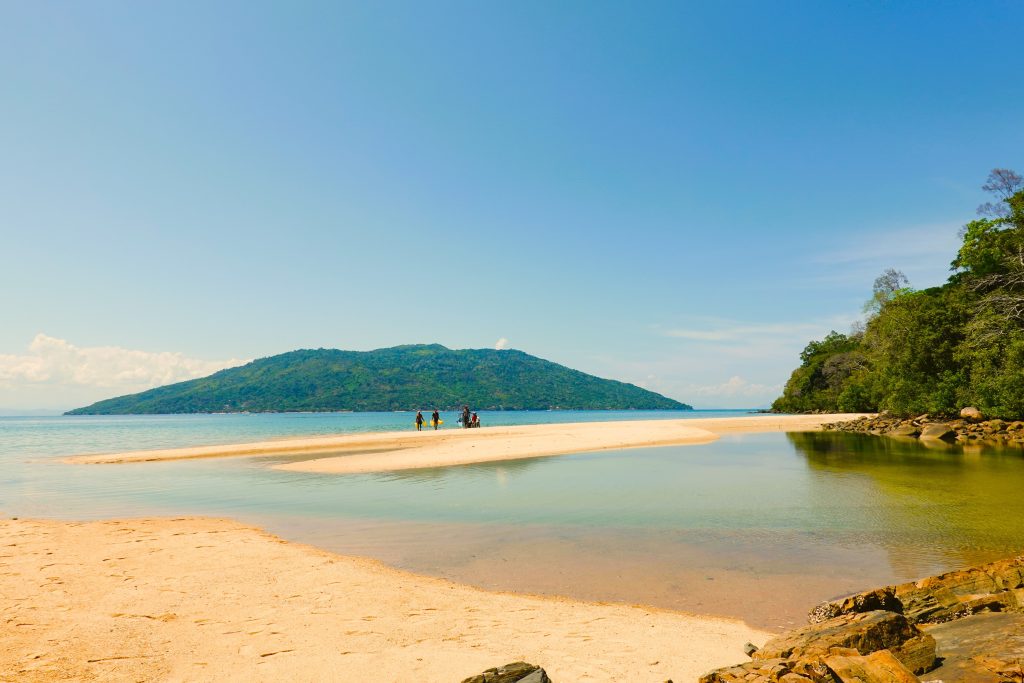
The archipelago is the real attraction. Nosy Tanikely is a marine reserve with snorkelling straight off the beach and reliable green turtles. Nosy Komba has a village, craft market and habituated black lemurs. Nosy Iranja is two islets joined by a sandbar that appears at low tide, ninety minutes out, with turtles nesting in season.

Nosy Be is the most expensive part of Madagascar across every category, which catches budget travellers out.
Île Sainte-Marie and Île aux Nattes
Île Sainte-Marie is the quieter and better-value alternative on the east coast. Small hotels spread along the west coast rather than a resort strip, calm lagoon beaches and short distances everywhere.
Between July and September humpback whales fill the channel between the island and the mainland to breed and calve, with sightings close to certain and animals often visible from hotel terraces. That window fills the island and raises prices, so book months ahead.
Île aux Nattes, a ten-minute pirogue crossing from the southern tip, is the one many travellers rate highest in Madagascar. Three square kilometres, no roads, no cars, no ATMs, and beachfront guesthouses at a fraction of Nosy Be prices. Paradise Cove and Kintana Cove are the named beaches and both are usually empty.
The trade-off is weather. This is the wet east coast with cyclone exposure from December to March, and the ferry crossing from the mainland is often rough.
Nosy Be. Most developed, widest excursion choice, direct international flights, reliable weather year-round. The most expensive part of Madagascar. Busier than the alternatives.
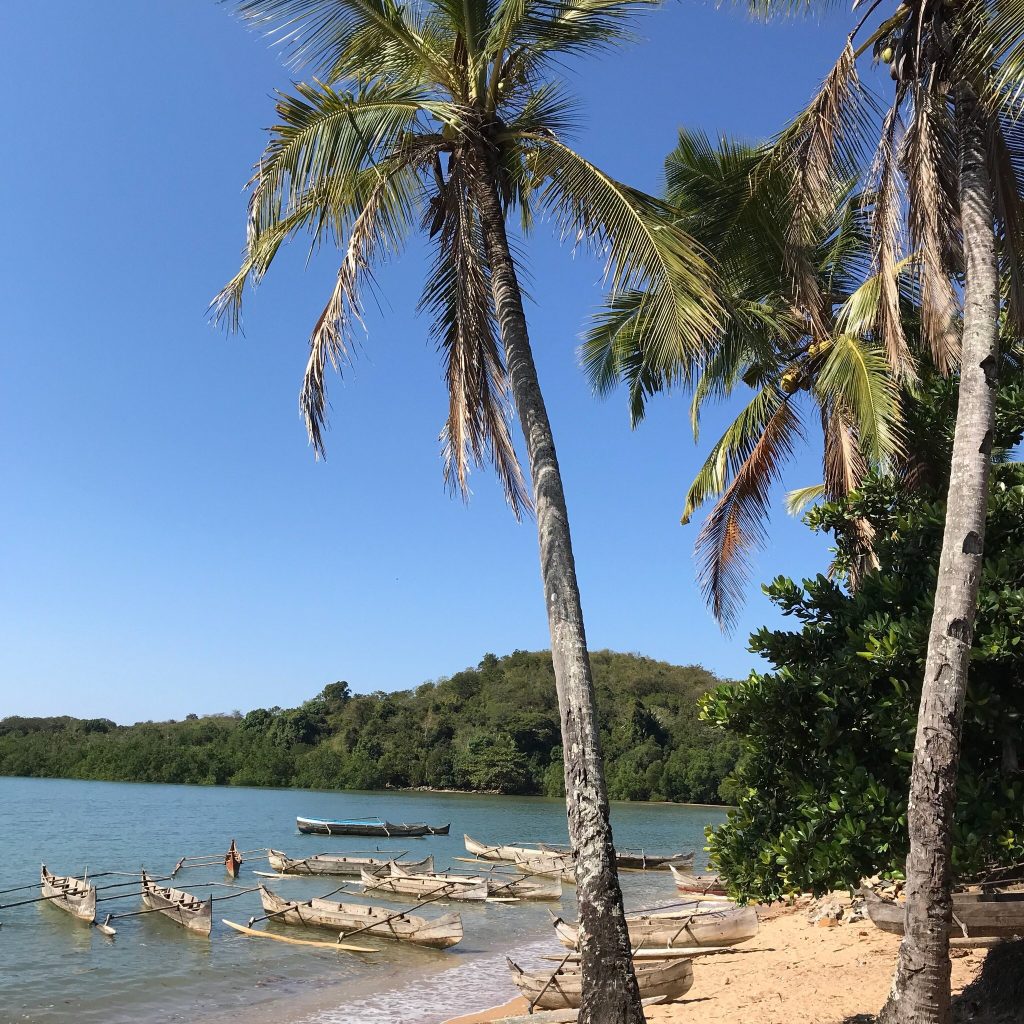
Sainte-Marie and Île aux Nattes. Quieter, cheaper, small hotels, whales July to September, the best beaches in the country on Nattes. Wetter and cyclone-exposed December to March.
Ifaty, Anakao and the southwest. Reef 200 metres offshore, spiny forest behind, fits at the end of the RN7. Hot and dry year-round. Less developed and less scenic than the islands.
The Southwest Coast: Ifaty, Mangily and Anakao
The southwest is where the RN7 finishes, and its beaches suit travellers arriving overland rather than flying in for a beach holiday alone.
Ifaty and Mangily sit 27 to 30 km north of Toliara on a rough road, with a coral reef roughly 200 metres offshore making snorkelling straightforward from the beach. Beach hotels line the shore and scuba operators work the outer sites.
Anakao is reached by boat from Toliara in about an hour, a Vezo fishing village with beach lodges and access to Nosy Ve for seabirds and inland to Tsimanampetsotsa National Park.
Further north, Salary Bay and Andavadoaka have progressively fewer visitors and less infrastructure. This is the driest part of Madagascar, hot and sunny almost year-round.
Toliara itself has no swimming beach worth the name, so transfer straight to the coast rather than booking a city hotel expecting one.
The North Coast and the Emerald Sea
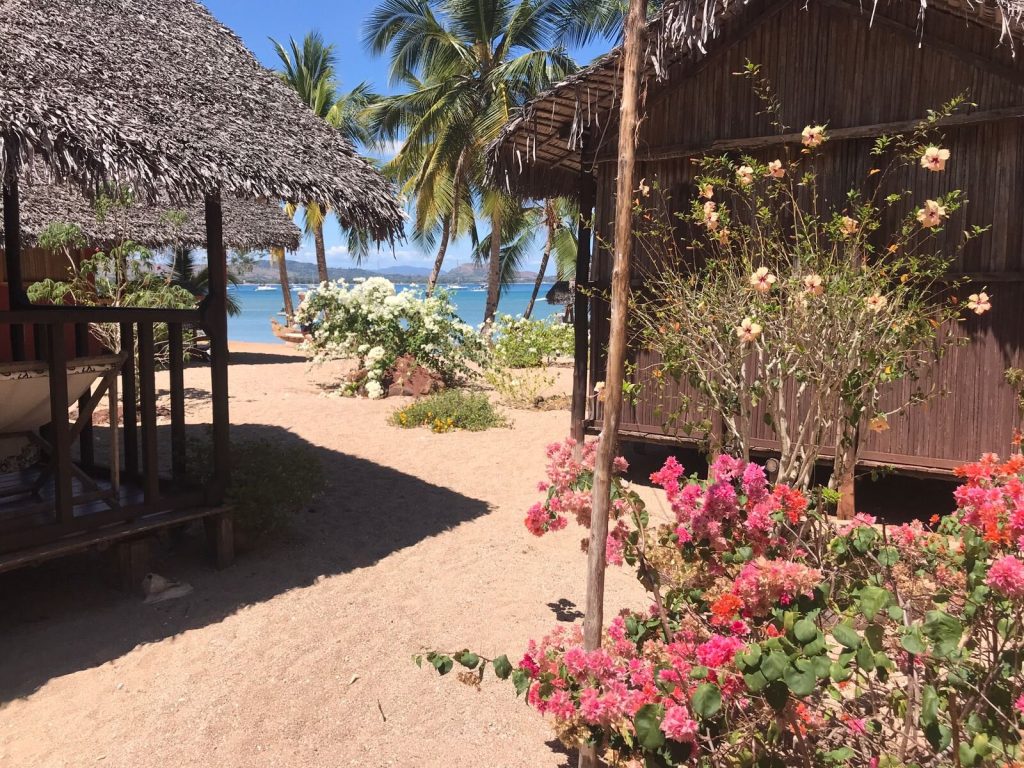
Around Diego Suarez the coast offers something different again. Ramena is a fishing village with a beach forty-five minutes from the city and the departure point for the Emerald Sea, a shallow lagoon where white sand turns the water green.
Les Trois Baies runs east along the peninsula: Sakalava Bay, Dunes Bay and Pigeon Bay, wild beaches reachable by four-wheel drive or on foot with almost nobody on them.
Sakalava Bay is the best kitesurfing spot in Madagascar, driven by the Varatraza trade wind from May to November. That same wind makes the small open boats to the Emerald Sea wet and cold on the afternoon return, so kitesurfers and snorkellers want opposite dates.
Masoala: Rainforest Meets Reef
Masoala National Park is the one place in Madagascar where you walk out of rainforest into coral. Three marine reserves sit off the peninsula, with around a hundred coral species, and snorkelling works straight off beaches with jungle behind them.
Green and hawksbill turtles use these waters, dolphins are common, and humpback whales pass through the Baie d’Antongil between July and September.
The catch is access. Everything depends on boat crossings from Maroantsetra of one to two hours that cancel in rough seas, and the peninsula lodges are few and expensive. Buffer days are necessary rather than prudent.

For travellers who want beach and wildlife genuinely combined rather than sequenced, nowhere else comes close.
Book domestic flights before accommodation. Routes to Nosy Be, Sainte-Marie and Toliara run at limited frequency and sell out in peak season, and capacity constrains a beach itinerary more than hotel availability does. Leave a buffer day before any international departure, since domestic flights reschedule and the ferry to Sainte-Marie is frequently cancelled in rough weather.
Beach Activities Beyond Swimming
Most Malagasy beach destinations offer more than sand, and building one or two activities in improves a stay considerably.
Snorkelling works from the beach at Nosy Tanikely, Ifaty and the Masoala reserves without needing a boat or certification. Scuba operators are concentrated on Nosy Be and at Ifaty, with wreck sites the speciality around Île Sainte-Marie given three centuries of shipping there.
Kitesurfing and windsurfing centre on Sakalava Bay near Diego Suarez, the best spot in the country, with schools catering to all levels from May to November. Vinanibe near Fort Dauphin has a genuine surf break.
Boat excursions are the standard day out: the Emerald Sea from Ramena, the Tanikely and Komba circuit from Nosy Be, Nosy Iranja for the sandbar, and pirogue crossings to Île aux Nattes and Lokobe.
Deep-sea fishing charters run from Toliara, Ifaty, Nosy Be and Sainte-Marie for tuna, marlin, barracuda and dorado, with some operators preparing your catch for dinner.
Best Time for a Beach Holiday
Beach timing runs differently from the wildlife calendar, and the regions differ from each other.
September to November. The strongest window overall. Warm, dry, calm seas and the best underwater visibility. Whale sharks appear off Nosy Be. Quieter than the mid-year peak.
April to June. Seas settling after the rains, good visibility, few visitors and lower prices. Comfortable temperatures across all the coasts. A reliable shoulder window.
July to September. Humpback whales at Sainte-Marie and Nosy Be, which for many is the reason to come. Trade winds in the far north make crossings rough. Busiest and most expensive period.
December to March. Cyclone season on the east, when Sainte-Marie becomes unreliable and many places close. The far north around the Emerald Sea has its calmest water and best clarity. Nosy Be sees less impact than the east.
Frequently Asked Questions
Where are the best beaches in Madagascar?
Île aux Nattes off Sainte-Marie is rated highest by many travellers, with white sand, no cars and usually empty coves. Andilana on Nosy Be is the best on the main island. Nosy Iranja’s sandbar between two islets is the most photographed. The Three Bays near Diego Suarez are the wildest and least visited.
Nosy Be or Île Sainte-Marie?
Nosy Be for the widest choice of excursions, most developed accommodation, direct international flights and reliable weather, at the highest prices in Madagascar. Sainte-Marie for quiet, better value, small hotels and whales between July and September. Île aux Nattes offshore is cheaper still with the best beaches.
What does a beach holiday cost?
Simple guesthouses run 20 to 40 US dollars a night and comfortable hotels 60 to 120, with Nosy Be the most expensive across every category and Île aux Nattes among the cheapest. Boat excursions from Nosy Be run around 300,000 Ariary per person for a full day including lunch. Domestic flights are the largest single cost.
Is the snorkelling good?
Yes at the right sites. Nosy Tanikely is the best in Madagascar for reef access straight off the beach with reliable turtles. Ifaty has the barrier reef 200 metres offshore. Masoala has around a hundred coral species with rainforest behind. Visibility is best from September to November and in the far north from November to March.
When should I go?
September to November for the best all-round conditions across every coast. July to September if whales matter more, accepting rougher seas in the north. April to June is the value shoulder. December to March brings cyclone risk on the east, though Nosy Be and the far north are less affected.
Can I combine beach and wildlife?
Easily, and it is the standard structure. Andasibe for indri then a flight to Nosy Be or Sainte-Marie is the most common pairing. Nosy Be has Lokobe rainforest on the island itself. Masoala combines both in one place, though it needs a week and boat access that depends on weather.
Are Madagascar’s beaches safe for swimming?
At most island and northern sites, yes, particularly inside reef lagoons. Toamasina on the east coast is not, with currents, port pollution and sharks, so Foulpointe 58 km north is where people swim. Morondava has strong currents. The Bay of Antongil at Masoala has a shark reputation, so follow guide instructions.
Is it worth flying in just for a beach holiday?
Nosy Be has direct international services and works as a standalone beach destination, though Mauritius and the Seychelles offer more polish for similar effort. Madagascar’s beaches are best treated as the second half of a trip whose first half was wildlife, which is what the country does that nowhere else does.
Planning Your Trip
A Madagascar beach holiday is at its best when it follows something else. Two or three nights of wildlife, one domestic flight, then a week of doing very little somewhere almost nobody has found. That structure plays to what the country actually offers rather than competing with destinations that do resorts better.
Booking Your Madagascar Trip
The safari companies and tour operators listed on this website put trips like this together for a living and know which camps, guides and routes actually deliver. We are an independent guide to Madagascar; we do not book or sell tours ourselves.
When you are ready, arrange your safari, tour or holiday with one of the recognised operators listed here. Tell them your dates and what matters most, and a real person, not a form, will handle the itinerary, park bookings and logistics for you.