Amber Mountain National Park
Amber Mountain National Park is Madagascar’s oldest, created in 1958 around an extinct volcano whose slopes carry one of the wettest rainforests on the island. Guided walks run from an hour to a full day across a trail network of roughly 34 km, taking in waterfalls, crater lakes and viewpoints over the northern coast. The park covers 18,200 hectares beside the village of Joffreville, a short drive south of Antsiranana.

Waterfall Hiking Tours to the Grande Cascade and Sacred Waterfall
The waterfall hiking tours are the backbone of a visit here, and there are three falls worth building a day around. The Grande Cascade drops about 80 metres and forms the head of the Antomboka river, which irrigates rice fields on the northwestern side of the massif. The circuit to reach it runs a little over 3 km and rates as moderate, with a long flight of steps on the return that catches people out.
The Petite Cascade, also called the Antankarana waterfall, sits on an easier route suitable for anyone. The Cascade Sacrée at Ampijoroana is the third, treated as a sacred site by local communities and shallow enough at the base for a swim. Guides will explain which parts of it carry restrictions before you get there.
Linking the falls with the Voie des Mille Arbres, a trail laid out to show the range of forest plants, makes a satisfying half day. Trees here reach 40 metres, hung with lianas, orchids and bird’s-nest ferns.
This is one of the wettest places in Madagascar, recording around 3,500 mm of rain a year against roughly 1,000 mm down in Antsiranana. Rain falls outside the wet season too. Bring a waterproof and expect wet, slippery steps on the waterfall circuits whatever month you visit.
Crater Lake Walking Tours and the Mahasarika Circuit
Walking tours to the crater lakes offer a gentler alternative to the waterfall steps. Six lakes sit within the wider complex, filling old volcanic craters on the mountain. Lac Mahasarika is the smallest and by common agreement the prettiest, reached on a level circuit of about 2.7 km.
The Grand Lac is larger and further in. Viewpoints along these routes look out toward the Lac Maudit and, on a clear morning, across to Cap d’Ambre, the bay at Diego Suarez and the sea on both sides of the northern tip. Fog rolls in and out through the day, so a lookout that showed nothing at nine can be open by eleven.
Short circuits. Antomboka at 3.2 km, Ampijoroana at 3 km, Mahasarika at 2.7 km. One to three hours each. Waterfalls, the sacred falls, the smallest crater lake, and the best chance of crowned lemurs near the picnic area. Most visitors do a combination of these.
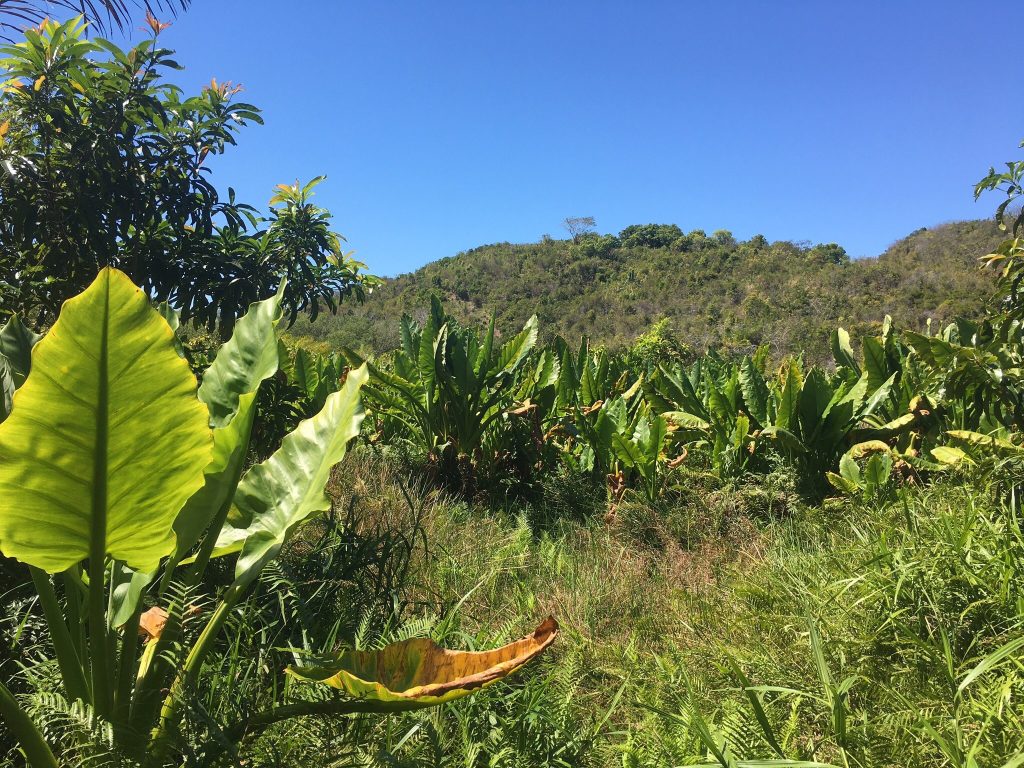
Long circuits. Cratère Renard and Olioly at around 12 km apiece. Full days with real climbing. Cratère Renard branches off the summit route, while Olioly is the one birders choose. Quiet, and worth the effort if you have a second day.
Crowned Lemur Watching Tours in the Montane Rainforest
Crowned lemur watching tours at Amber Mountain are less certain than at Ankarana but far from difficult. The animals gather around the campsite and picnic area, where they have grown used to visitors and come down to inspect them. Sanford’s brown lemur shares the forest, and seven lemur species live here in total.
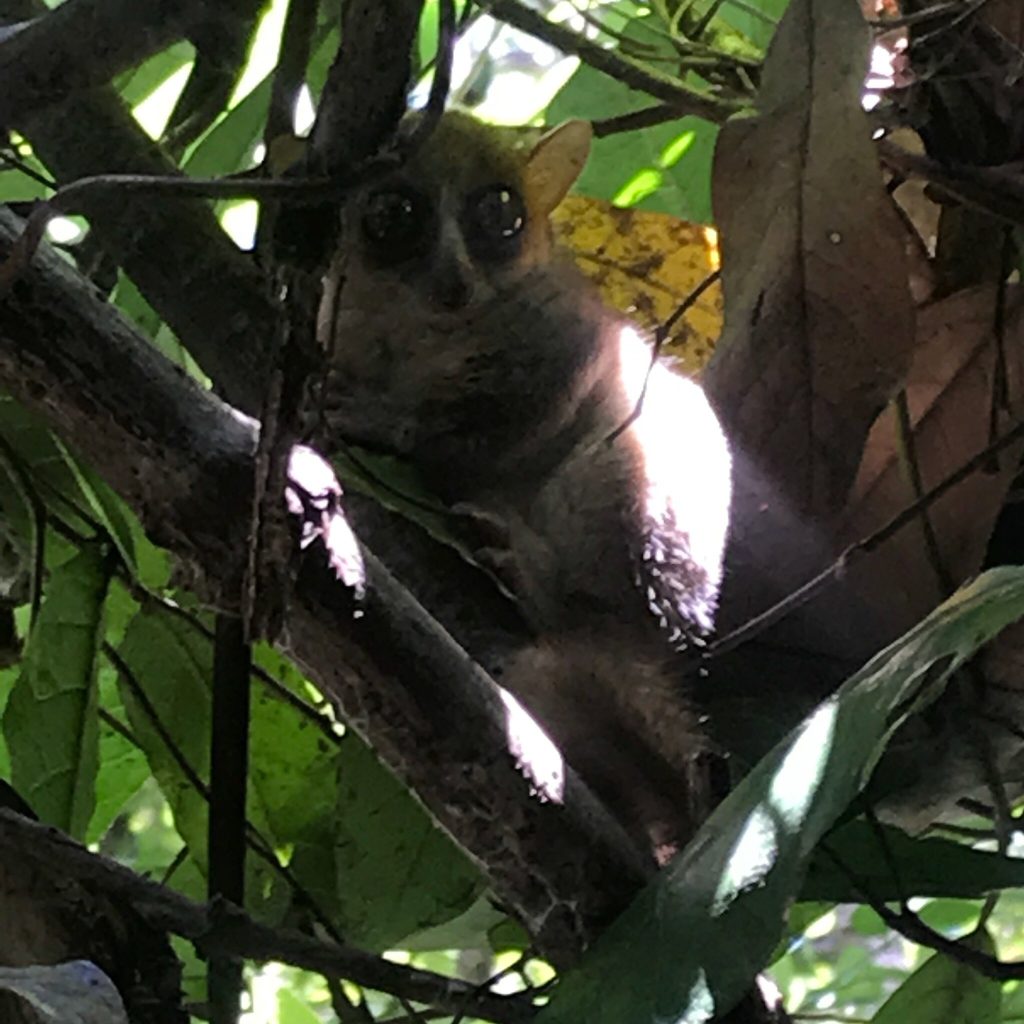
The mountain has its own nocturnal species too. The Amber Mountain fork-marked lemur, Phaner electromontis, is named for this massif and known for loud calls and an odd head-bobbing habit. Mouse lemurs are around, and aye-ayes are reported though almost never seen.
This is an island of rainforest surrounded by dry forest and semi-desert. That isolation is why the mountain carries species found on this one volcano and nowhere else on earth.
Wildlife density is lower than at Ranomafana or Andasibe, and some visitors leave without a lemur sighting. Going early and walking the quieter circuits improves the odds considerably.
Chameleon Spotting Tours and the Smallest Reptiles in Madagascar
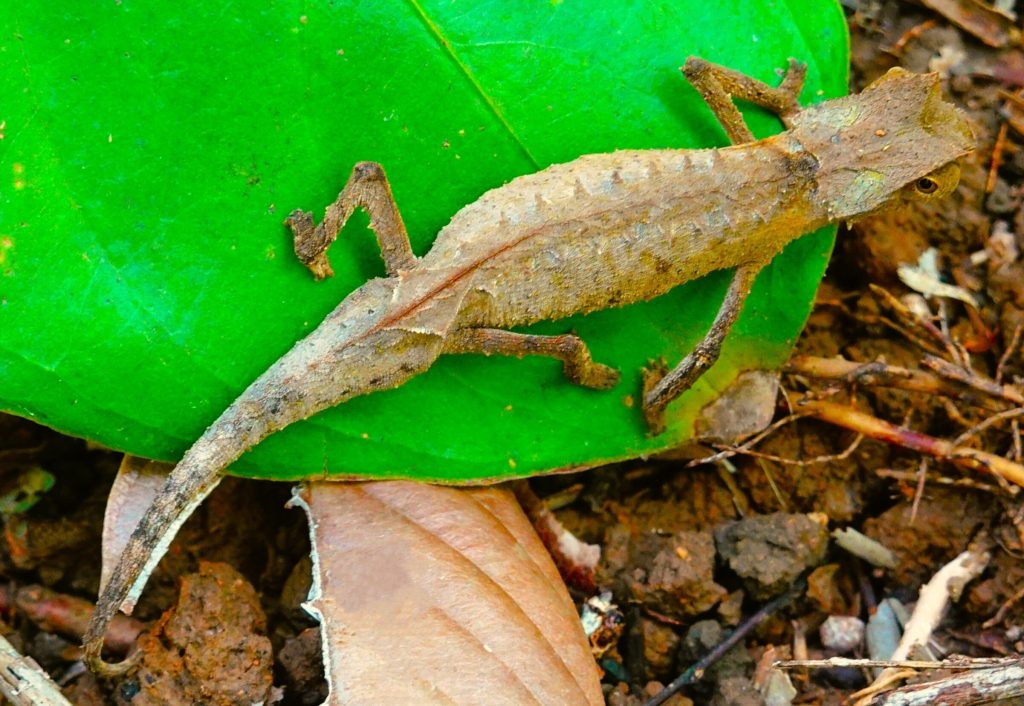
Reptile spotting tours are where this park quietly outperforms its reputation, with 59 reptile species recorded. Two chameleons carry the mountain’s name. Calumma amber, the Amber Mountain chameleon, lives only on this massif. So does Brookesia tuberculata, a leaf chameleon among the smallest reptiles anywhere, small enough to sit on a fingernail and almost impossible to find without a guide who knows the leaf litter.
Leaf-tailed geckos, tree boas and 24 amphibian species fill out the list. Pill millipedes roll into perfect spheres when disturbed and turn up along most trails. Butterflies number around 36 species and are most active in the warmer, wetter months.
Birding Safaris on the Olioly Circuit
Birding safaris here focus on the Olioly circuit, a 12 km route with the richest endemic bird list in the park. Around 75 species have been recorded across the massif, a good proportion of them found only in Madagascar.
The Amber Mountain rock thrush is the local speciality, a subspecies restricted to this mountain. Forest birds are easier to hear than see in dense montane growth, so a guide who works by call is worth asking for at the reception office, where roughly forty accredited guides are based.
Early morning is when the forest is loudest. Fog and rain both suppress activity, which is another argument for building two mornings into a visit rather than one.
Night Walk Tours on the Park Boundary
Night walk tours take place in private reserves bordering the park rather than inside it, following the same pattern as elsewhere in Madagascar. Several Joffreville lodges run them.
What you are looking for is the nocturnal half of the species list: fork-marked and mouse lemurs, sleeping chameleons picked out by torchlight, geckos and frogs. The forest edge holds most of this, and the walks are short and easy underfoot compared with the daytime circuits.
Cratère Renard Trekking for Longer Days on the Mountain
The Cratère Renard circuit is the serious trekking option, running about 12 km and branching from the summit route. Mount Ambohitra tops out at 1,475 metres, the highest point in northern Madagascar, and the walking on this side is steeper and wetter than anything on the short circuits.
Camping is possible at Ampijoroana, known as the Station des Roussettes, with 20 tent pitches, a kitchen area, water, showers and toilets. A small three-room gîte offers a bed for anyone who would rather not carry a tent. Staying inside the park puts you on the trails at dawn, which matters more here than the distance you cover.
Getting to Amber Mountain National Park from Diego Suarez
The park reception sits about 3 km beyond Joffreville, roughly 30 to 38 km south of Antsiranana on a paved road. This makes it one of the easiest protected areas to reach in the whole country. Bush taxis run daily from Antsiranana to Joffreville in around 45 minutes, and a private vehicle takes less.

From Joffreville it is a further 3.5 km to where the circuits begin, so arrange transport rather than planning to walk it. Some groups drive in as far as the campsite, about 2.5 km past reception. Others start at the reception itself, which is where the forest and the wildlife actually begin.
Joffreville, called Ambohitra in Malagasy, sits at around 900 metres and was a French colonial garrison station, which shows in the wide cobbled avenue and the brick buildings set back in compounds. Several have been restored as lodges. Staying there rather than commuting from Diego Suarez saves an hour each way and puts you at the gate early. The town itself is thin on shops and restaurants, so most eating happens at the lodges.
Best Time for an Amber Mountain Hiking Tour
The mountain makes its own weather. While the coast around Antsiranana bakes, the forest up here stays cool and damp, which is precisely why people come after a few days in the northern heat.
April to June. The heaviest rain has passed, trails firm up and the forest is at its greenest. Comfortable walking temperatures and few visitors. A strong window for the longer circuits.
July to September. Driest and coolest, with the most reliable trail conditions and the clearest views from the lookouts. Peak season for the northern circuit, so lodges in Joffreville fill up.
October and November. Warming, with reptiles and amphibians becoming much more active and butterflies out. Rain increases toward the end of this period. Good for anyone whose main interest is chameleons and frogs.
December to March. Wet season proper. The park stays open, unlike Tsingy de Bemaraha, but trails run to mud, leeches appear and the waterfall steps are slick. Wildlife is active and the falls are at full flow.
Frequently Asked Questions
How much does it cost to visit Amber Mountain National Park?
Entry follows the standard Madagascar National Parks rate of 45,000 Ariary per adult per day, with children under twelve at 25,000 Ariary. Guide fees are charged separately per group and set by circuit, from around 25,000 Ariary for the short waterfall routes up to considerably more for the 12 km circuits. Payment is cash in Ariary at the reception office near Joffreville. There is no card facility and no advance booking.
Is a guide compulsory?
Yes, as in all Madagascar National Parks properties. Around forty accredited guides work from the reception office. Given how much of the wildlife here is small, camouflaged and in the leaf litter, going without one means walking through a green corridor and seeing very little of it.
How long do I need at Amber Mountain?
Half a day covers the main waterfalls and one crater lake, which is what most northern itineraries allow. A full day lets you add a longer circuit or walk more slowly, which suits photographers and birders. Two nights in Joffreville is worthwhile if you want the Olioly or Cratère Renard circuits and a night walk.
How difficult is the walking?
The short circuits are easy to moderate on maintained paths, with the return from the Grande Cascade involving a substantial climb by steps. Visitors with limited mobility can be driven as far as the main picnic site. The 12 km circuits need decent fitness and a tolerance for wet ground.
Will I definitely see lemurs?
No. Crowned lemurs and Sanford’s brown lemurs are regularly seen around the campsite and picnic area, but this park has lower wildlife density than the eastern rainforests and some visitors miss them entirely. Early starts help. If lemur sightings are your priority, pair Amber Mountain with Ankarana, where crowned lemurs are close to guaranteed.
How does it combine with Ankarana?
Very naturally. Ankarana lies about 50 km south of Joffreville on the RN6, and the two parks are the standard pairing on a northern circuit. Amber Mountain gives you cool montane rainforest, waterfalls and lakes. Ankarana gives you dry forest, limestone tsingy and caves. Two or three nights covers both with a stop at the Red Tsingy in between.
What should I pack?
A waterproof jacket regardless of season, shoes with grip for wet steps and mud, insect repellent, and warm layers if you are camping, since nights at altitude get cold. Leech socks are worth having in the wet months.
Planning Your Visit
Amber Mountain is the easy one on the northern circuit, close to town, on a sealed road and walkable in half a day. The mistake is treating it only that way. The mountain rewards a second morning, when the fog lifts off the lakes and the birds are calling before the day groups arrive.
Booking Your Madagascar Trip
The safari companies and tour operators listed on this website put trips like this together for a living and know which camps, guides and routes actually deliver. We are an independent guide to Madagascar; we do not book or sell tours ourselves.
When you are ready, arrange your safari, tour or holiday with one of the recognised operators listed here. Tell them your dates and what matters most, and a real person, not a form, will handle the itinerary, park bookings and logistics for you.