Ankarana Special Reserve
Ankarana Special Reserve sits above the longest known cave system in Madagascar, with more than 100 km of mapped passages and underground rivers running beneath a plateau of razor-edged limestone. Guided walks combine tsingy viewpoints, bat caves and canyon forest, from half-day routes to a 20 km trek. The reserve covers roughly 182 square kilometres beside the RN6 in the far north, and joined the UNESCO Andrefana Dry Forests listing in 2023.

Tsingy Trekking Safaris on the Ankarana Circuits
A tsingy trekking safari at Ankarana gives you the same limestone architecture as Bemaraha in the west without the punishing three-day drive to reach it. The pinnacles here rise 50 to 60 metres in places, forming a continuous barrier along the western edge that locals call the Wall of Ankarana.
The standard short circuit runs about 6 km each way and takes in a tsingy viewpoint alongside the bat cave, which makes it the obvious choice for anyone with a single day. Trails cross broken rock and tree roots, with a steep pull at the end to the viewpoint. Nothing here needs a harness, unlike the via ferrata routes further south, though sturdy shoes and a tolerance for heat are both required.
From the top the view runs west over the pinnacle field toward Ambilobe and the Mozambique Channel, with the islands off Nosy Be visible on a clear day. Turn the other way and the silhouette of Amber Mountain sits on the northern horizon.
Bat Cave and Underground River Tours at Ankarana
The cave tours are what set this reserve apart from anywhere else in the country. Slightly acidic rivers have spent millions of years dissolving passages through the limestone, and the result is a network mapped to over 100 km and probably the largest in Africa.
The Grotte des Chauves-Souris, the bat cave, is on the main circuit and holds colonies numbering in the hundreds. Larger systems including Andrafiabe and Mandresy need lamps and more time. Benavony runs about 250 metres and carries the best dripstone formations, with stalactites and stalagmites lit by torchlight.
Down in the dark water lives a fish worth knowing about. Glossogobius ankaranensis has no eyes at all, having traded them over generations for clusters of sensory hairs that read movement in the water. Blind crabs, spiders and the bats round out a food chain that runs entirely without light.
Caves close during the rains for good reason. Sudden downpours send water through the passages fast, and the lower reaches of the reserve flood. Nobody should be underground here between December and April. Bring your own headlamp even in the dry season rather than relying on the guide’s.
Crowned Lemur Watching Tours in the Canyon Forest
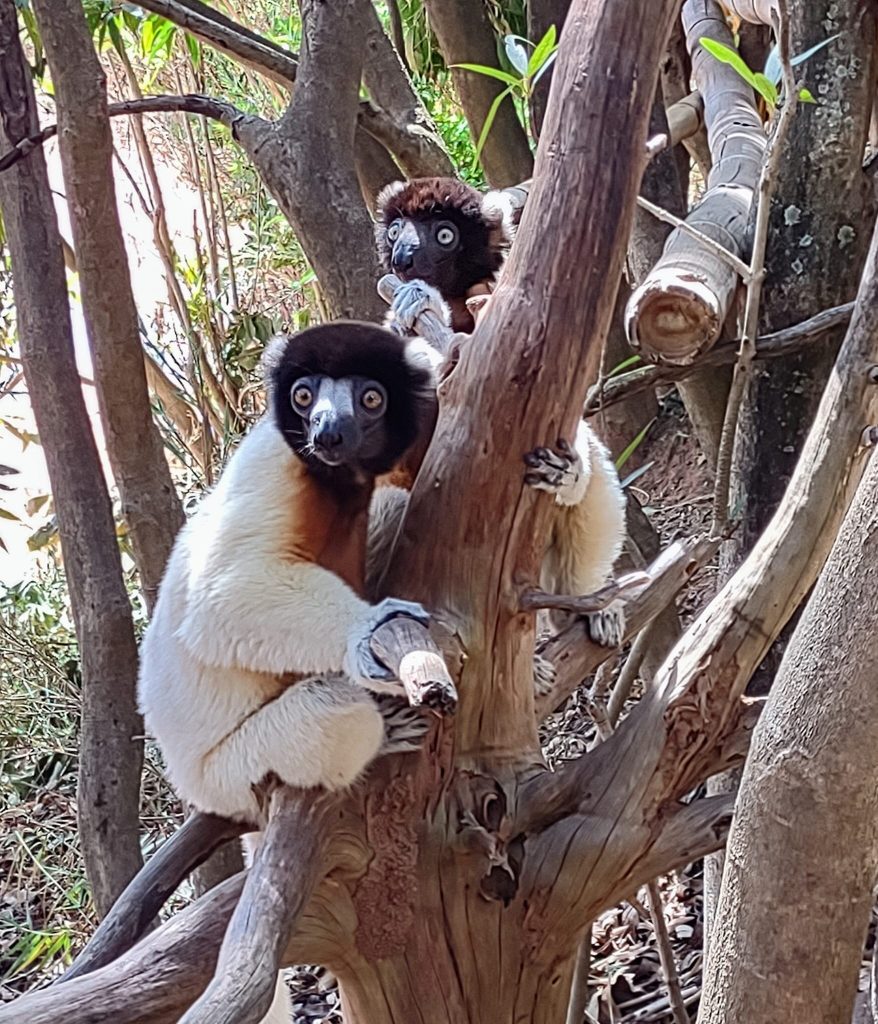
Crowned lemur watching tours are close to a certainty at Ankarana, which holds most of the world population of Eulemur coronatus. Males are reddish brown with a black and orange crown, females grey with orange, and both are entirely relaxed around people at the picnic sites, having worked out some time ago that visitors carry bananas.
These are also the only lemurs in the region known to cross the bare tsingy. They move out over the razor rock into the forest at first light and come back across it before dusk to sleep in the safer canyon forest at the centre of the pinnacle fields, which is a piece of behaviour worth watching for if your timing lines up.
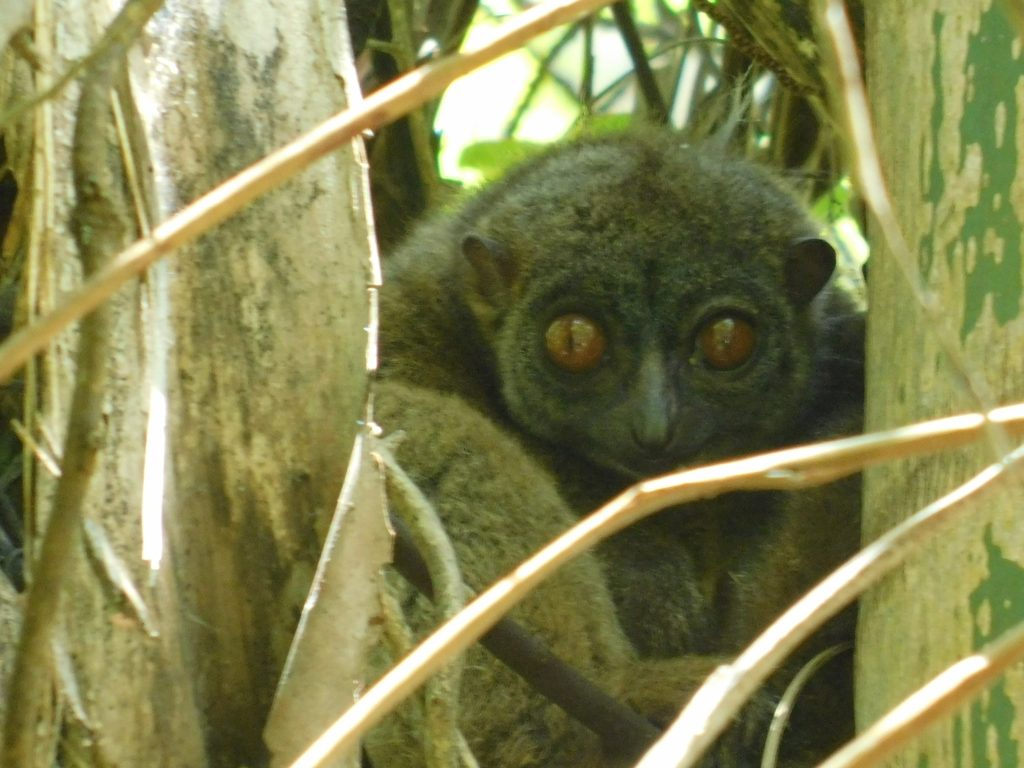
Sanford’s brown lemur shares the same forest. Eleven lemur species live here in total, including nocturnal northern sportive lemurs and dwarf lemurs. Fossa and ring-tailed mongoose are both present and both seldom seen.
Subfossil bones recovered from these caves include indri, giant sloth lemurs and Megaladapis, animals the size of a large dog or bigger. All of them lived in this forest and none survive.
Suspension Bridge Hiking on the Moyen Circuit
The Moyen Circuit is the serious hiking option, a 20 km route to the finest tsingy formations in the reserve by way of two suspension bridges strung between canyon walls. Allow a full day and start early, because there is very little shade once you are out on the rock.
Longer treks run into the western sector from the village of Andrafiabe, though that side opens only from around July to November, when the Antenan’Ankarana river drops enough for vehicles to cross. The eastern zone from Mahamasina stays open year-round.
Eastern zone, from Mahamasina. Open all year. Visitor centre, guides, the bat cave and the main tsingy viewpoints. Where almost everyone goes, and where the accommodation is. Suits day visitors and anyone on a northern circuit.
Western zone, from Andrafiabe. Roughly July to November only, since the river crossing needs low water. Bigger cave systems, longer treks, far fewer people. Needs a vehicle that can handle the track and a guide who works that side.
Birding Tours in the Ankarana Dry Forest
Birding tours here have recorded roughly 100 species across the dry deciduous forest and canyon habitats. An early expedition logged 65 species from 32 families, close to a third of everything that breeds in Madagascar, which gives some sense of the density in a reserve this size.
White-breasted mesite is the prize, along with the Madagascar crested ibis and the paradise flycatcher. Raptors are well represented, including Madagascar fish eagles, Frances’s sparrowhawks and banded kestrels, all of which take crowned lemurs given the chance.
Watch for the mixed feeding flocks. Several small insect-eating species move through the forest together, each catching what the others flush, which spreads the work of spotting predators across the whole group. Guides who know the forest will stop you when one comes through.
Night Walk Tours and Nocturnal Wildlife at Ankarana
Night walk tours around the reserve edges turn up northern sportive lemurs, dwarf lemurs and the reptiles that stay hidden through the heat of the day. Leaf-tailed geckos of the genus Uroplatus press flat against bark and take a practised eye to find. Chameleons sleep on exposed branches where a torch beam picks them out.
As at the national parks, walking inside reserve boundaries after dark is not permitted, so night activity happens on the periphery and around lodge grounds. Ankarana Lodge has resident lemurs in the trees by the pool, which makes for easy viewing without going anywhere.
Red Tsingy and Amber Mountain on the Northern Tour Circuit
Ankarana slots into a wider northern tour that most visitors build around Diego Suarez. The Red Tsingy sits about 60 km south of the city just off the RN6 and makes a natural stop on the way down. These are soft laterite spires carved by the Irodo River rather than limestone, fragile and constantly reshaped, and the colour contrast against Ankarana’s grey rock is the reason to see both.
Amber Mountain National Park lies roughly 100 km away and offers montane rainforest, waterfalls and a completely different species list. Pairing the two gives you rainforest and dry karst within a couple of days of each other. Travellers coming from Nosy Be reach Ankarana by way of Ankify and the RN6 in three to four hours.
Getting to Ankarana Special Reserve from Diego Suarez
The reserve entrance at Mahamasina sits directly on the RN6, about 108 km south of Antsiranana and roughly 30 km north of Ambilobe. The road is sealed, though patchy in places, and the drive from Diego Suarez takes somewhere between two and four hours depending on conditions and how often you stop.

This is one of the more accessible protected areas in Madagascar, which is worth stating plainly given how much of the country is not. An ordinary vehicle manages the RN6 in the dry season. Taxi-brousse services run the route for anyone travelling independently, slower and less comfortable but perfectly workable. Antsiranana has an airport with domestic flights to the capital several times a week.
Accommodation is thinner than the reserve deserves. Ankarana Lodge sits about a kilometre from the Mahamasina gate with a dozen bungalows and rooms, a pool and a generator that runs only in the evening. Chez Laurent in Mahamasina village offers simpler bungalows. Two campsites inside the reserve have basic toilets and nothing else, no electricity and no water, and plenty of mosquitoes. Ambilobe and Diego Suarez both have more choice at the cost of a longer daily drive.
Best Time for an Ankarana Trek
The north runs hot. Ankarana sits at low altitude with average temperatures between 24 and 28 degrees, and the practical question is less about rain than about heat and cave access.
Late April to June. The rains have finished, the caves reopen and temperatures are at their most reasonable. Quiet on the trails. One of the better windows for the longer circuits.
July to November. Peak conditions, and the only period when the western sector opens, since the river crossing needs low water. Reliable trails, accessible caves and the strongest wildlife viewing. Crowned lemurs give birth in late September and early October.
December to March. Wettest months. The lower reaches flood, caves are off limits because of flash flooding, and parts of the reserve become unreachable. The eastern zone technically stays open, but you lose most of what makes the visit worthwhile.
March and April. The hottest stretch of the year, and uncomfortable for walking on exposed rock. Orchids do flower in the early months, which is some compensation for anyone travelling then anyway.
Frequently Asked Questions
How much does it cost to visit Ankarana Special Reserve?
Entry follows the standard Madagascar National Parks rate of 45,000 Ariary per adult per day, with children under twelve at 25,000 Ariary. Guide fees are separate and charged per group by circuit, running from around 25,000 Ariary for a short walk to considerably more for the full-day Moyen Circuit. Porters can be hired for the longer treks. Payment is cash in Ariary at the Mahamasina reception office, and there is no card facility or advance booking.
Is a guide compulsory?
Yes. No visitor enters either zone unaccompanied. Beyond the rule, the trails cross tsingy where a wrong step onto bare limestone opens skin, and the cave systems are genuinely dangerous without someone who knows them.
How does Ankarana compare with Tsingy de Bemaraha?
Bemaraha has the larger and more spectacular pinnacle field and the via ferrata routes, but reaching it means days of rough driving and it closes for months each year. Ankarana is smaller and easier, sits on a sealed road two to four hours from an airport, and has cave systems Bemaraha cannot match. Travellers doing the northern circuit should see Ankarana. Those choosing between the two on a single trip should weigh time against ambition.
How many days should I allow?
One full day covers the short circuit with the bat cave and a tsingy viewpoint, which is what most northern itineraries allocate. Two nights lets you add the Moyen Circuit or go deeper into the caves without rushing either. Anyone heading into the western sector should plan three or more.
Can I visit the caves all year?
No. Caves close through the rainy season from roughly December to April because sudden rainfall raises water levels underground with very little warning. Some parts of the reserve flood entirely. Plan a cave-focused visit between May and November.
Is the walking difficult?
Moderate. The short circuit involves uneven ground, tree roots and a steep final climb to the viewpoint, manageable for most reasonably fit walkers. Heat is the real difficulty rather than gradient. The 20 km Moyen Circuit needs proper hill fitness and an early start.
What should I bring?
Closed shoes with grip, a headlamp for the caves, more water than seems necessary, sun protection and insect repellent. The limestone is sharp enough to cut a hand that grabs it, so gloves are worth packing even though the routes here do not require them formally.
Planning Your Visit
Ankarana is the rare Malagasy reserve where the logistics are straightforward and the payoff is large. The decisions that matter are which zone you enter, whether the caves are open when you travel, and whether you have the day it takes to walk the Moyen Circuit properly.
Booking Your Madagascar Trip
The safari companies and tour operators listed on this website put trips like this together for a living and know which camps, guides and routes actually deliver. We are an independent guide to Madagascar; we do not book or sell tours ourselves.
When you are ready, arrange your safari, tour or holiday with one of the recognised operators listed here. Tell them your dates and what matters most, and a real person, not a form, will handle the itinerary, park bookings and logistics for you.