Lokobe National Park
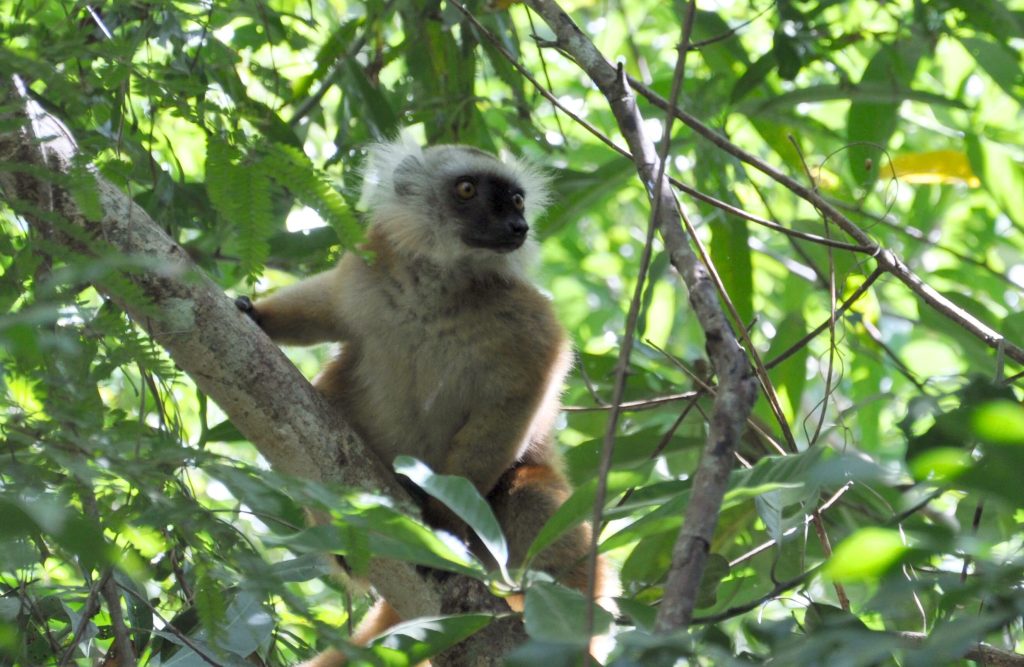
Lokobe National Park protects the last surviving lowland rainforest on Nosy Be, reached by dugout canoe and known above all for its black lemurs and panther chameleons. Visits run as half-day guided walks of two to three hours from the village of Ampasipohy. The park covers roughly 740 hectares in the southeastern corner of the island and has been under some form of protection since 1927.
Black Lemur Watching Tours in the Sambirano Forest
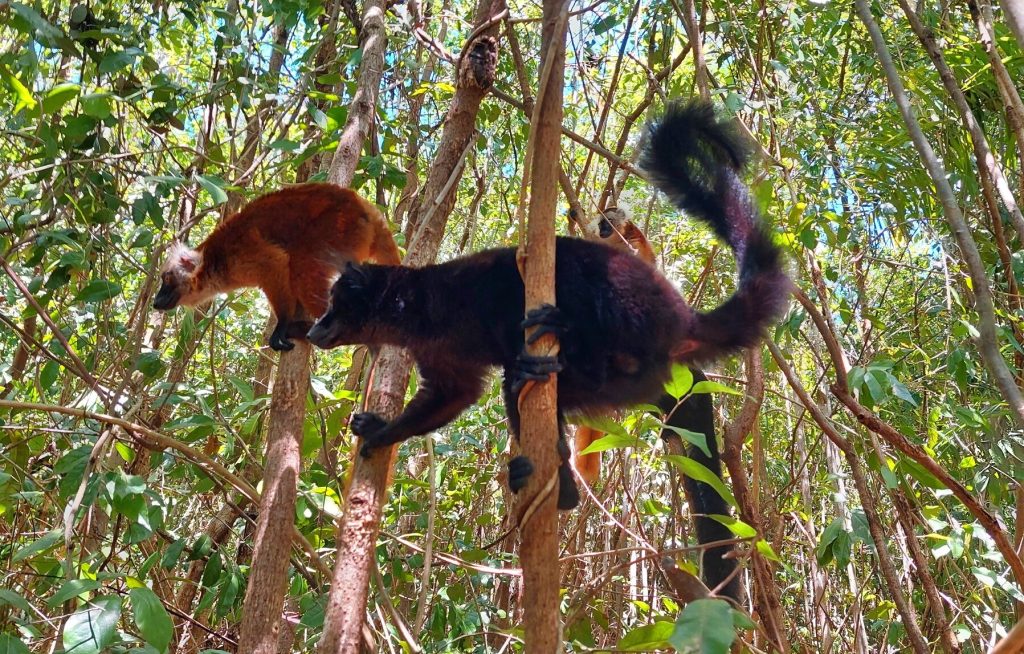
Black lemur watching tours are the reason Lokobe exists on most Nosy Be itineraries. Eulemur macaco is the resident species and the sexes look so different that visitors often assume they are seeing two animals. Males are near-black. Females are a warm chestnut with dramatic white ear tufts framing the face.
The forest here is Sambirano, a humid evergreen type found only in this northwestern corner of Madagascar, and Lokobe holds the last real fragment of it on the island. Everything else on Nosy Be has gone to ylang-ylang, sugar and settlement.
Two other lemur species live in the park, including a sportive lemur restricted to this forest. Sightings on a standard walk are good, since the animals are used to the presence of guided groups on the designated trails.
An important distinction to understand before booking. Inside the national park, touching and feeding wildlife is forbidden and you must stay on marked trails with an accredited guide. The lemur handling and banana feeding some visitors report happens in village-run areas outside the park boundary, not within it. If ethical viewing matters to you, book a guide at the official entrance and ask directly which side of the line your walk will be on.
Pirogue Trips from Ambatozavavy to Ampasipohy
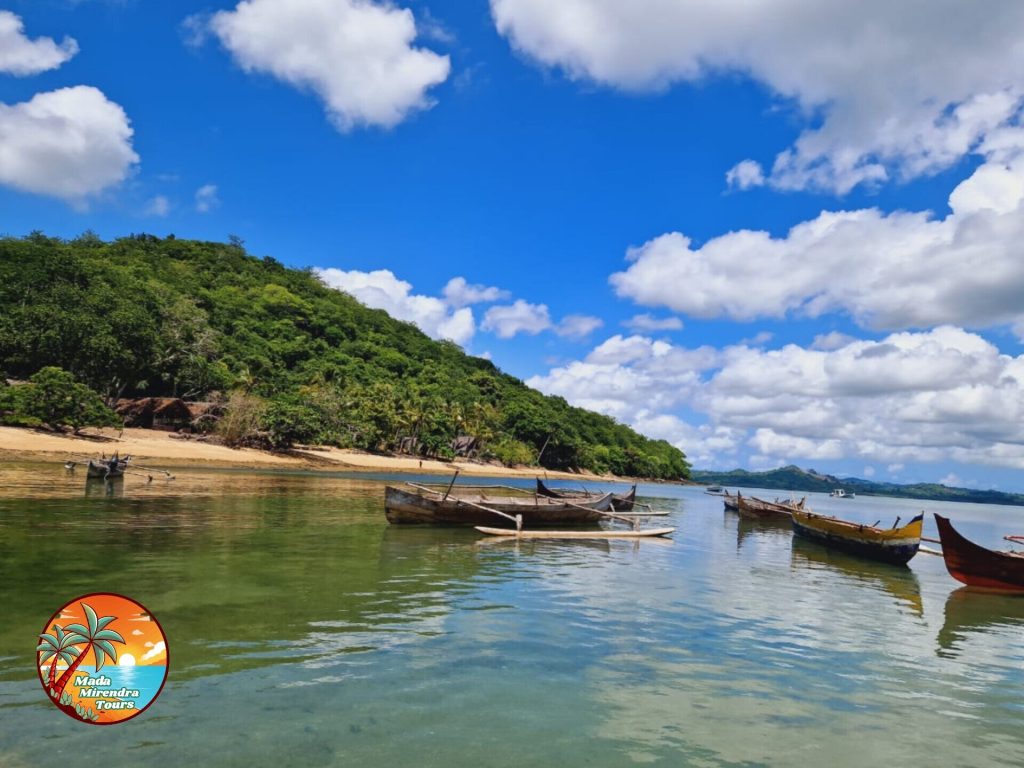
Getting there is half the outing. Pirogue trips leave from the fishing village of Ambatozavavy, where traditional dugout canoes carry visitors around the coast to Ampasipohy, the starting point for walks. The crossing takes anywhere from twenty minutes to an hour depending on the tide and whether the boat is paddled or has a motor.

At low tide the boats sit well out and you walk across exposed seabed to reach them, which nobody warns you about and which is part of the experience. Mangroves line sections of the shore.
There is no road into the park. This is the only way in, and it is why Lokobe feels considerably more remote than its position on a developed tourist island would suggest.
Panther Chameleon and Reptile Spotting Tours
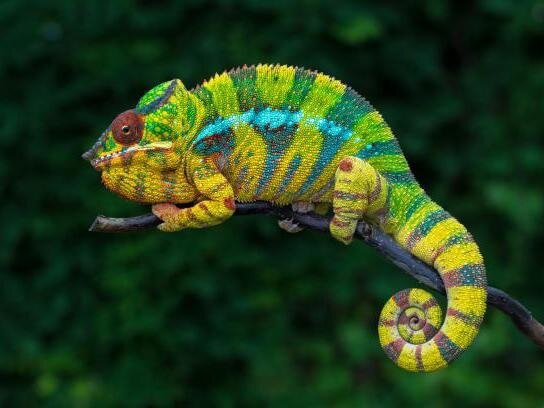
Reptile spotting tours are what many visitors end up remembering. The Nosy Be panther chameleon is the star, a large animal in electric blues and greens that ranks among the most photographed reptiles in Madagascar.
Guides also find Brookesia leaf chameleons among the smallest reptiles on earth, boa constrictors draped along branches, leaf-tailed geckos flattened against bark, and a range of endemic frogs. None of the snakes here is dangerous to people.
The finding is done entirely by the guides. Walking these trails alone, an untrained visitor would pass every one of these animals without registering a thing.
Seven and a half square kilometres holding the island’s last primary forest, ringed by a tourist economy that has cleared almost everything else on Nosy Be.
Birding Tours and Endemic Species at Lokobe
Birding tours here are modest by Malagasy standards but productive for their size. Madagascar pygmy kingfishers work the forest floor, and the Madagascar long-eared owl roosts in the canopy where guides know the sites.
Vangas, couas and forest passerines fill the list. Because the park is small and the walk short, birders should treat Lokobe as a morning rather than a destination, and combine it with the mangroves and coastal habitats around Ambatozavavy on the way in and out.
Botanical Walking Tours Through the Last Primary Forest
Botanical walking tours deserve more attention than they usually get. Several palm species grow here and nowhere else, including Dypsis lokobeensis, named for this forest.
Guides point out ylang-ylang, whose oil built the island’s economy, alongside wild vanilla orchids, travellers’ palms, ebony and the resin-producing Canarium trees. The medicinal uses of many species are part of the standard commentary, drawn from Sakalava and Antankarana knowledge.
Village Visits at Ampasipohy and Marodoka
Most Lokobe trips include a stop and a meal at Ampasipohy, and the village visit is a genuine part of the day rather than an add-on. Lunch is usually cooked locally and eaten under shelter before or after the forest walk.

The villages around the park are directly tied to its management. Park revenue has funded solar lighting at Ampasipohy and Antafondro, water supply and sanitation work at Marodoka, school maintenance at Ambatozavavy, and pirogues for fishermen at Ambanoro. Booking through the official channels rather than an informal operator keeps that link intact.
Standard half day. Taxi from your hotel to Ambatozavavy, pirogue to Ampasipohy, a two to three hour guided forest walk, lunch in the village, return by early afternoon. What almost every operator sells.
Longer options. Some guides run three-hour circuits covering more of the accessible forest, and combining Lokobe with mangrove paddling or a village stay extends it to a full day. Only a small part of the reserve is open to visitors.
Conservation History and Why Only Part of Lokobe Is Open
Lokobe has been protected longer than almost anywhere in Madagascar. The French administration placed the area under protection in 1927, and it was formally constituted as an integral nature reserve in 1966. That status was the strictest available and closed the forest to visitors entirely, which is why tourism here developed so late compared with the rest of Nosy Be.
Reclassification to national park opened a limited part of the forest to guided visits while keeping the core untouched. Only a small fraction is walkable today, and the trails you use represent a deliberate compromise rather than a shortage of paths. Visitors expecting to range across the whole reserve will not, and that is the point of the arrangement.
Rainfall here reaches around 2,250 mm a year, which sustains the evergreen forest but also brings landslides after prolonged wet spells. The pressures the park faces are the familiar ones for an island with a large tourist economy: encroachment at the boundaries, timber cutting and collection of forest products. Patrols, boundary maintenance and school programmes in the surrounding villages are the response, funded substantially by what visitors pay at the gate.
Getting to Lokobe National Park from Hell-Ville
Nosy Be is reached by air from Antananarivo or by boat from Ankify on the mainland, and Hell-Ville, properly called Andoany, is the main town. From there it is a short road transfer to Ambatozavavy on the east coast, then the pirogue.
Day trips are sold from every hotel on the island and typically bundle the taxi transfer, pirogue crossing, guide, park fees and lunch into one price. Prices differ depending on whether you start from Hell-Ville or from the beach hotels at Andilana in the north, since the road transfer is longer from the latter.
The park opens in the morning and closes mid-afternoon. Nobody stays inside, so accommodation means the hotels of Nosy Be, which run from beach resorts at Ambatoloaka and Andilana to simpler guesthouses in town.
Best Time for a Lokobe Visit
Nosy Be enjoys around 340 days of sunshine a year and temperatures reaching the low thirties, so the park is walkable throughout. What changes is rainfall and how active the wildlife is.
April to June. Rains tailing off, forest green and humid, comfortable temperatures. Good all-round conditions with fewer visitors than peak season.
July to October. Dry season and the busiest months on Nosy Be. Reliable weather and calm seas for the pirogue crossing. Book the excursion a day or two ahead, since the island is full.
November to January. Often named the best window for wildlife here. Warmer and wetter, with chameleons, frogs and reptiles at their most active and the forest at its richest.
February and March. Wettest and most cyclone-exposed. The park stays open but heavy rain can make the crossing unpleasant and the trails slick. Landslides are a recognised risk after prolonged rain.
Frequently Asked Questions
How much does it cost to visit Lokobe National Park?
Entry runs at 55,000 Ariary per adult with children at 25,000 Ariary, higher than the standard national park rate. Most visitors pay a bundled excursion price instead, commonly around 110,000 Ariary per person starting from Hell-Ville and roughly 150,000 from Andilana, which covers the taxi transfer, pirogue crossing, guide, park fees, lunch and drinks. Payment is in Ariary.
Do I need a guide?
Yes. Guides are compulsory inside the park and visitors must stay on the designated trails. Hire at the official entrance or book through a reputable operator in Hell-Ville or Ambatoloaka, which also keeps the pirogue and transfer arrangements transparent.
How long does the visit take?
Half a day in total. The forest walk itself is two to three hours, with the road transfer and pirogue crossing either side. Most excursions leave around eight in the morning and return by early afternoon.
Is the walking difficult?
Moderate. The trails are short but the forest is humid and the ground uneven, with roots and some climbing. Several visitors describe the day as more tiring than expected, largely because of heat and the walk across the seabed at low tide. Closed shoes rather than sandals.
Will I definitely see black lemurs?
Very likely. The lemurs are habituated to guided groups and sightings on the standard trails are common. Chameleons and other reptiles depend more on the season and on your guide’s eye.
Is the lemur feeding I have read about happening in the park?
No. Feeding and handling take place in village-run areas outside the official boundary. Inside the national park it is prohibited. If that matters to you, ask your operator explicitly whether the walk is inside the park and book an accredited guide at the gate.
What else can I do on Nosy Be?
Nosy Tanikely for snorkelling, Nosy Komba for its own forest and craft market, Nosy Iranja for beaches, and Mont Passot for sunset over the crater lakes. Lokobe pairs naturally with a marine excursion on a separate day, since it occupies only a morning.
Planning Your Visit
Lokobe is a short excursion rather than an expedition, and the thing worth getting right is who you book with. The difference between an accredited park guide and an informal village operator shows up in what happens to the animals, not in the price.
Booking Your Madagascar Trip
The safari companies and tour operators listed on this website put trips like this together for a living and know which camps, guides and routes actually deliver. We are an independent guide to Madagascar; we do not book or sell tours ourselves.
When you are ready, arrange your safari, tour or holiday with one of the recognised operators listed here. Tell them your dates and what matters most, and a real person, not a form, will handle the itinerary, park bookings and logistics for you.