Marojejy National Park
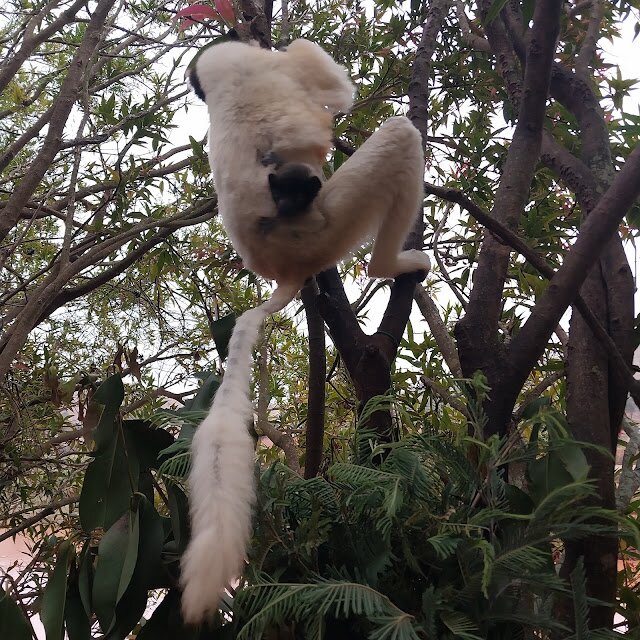
Marojejy National Park is where you go to see the silky sifaka, a white lemur numbering fewer than two thousand animals and found in only two forests on earth. Reaching it means a multi-day trek between three mountain camps, with treks of two to five days depending on how high you climb. The park rises from lowland rainforest to a summit at 2,132 metres in the SAVA region of the northeast, and forms part of the UNESCO-listed Rainforests of the Atsinanana.
Silky Sifaka Trekking Safaris in Marojejy
A silky sifaka trekking safari is the reason almost everyone commits to this park, and the commitment is real. There is no road in, no day visit and no shortcut. You walk, you sleep in the forest, and you look for an animal that most people who love lemurs will never see.
Propithecus candidus, known in Malagasy as simpona malandy, meaning the white sifaka, survives in Marojejy and in the neighbouring Anjanaharibe-Sud Special Reserve and nowhere else. Population estimates put it under two thousand. The forest around Camp Marojejia is where guides concentrate the search, and the park makes a specialist tracker available alongside your guide. Take one. The difference it makes to your odds is not marginal.
Sightings are never promised and some groups leave without one. Two nights at the middle camp gives you far better odds than one, because it buys you two mornings rather than a single afternoon of walking after a long climb.
Henri Humbert of the Paris natural history museum surveyed this massif and dedicated a book called Miracles of Nature to it. Around 90 percent of Marojejy remains primary forest, untouched.
The Mantella Trek to Camp Mantella and Humbert Waterfall
The Mantella Trek is the first stage and the shortest option, named for the small bright frogs found along it. From the village of Manantenina the walk runs roughly 9.5 km and takes four to five hours, climbing gently through lowland forest once you pass the park boundary. Driving as far as Mandena, the last village before the entrance, shortens it a little.
Camp Mantella sits at 450 metres with five cabins holding beds and mattresses, plus a sheltered eating area and space to pitch tents if you bring your own. The Humbert waterfall lies a short walk away, an easy afternoon once you have dropped your pack.
Two days and one night here gives you lowland rainforest, frogs, chameleons and a night walk. What it does not give you is a realistic chance of the silky sifaka, which lives higher up. Anyone whose main goal is the lemur should plan to go further.
The Simpona Trek and Camp Marojejia
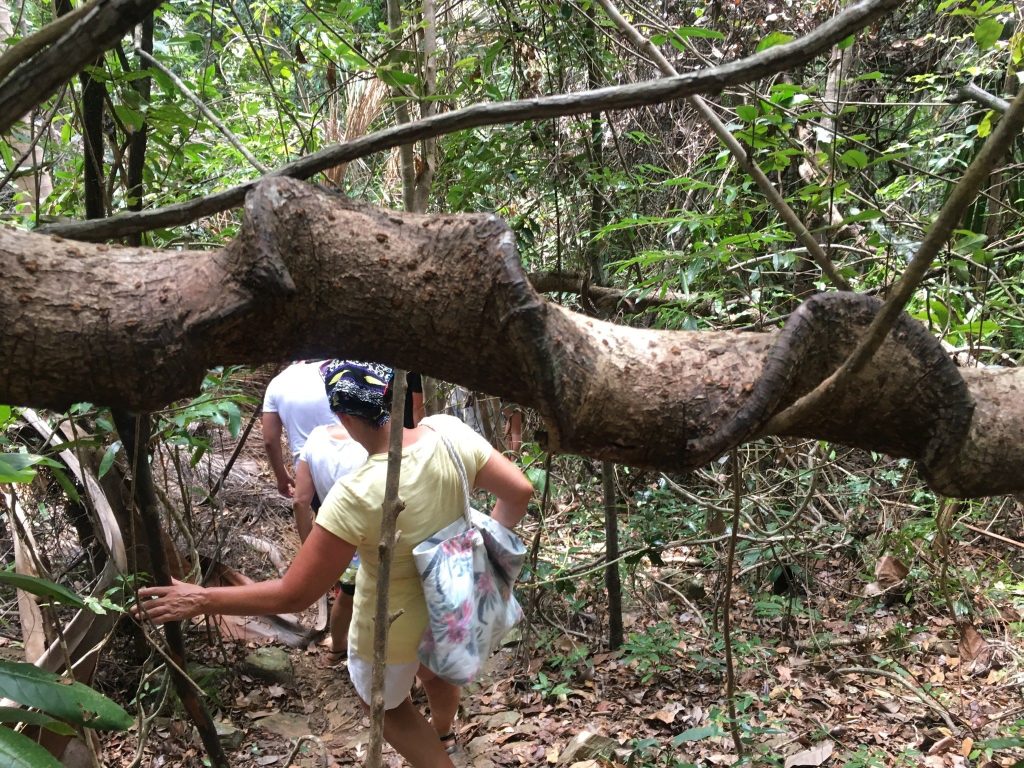
The Simpona Trek continues upward from Camp Mantella to Camp Marojejia, a climb of only about 2 km but one to two hours of work on a stone path that turns treacherous when wet. Elevation goes from 450 to 775 metres.
Camp Marojejia sits on the boundary between lowland and montane rainforest, perched on a hillside looking out at bare granite outcrops rising from unbroken green. It has four or five cabins and a sheltered eating area. This is the camp that matters for wildlife, and most itineraries build in two nights.
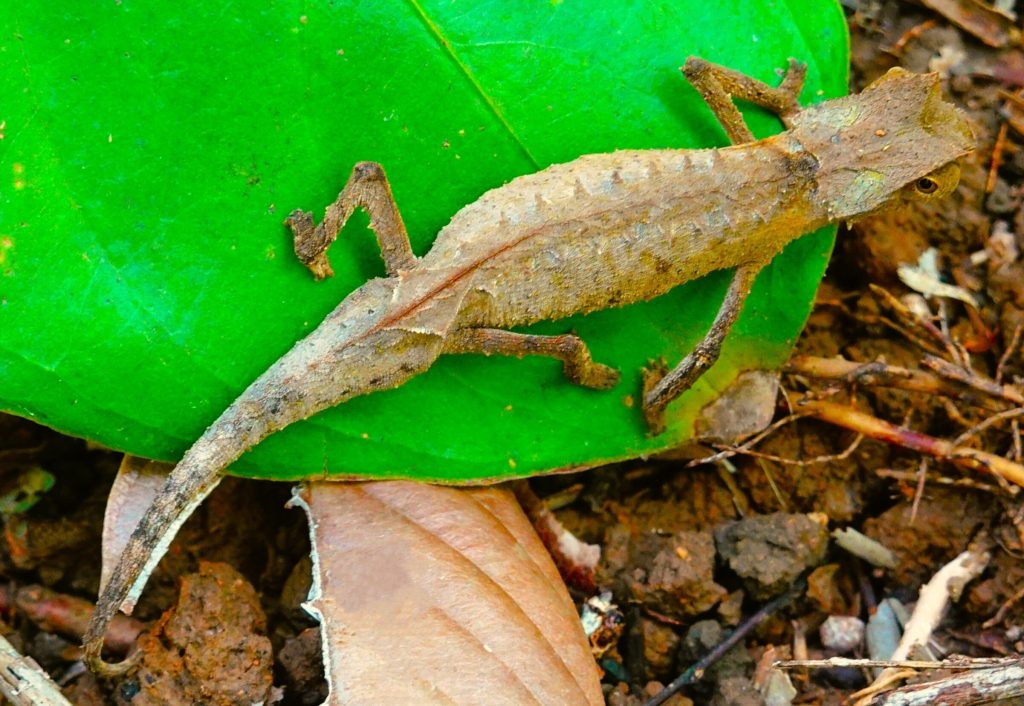
Along the connecting path, watch for Brookesia karchei, a ground-dwelling chameleon found only here, and for endemic palms including Marojejya insignis. Three days in the park is the sensible minimum for this trek.
Mantella Trek. Two days, one night at 450 m. Lowland forest, the Humbert waterfall, frogs and reptiles. Moderate walking. Suits visitors short on time or unsure about multi-day hiking. Little chance of silky sifaka.
Simpona Trek. Three to four days, nights at Camp Mantella and Camp Marojejia. The standard choice. Best odds on silky sifaka and helmet vanga. Steep in places but manageable for reasonably fit walkers.
Summit Trek. Four to five days, adding Camp Simpona at around 1,250 m and the peak at 2,132 m. Demanding, cold at altitude, basic facilities at the top camp. For experienced hikers who want the whole mountain.
Marojejy Summit Trekking to 2,132 Metres
Summit trekking pushes on from Camp Marojejia to Camp Simpona, which sits somewhere around 1,250 to 1,325 metres depending on which measurement you trust. The distance is short, a little over 2 km, and people routinely underestimate it. The gradient is severe and the ground is wet.
Camp Simpona is smaller and plainer than the two below, a cluster of basic cabins and a tent area in cloud forest. From there the summit push starts before dawn. Above 1,400 metres the trees shrink into stunted montane thicket, and the top gives views over the Indian Ocean and the whole northeastern corner of the island when the cloud allows, which is not most days.
This is a genuine mountain trek rather than a walk. Cold, rain and mud are constants. Anyone attempting it should be comfortable with several consecutive days of steep hiking in wet conditions.

Helmet Vanga Birding Safaris in Marojejy
Birding safaris here draw people almost as much as the lemurs. Marojejy holds around 118 to 125 bird species, and the flagship is the helmet vanga, Euryceros prevostii, a heavy-billed blue and rufous bird that birders travel across the world for. The forest around Camp Marojejia is the reliable area.
Ground-rollers are the other target group, with scaly, short-legged and rufous-headed all recorded. Add the Madagascar serpent-eagle, cryptic warbler, velvet asity and blue coua. Several of these are heard far more often than seen, and patience matters more than distance covered.
Ask for a birding guide when you book rather than at the gate. The park has around a dozen accredited guides working from the Manantenina visitor centre, and not all of them are bird specialists.
Chameleon, Frog and Palm Spotting Tours in the Rainforest
Spotting tours for the smaller residents reward anyone walking slowly. Marojejy records roughly 150 reptile and amphibian species, including the climbing mantella frog, a tiny black and yellow animal that breeds in water trapped in tree hollows.
Botanically the park is among the richest in Madagascar. Around 275 to 300 fern species grow here, along with some 300 epiphytes and roughly 50 palms, several found nowhere else. Canopy trees reach past 50 metres. The dwarf Marojejy palm is one of the specialities that botanists come for, and guides will point out orchids at every altitude band as the forest changes on the climb.

Night Walk Tours Around the Camps
Night walk tours operate from Camp Mantella and Camp Marojejia and turn up a different cast entirely. Nocturnal lemurs here include greater dwarf lemurs, fork-marked lemurs, eastern woolly lemurs and weasel sportive lemurs. Aye-ayes are present in the park and very occasionally seen, which is more than can be said for most places.
Frogs and geckos make up the rest. Bring a headlamp with fresh batteries and a spare set, since there is no electricity at any camp and nothing to recharge from.
Getting to Marojejy National Park from Sambava
Sambava is the gateway, with flights from Antananarivo, Antsiranana, Toamasina and Maroantsetra. From there the road to the park runs 65 to 70 km on the paved RN3B toward Andapa, and the visitor centre sits just before the village of Manantenina.
Taxi-brousse services leave Sambava’s northern station from early morning and take three to four hours, crowded and unreliable but cheap. A private taxi is faster, negotiated in town, and the going rate is covered in the FAQ below. The road itself is in good condition and the drive up the Lokoho valley is a pleasure.
Everything else is bought in Sambava. Food for the entire trek, bottled water, toilet paper and any camping gear you need all come from town, because there is nothing to buy beyond Manantenina. At the visitor centre you settle fees and hire your team: guide, porters, cook and, if you want the sifaka, a tracker. Porters carry to the camps and return to their villages rather than staying up with you.
Sambava is the last place with banks, and the park takes local currency in cash only. Work out your full costs before leaving town, including porter and cook fees for every day, and carry more than you think you need. There is no way to pay for anything once you start walking.
Best Time for a Marojejy Trek
Marojejy is technically open all year, though the practical window is narrower than that suggests. This is rainforest on a mountain in the wettest corner of Madagascar, and rain falls in every month.
April to June. The heavy rains have eased and river crossings drop to safe levels. Trails are still muddy but passable. Quiet, and a reasonable window for the longer treks.
July to September. Cooler and drier overall, with the most reliable conditions for the summit trek. Nights at Camp Simpona get genuinely cold, so pack warm layers if you are going high.
October to mid-December. Often cited as the best overall period. Less rain than the peak wet season, and birds and lemurs are at their most active. Silky sifaka viewing is at its most productive.
Late December to March. Heavy rain makes travel difficult and sometimes dangerous. Trails turn to deep mud, river crossings run high, and the northeast is exposed to cyclones. Not a period to plan a trek around.
Whatever month you choose, pack as though it will rain daily, because it probably will. Waterproof bags for everything, proper boots rather than sandals, and a warm layer for the evenings.
Frequently Asked Questions
How much does it cost to trek in Marojejy?
Park entry follows the standard rate of 45,000 Ariary per adult per day, with children under twelve at 25,000 Ariary, charged for each day you spend inside. A private taxi from Sambava to the visitor centre runs around 60 euros, while the taxi-brousse costs a fraction of that. On top of that you pay a guide, porters at roughly one per trekker depending on load, a cook, and a tracker if you want the silky sifaka. Camp cabin fees apply too. A four-day trek with a full team typically runs to several hundred euros per person once everything is added, and all of it is cash in Ariary paid at Manantenina.
Do I really need a tracker as well as a guide?
If the silky sifaka is your priority, yes. The specialist trackers know where groups have been feeding and move ahead of the party to locate them. Visitors who skip the tracker to save money frequently report not seeing the animal. It is the single best value item on the fee list.
How fit do I need to be?
For the Mantella trek, reasonably fit. For the Simpona trek, comfortable with a few hours of steep uphill on wet ground carrying a day pack. For the summit, properly fit, since the stretch to Camp Simpona is short in distance and severe in gradient, and the summit day starts before dawn. Porters carry the heavy loads, which makes a large difference.
What are the camps like?
Basic but genuinely comfortable by trekking standards. Camp Mantella and Camp Marojejia both have four or five cabins with beds and mattresses plus a sheltered eating area. Camp Simpona is smaller and plainer. None has electricity. Tent pitches exist at all three but you must bring your own tent.
How many days should I allow?
Three to four days is the sweet spot, covering the walk in, two nights at Camp Marojejia for the sifaka and the birds, and the walk out. Two days only reaches the lowest camp. The summit adds one or two more. Factor in a night in Sambava at each end for flights and provisioning.
Can I combine Marojejy with anything nearby?
Anjanaharibe-Sud Special Reserve is the natural pairing, reached from Andapa and holding the only other silky sifaka population. It needs its own guide from Befingotra even if you bring one from Marojejy. Sambava also connects by air to Maroantsetra for Masoala, which makes a serious northeastern rainforest circuit for anyone with two weeks.
Is Marojejy worth it compared with the easier parks?
It depends entirely on what you want. Andasibe gives you a near-certain indri sighting after a three-hour drive. Marojejy asks for four days of walking and offers no guarantees. What it gives back is a critically endangered lemur, one of the least disturbed rainforests in Madagascar, and a mountain very few visitors climb.
Planning Your Visit
Marojejy is not a park you drop into. Flights to Sambava, provisioning in town, hiring a full team at Manantenina and carrying enough cash for all of it are decisions that have to be made before you arrive, and getting one wrong costs days.
Booking Your Madagascar Trip
The safari companies and tour operators listed on this website put trips like this together for a living and know which camps, guides and routes actually deliver. We are an independent guide to Madagascar; we do not book or sell tours ourselves.
When you are ready, arrange your safari, tour or holiday with one of the recognised operators listed here. Tell them your dates and what matters most, and a real person, not a form, will handle the itinerary, park bookings and logistics for you.