Emerald Sea (Mer d’Émeraude)
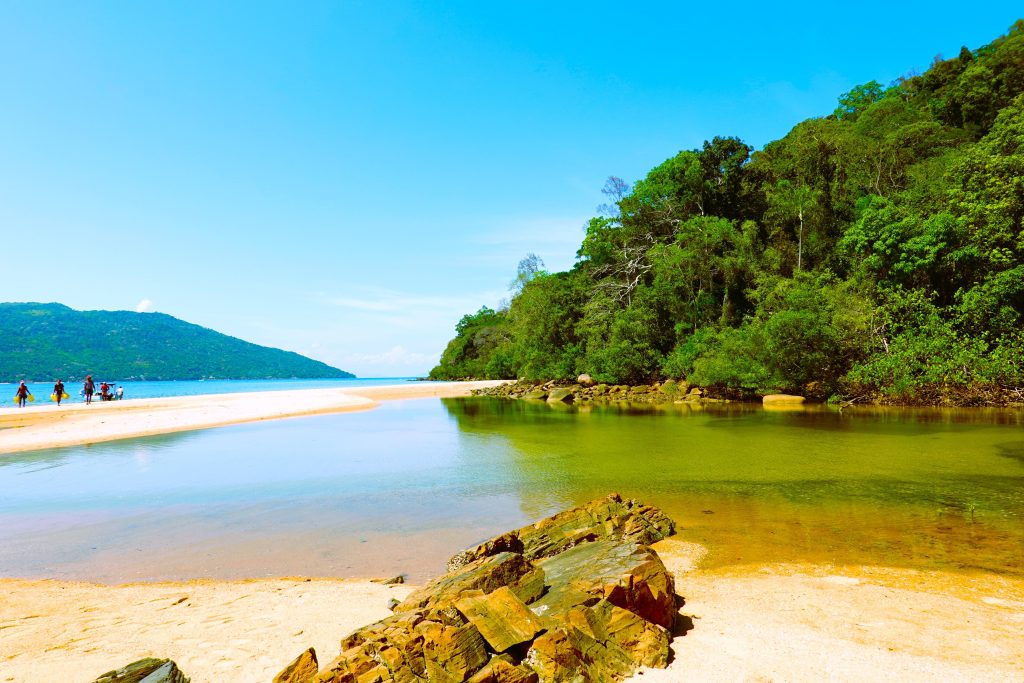
The Emerald Sea, or Mer d’Émeraude, is a shallow lagoon at the mouth of Diego Suarez bay whose white sand bottom turns the water a colour visible from space. Day trips run by sailing boat from Ramena beach, taking in deserted islets, snorkelling and a grilled fish lunch. The lagoon runs about 12 km long and three wide, sheltered from the open ocean by reef and islands.
Boat Trips to the Emerald Sea from Ramena
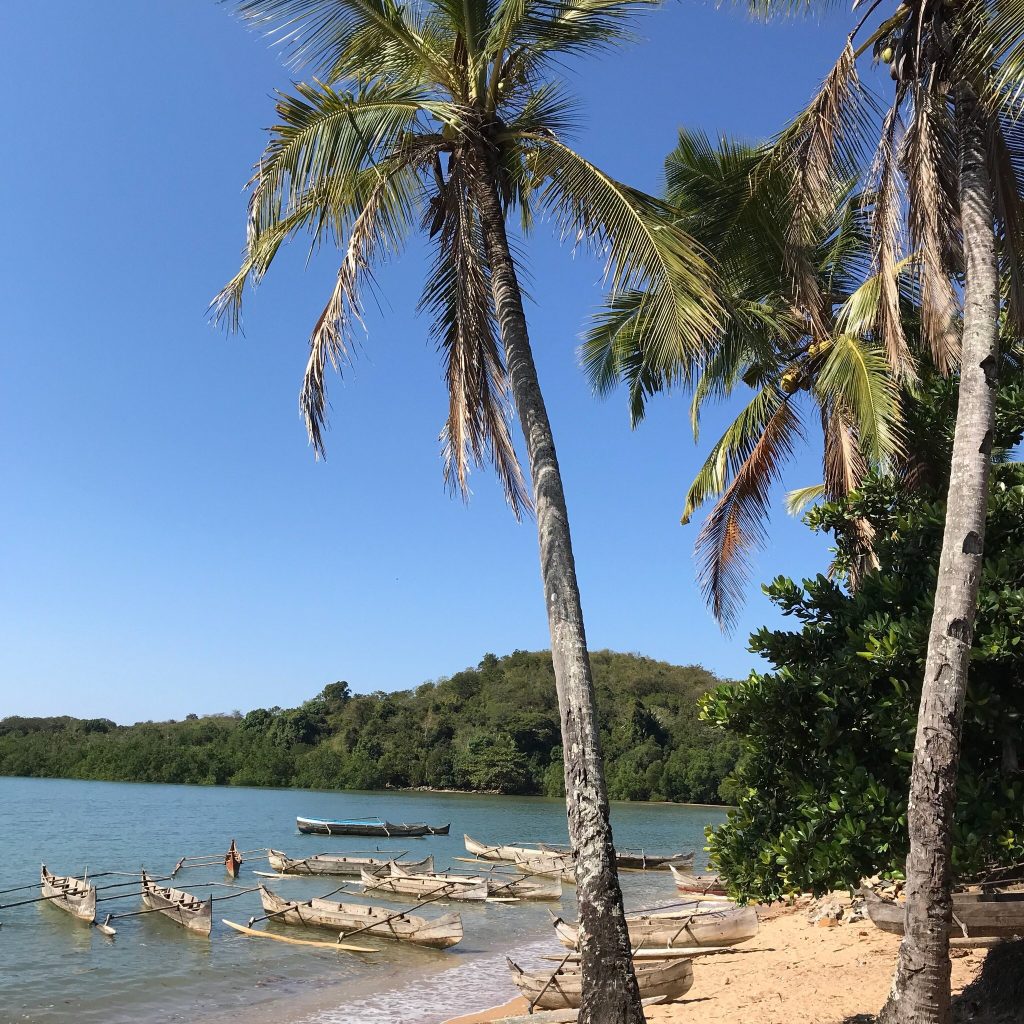
Boat trips are the only way in. Small wooden sailing craft leave Ramena beach in the morning and cross to the lagoon in around forty minutes to an hour depending on wind and swell. Departures from Port Jasmin in Diego Suarez take longer.
The colour change happens as you go. Deeper water outside runs blue, then the bottom shelves up to white sand and the water turns through turquoise into the green that gives the place its name. It is genuinely striking rather than a marketing description.
Boats land at one of the uninhabited islets, most often Nosy Suarez, where lunch is cooked on the beach. Several other islands frame the lagoon, including Nosy Antaly Be, Nosy Antaly Kely, Nosy Lava, Nosy Diego and Nosy Toreky.
The boats are small, open and rustic. Between May and November the trade winds blow hard and the return leg in the afternoon is frequently wet and cold, with soakings more or less guaranteed. Bring a dry bag for anything electronic, a windproof layer for the return, and take seasickness precautions seriously. Look at the boat before committing if rough water troubles you.
Snorkelling Tours on the Emerald Sea Reefs
Snorkelling tours are included in most excursions and the equipment usually comes with the trip. The coral here is largely undamaged, protected by its position inside the lagoon, and supports reef fish, rays, sea cucumbers and turtles.
Water is shallow and warm, averaging somewhere between 25 and 30 degrees, which makes this comfortable snorkelling for people who do not do much of it. Visibility is best when the water is calm.
The islets have beaches to themselves, and outside peak season you will often have one entirely to yourself. That emptiness is a large part of what people remember.

Twelve kilometres of lagoon over white sand, reef on the seaward side and almost nobody on the beaches. The colour is visible from orbit.
Kitesurfing and Windsurfing Trips on the Lagoon
The Emerald Sea is among the better kitesurfing spots in Madagascar and considerably less known than Sakalava Bay nearby. Flat water inside the lagoon and waves on the reef outside give it range for different abilities.
Twelve kilometres of lagoon means space, and experienced riders organise downwinders along its length past fishing villages, with reef waves to surf at the far end. Beginners can ride here with care, though the schools are based at Sakalava and Ramena rather than on the lagoon itself.
Wind blows most reliably between May and November when the trade winds are up. That is the same period that makes the boat crossing rough, which is the trade-off: the conditions that suit kiters are the ones that soak day-trippers.
Island Tours and Beach Time on the Islets
Most excursions build in several hours on an islet, and the pattern is consistent: swim, snorkel, walk the sand, eat, and sit under shade until the boat leaves.
The grilled fish lunch is a genuine highlight and gets mentioned in nearly every account, cooked fresh on the beach by the crew. At low tide, a natural pool forms in places and is worth asking about, since some operators time the trip around it.
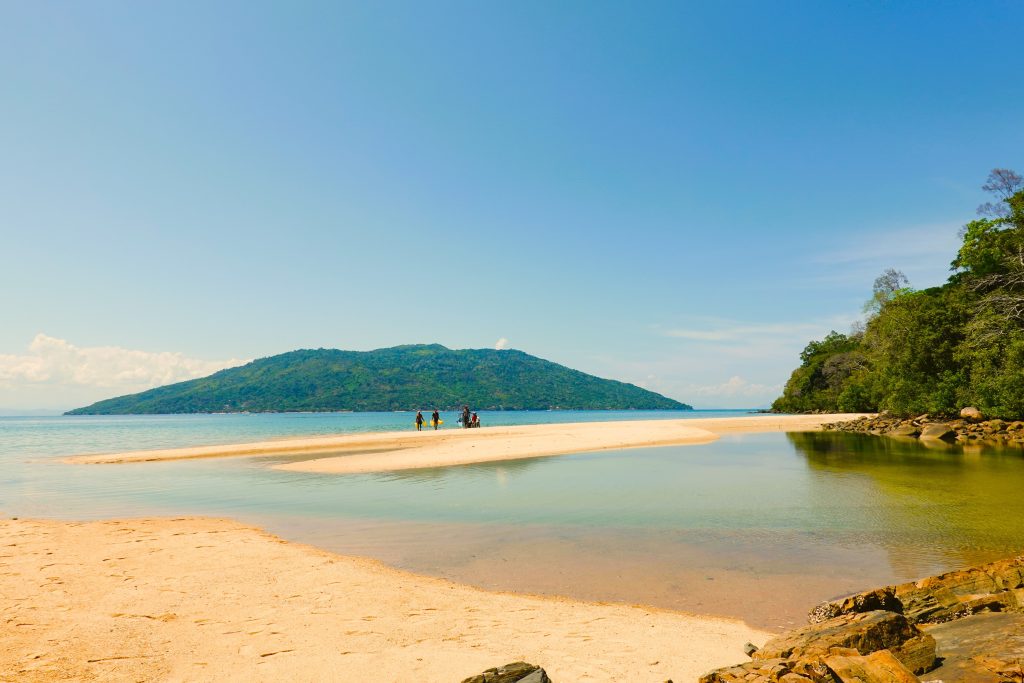
A small viewpoint sits at the end of the sand on the main islet. There are no facilities of any kind, so bring what you need and take your rubbish back with you.
Combining the Emerald Sea with Three Bays and Ramena
The lagoon fits into a wider northern circuit around Diego Suarez. Les Trois Baies, the Three Bays, is the standard companion outing, a run of wild beaches at Sakalava Bay, Dunes Bay and Pigeon Bay reachable by road or on foot.
Ramena itself is a fishing village with a beach, restaurants and a relaxed atmosphere, and many visitors base themselves there rather than in Diego Suarez. Montagne des Français rises behind it, with an old fort, tunnels and views over the bay, walkable in a couple of hours.
Further afield, the Red Tsingy lies about 65 km south and Amber Mountain National Park sits inland, both easy additions to a few days in the north.
Organised excursion. Booked through a hotel or operator, departing Ramena or Port Jasmin. Covers boat, snorkelling gear and lunch on an islet. Simplest option and what most visitors take.
Direct with fishermen. Local boat owners at Ramena beach will take passengers for considerably less. Cheaper and more improvised, with no equipment included. Agree the price and the return time before boarding.
Nosy Hara Marine Park North of the Emerald Sea
Beyond the lagoon lies Nosy Hara, a marine protected area covering a scatter of limestone islands north of the Emerald Sea. It is far less visited than the lagoon and reached on longer boat excursions from Ramena, usually as a full day or an overnight camping trip.
The islands are the northern tip of the same karst systems that surface inland at Ankarana, weathered into pinnacles and stacks rising straight from the water. Reefs around them are in good condition, and the marine park protects turtles, rays and a substantial fish population.
Brookesia micra, among the smallest reptiles on earth at around 30 millimetres including tail, was described from Nosy Hara and is found there and nowhere else. Seeing one requires a guide, considerable patience and luck, and most visitors come for the water rather than the chameleon.
Camping trips need arranging through operators in Diego Suarez or Ramena. Facilities are nonexistent and everything is carried in, which is why the islands stay as empty as they do.
Getting to the Emerald Sea from Diego Suarez
Ramena village is the embarkation point, about 20 km east of Antsiranana on a sealed road along the bay, roughly forty-five minutes by taxi. The road passes Nosy Lonjo, the sugarloaf islet in the bay, and stands of Adansonia suarezensis, a baobab found only in this corner of the north.
Taxi-brousse runs to Ramena for budget travellers, though the timing needs planning around a morning departure. Boats leave early, usually around seven or eight, and return in the late afternoon.
Diego Suarez has hotels across the range and an airport with domestic flights. Ramena has beach accommodation and is closer to the departure point, which suits anyone doing the lagoon and the Three Bays. Kitesurf lodges operate at Sakalava Bay nearby.
Best Time to Visit the Emerald Sea
Timing here involves a real trade-off between calm water and clear water.
November to March. Warmer and clearer water with the calmest crossings, since the trade winds have dropped. The best conditions for snorkelling and for anyone worried about a rough boat ride. Cyclone risk applies to the wider region.
April and May. Transitional, with winds building. Reasonable water clarity and moderate crossings. A decent compromise window before the trades set in properly.
May to November. Trade wind season. Excellent for kitesurfing and windsurfing, considerably rougher for day-trippers, with wet and cold return crossings. The busiest period for visitors to the north usually.
August and September. Peak wind and peak visitor numbers. Book excursions ahead. Snorkelling suffers when the water is stirred up, so manage expectations if that is your priority.
Anyone prone to seasickness should think carefully about the return leg in particular. The outward crossing in the morning is usually calm and the trouble comes in the afternoon when the wind has built. Taking something before departure rather than when you start to feel it is the practical answer, since there is nowhere to get off partway.
Frequently Asked Questions
How much does an Emerald Sea trip cost?
Organised boat transfers from Ramena run roughly 40,000 to 55,000 Ariary per person, with departures from Port Jasmin in Diego Suarez around 60,000 Ariary. Packages including lunch and snorkelling gear are commonly quoted around 25 euros, and kitesurf-oriented day trips with a meal on Suarez islet at about 90,000 Ariary. Local fishermen at Ramena beach will take passengers for substantially less without the extras. Confirm what is included before paying.
How long does the trip take?
A full day, typically departing Ramena around seven or eight in the morning and returning late afternoon. The crossing itself is forty minutes to an hour each way, sometimes longer against the wind, leaving several hours on the islet.
Will I get wet on the boat?
Very likely between May and November, when the trade winds make the return crossing rough. The boats are small and open, and passengers regularly arrive back soaked and cold. Bring a dry bag and a windproof layer. In the calmer months from November to March this is much less of an issue.
Is the snorkelling good?
Yes, with largely undamaged coral inside the lagoon and reliable fish, rays and turtles. Water clarity is better in the calm season, since wind stirs up the shallows. Equipment is usually included on organised trips but not if you go directly with local fishermen.
Can I kitesurf there?
Yes, and it is one of the better spots in the country, with flat water inside the lagoon and reef waves outside. Schools operate from Ramena and Sakalava Bay rather than on the lagoon, and day excursions for kiters are arranged through them. Wind is most reliable May to November.
Are there facilities on the islands?
None. The islets are uninhabited with no buildings, no toilets and no shade beyond what vegetation provides. Everything comes on the boat. Take your rubbish back with you, since nobody else will.
What else should I do in the area?
The Three Bays for wild beaches and snorkelling, Montagne des Français behind Ramena for the fort and the views, Amber Mountain National Park for rainforest and waterfalls, and the Red Tsingy south along the RN6. Three or four days based in Ramena or Diego Suarez covers all of it.
Planning Your Visit
The Emerald Sea is one of the better value excursions in Madagascar and one of the easier ones to get wrong. The colour and the empty beaches deliver on the promise; the small open boats in trade wind season catch people out.
Booking Your Madagascar Trip
The safari companies and tour operators listed on this website put trips like this together for a living and know which camps, guides and routes actually deliver. We are an independent guide to Madagascar; we do not book or sell tours ourselves.
When you are ready, arrange your safari, tour or holiday with one of the recognised operators listed here. Tell them your dates and what matters most, and a real person, not a form, will handle the itinerary, park bookings and logistics for you.